
Ambari hemp
Also known as: bimli; bimlipatum jute; Deccan hemp; hemp mallow; Indian brown hemp; kenaf
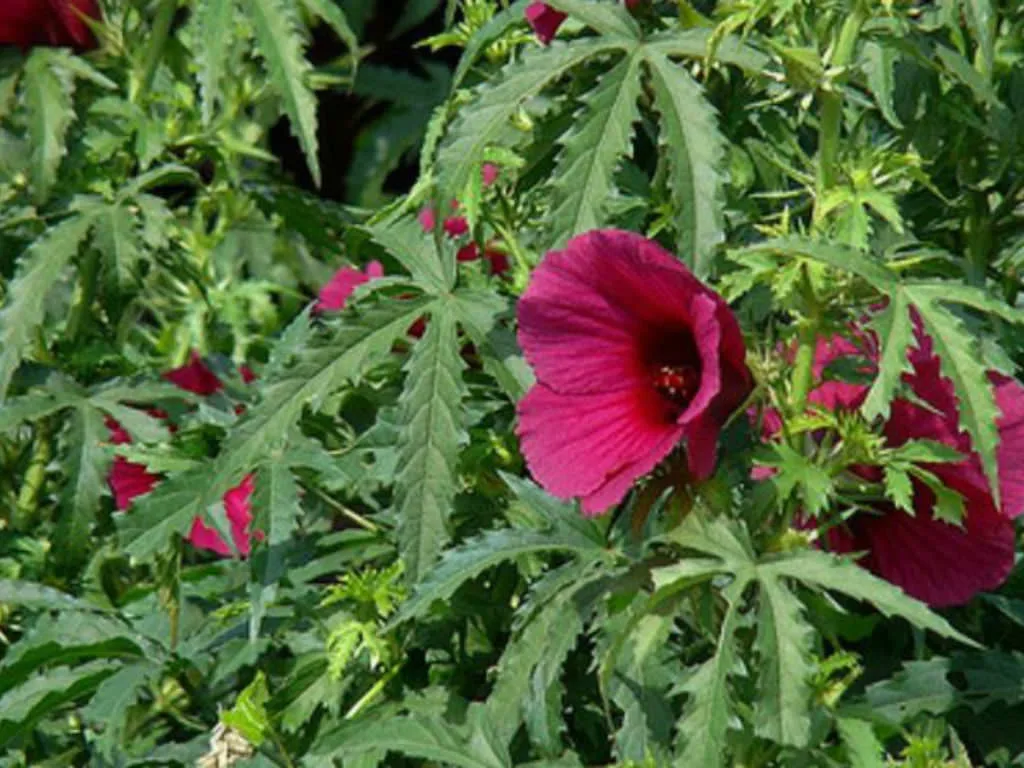
Fast-growing, upright, almost unbranched annual or short-lived, woody-based perennial about 3.5m tall, with fine, spiny-stems bearing long-stalked dark green leaves, the upper leaves palmately lobed and those lower down on the stem unlobed. Funnel-shaped, pale yellow, occasionally purple-red flowers with crimson-red centres, produced singley or in racemes from summer to autumn
Scientific classification
- Species
- Ambari hemp (Hibiscus cannabinus)
- Genus
- Hibiscus
- Family
- Malvaceae
- Information to be completed
- Toxicity
- Annual Biennial · Herbaceous Perennial
- Plant type
- 2.5-4 metres
- Height
- 1-1.5 metres
- Spread
- Deciduous
- Foliage
- Columnar upright
- Habit
- Spring · Summer · Autumn
- Season of interest
- Full sun
- Sunlight
- Information to be completed
- Ideal temperature









Ambari hemp pictures
Distribution of Ambari hemp
Distribution map
Information to be completed
Information to be completed
Culture
Information to be completed
Toxicity
Information to be completed
Quick identification of Ambari hemp
Information to be completed
Ambari hemp care guide
- Regular deep watering, keep root zone damp in warm growing weather
- Watering
- Full sun
- Sunlight
- Information to be completed
- Ideal temperature

Watering
Regular deep watering, keep root zone damp in warm growing weather
Fertilizing
 Fertilizing
Balanced diluted general feed biweekly active growing season
Pruning
 Pruning
Little pruning is needed. Remove diseased, damaged, crowded or crossing shoots and unwanted growth. Timing depends on the plant: generally late winter or early spring; plants prone to bleeding and deciduous magnolias need different timing, and deciduous azaleas and lilacs are pruned after flowering.
Propagation
 Propagation
Propagate by seed (sown indoors) in spring, or propagate by division in spring
Growing
 Growing
Outdoors grow in moist but well-drained, neutral to slightly alkaline soil in full sun. Long, hot summers are needed for good flowering. Can be grown in a container and overwintered in a conservatory or warm greenhouse
People also ask
Information to be completed
Common pests and diseases
Diseases
May be susceptible to honey fungus (rarely) and powdery mildews
Pests
May be susceptible to aphids, scale insects, mealybugs and glasshouse whitefly when grown under glass
Explore the plant health library →




