
Vanda coerulea
Also known as: Information to be completed
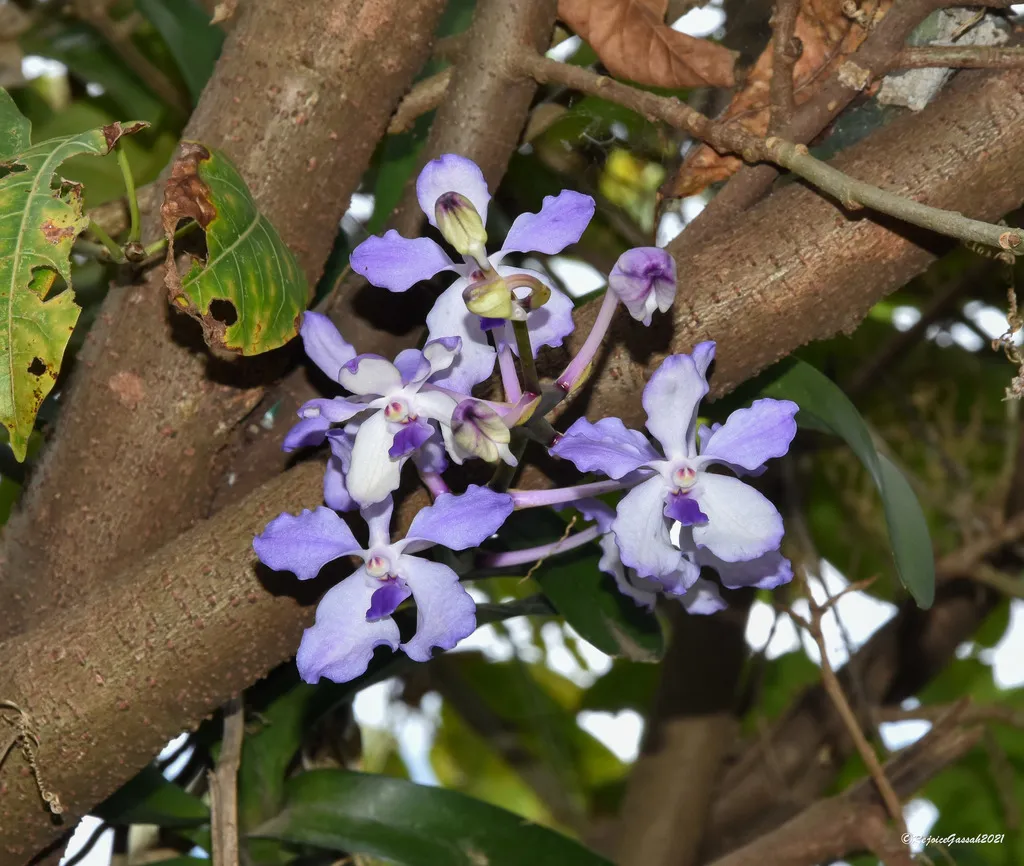
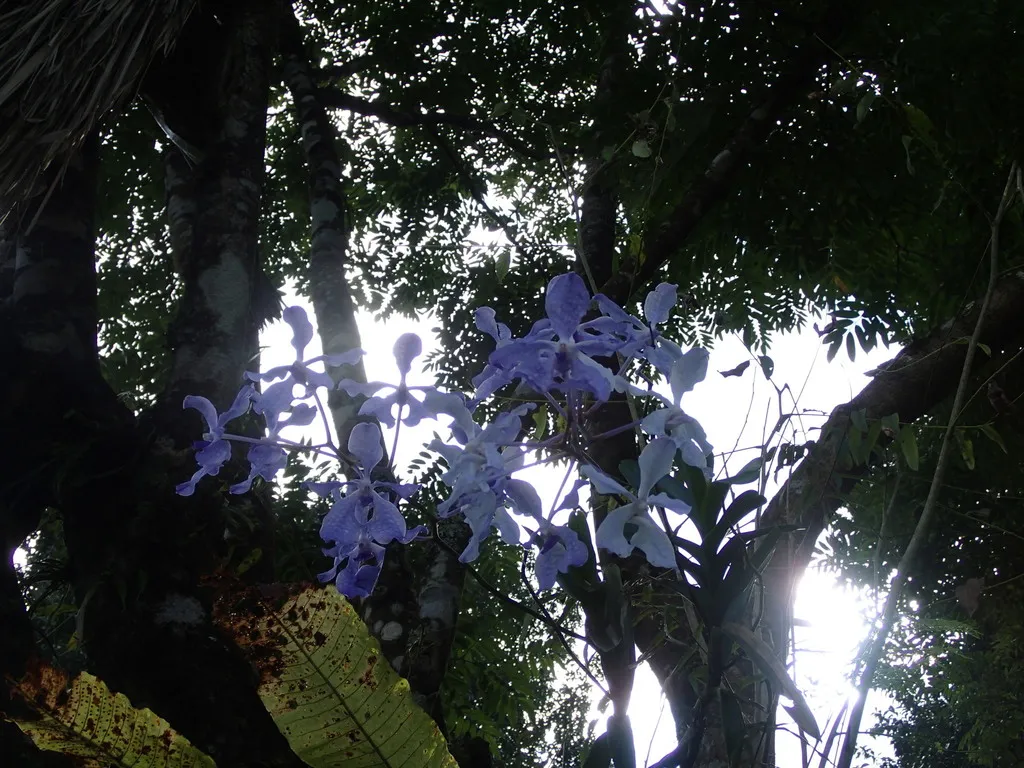
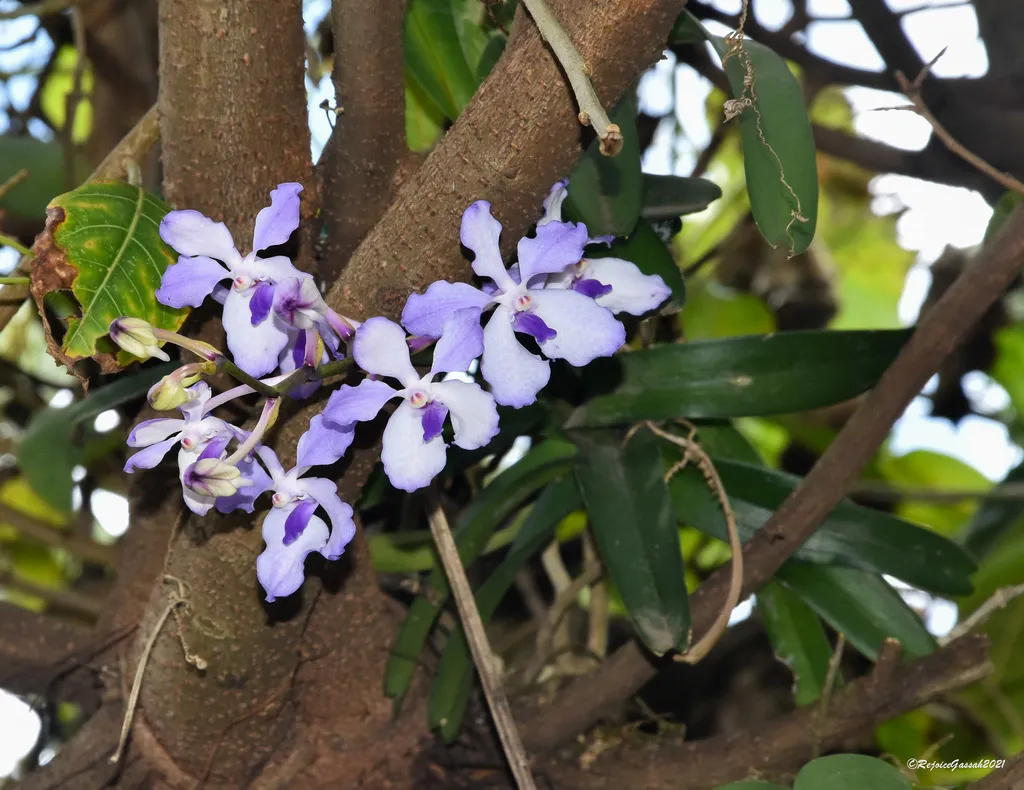
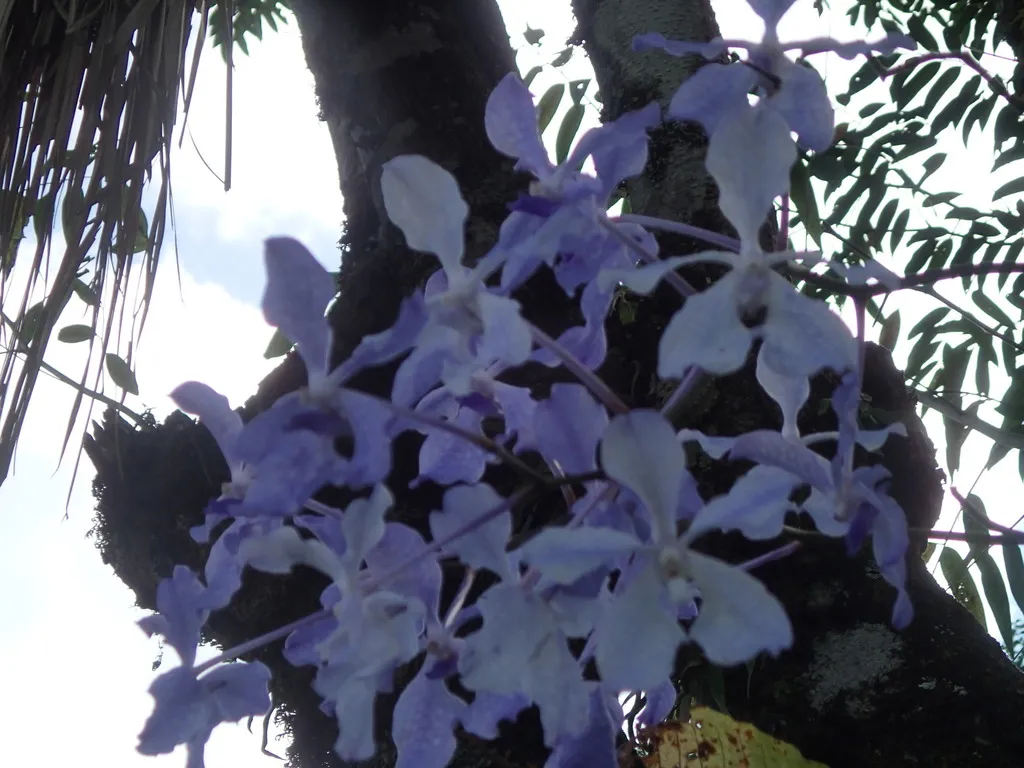
A medium to large-sized species of evergreen, tropical, epiphytic orchid, valued throught history for its unusual flowers. As a typical example of monopodial orchid, the new growth emerges from the tip on a long, central rhizome. Strap-shaped, green or dark green leaves angle out from the main stem, and as new leaves appear from top, older, lower leaves gradually fall off. Compared to other species, leaves are set higher on the alternate bracts, covering the main stem. A characteristic feature of the plant is an impressive root system that hangs downwards at the base of the plant. New root emerge from the central stem, following the ascending growing trend. Inflorescences emerge from axils of leaf sheaths and stem, and carry 5 -14 flowers. Plant may produce multiple, occasionally branched inflorescences, carrying up to 50 flowers in total. The number of flowers per stem depends on the age of plant. Three colour variations occur naturally, with the pale blue being most famous. Pure white and pale pink variations can also be found. Flowers are waxy, 10 cm wide, with typical tesselation, creating a characteristic pattern on the sepals and petals. The petals are twisted at the base, giving the plant a butterfly-like resemblance, described by many plant hunters and botanists.
Scientific classification
- Species
- Vanda coerulea (Vanda coerulea)
- Genus
- Vanda
- Family
- Orchidaceae
- Information to be completed
- Toxicity
- Information to be completed
- Plant type
- 1-1.5 metres
- Height
- 0.5-1 metres
- Spread
- Evergreen
- Foliage
- Columnar upright
- Habit
- Spring · Summer · Autumn · Winter
- Season of interest
- Partial shade · Full sun
- Sunlight
- Information to be completed
- Ideal temperature









Vanda coerulea pictures
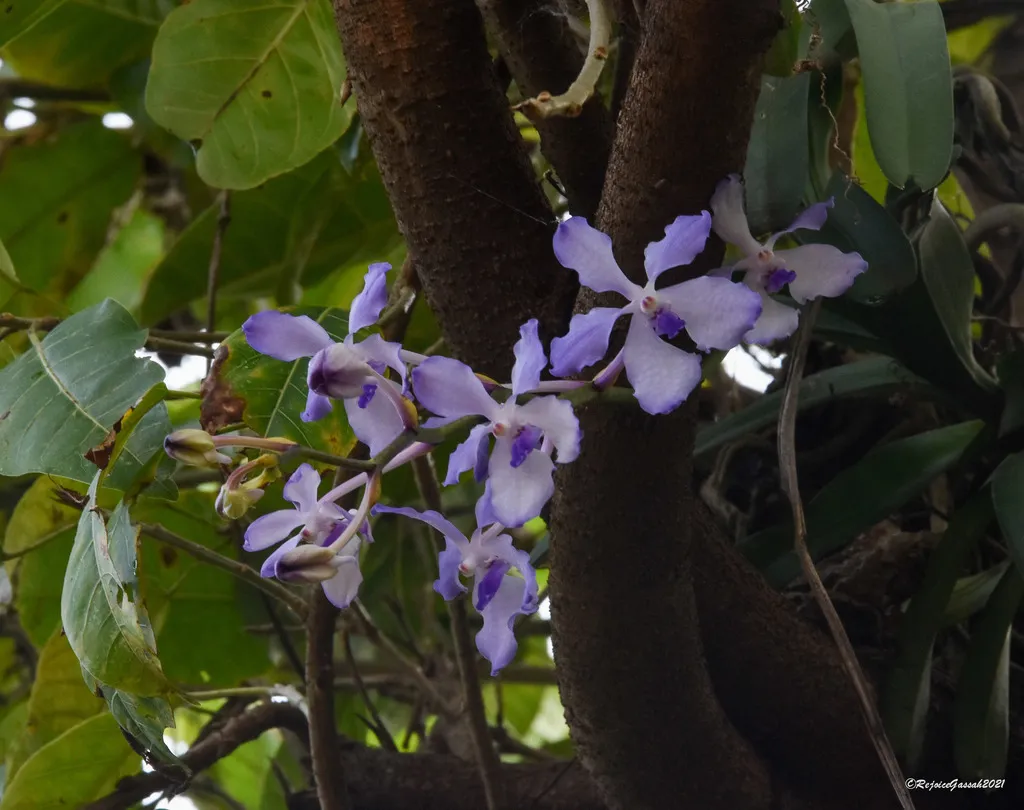
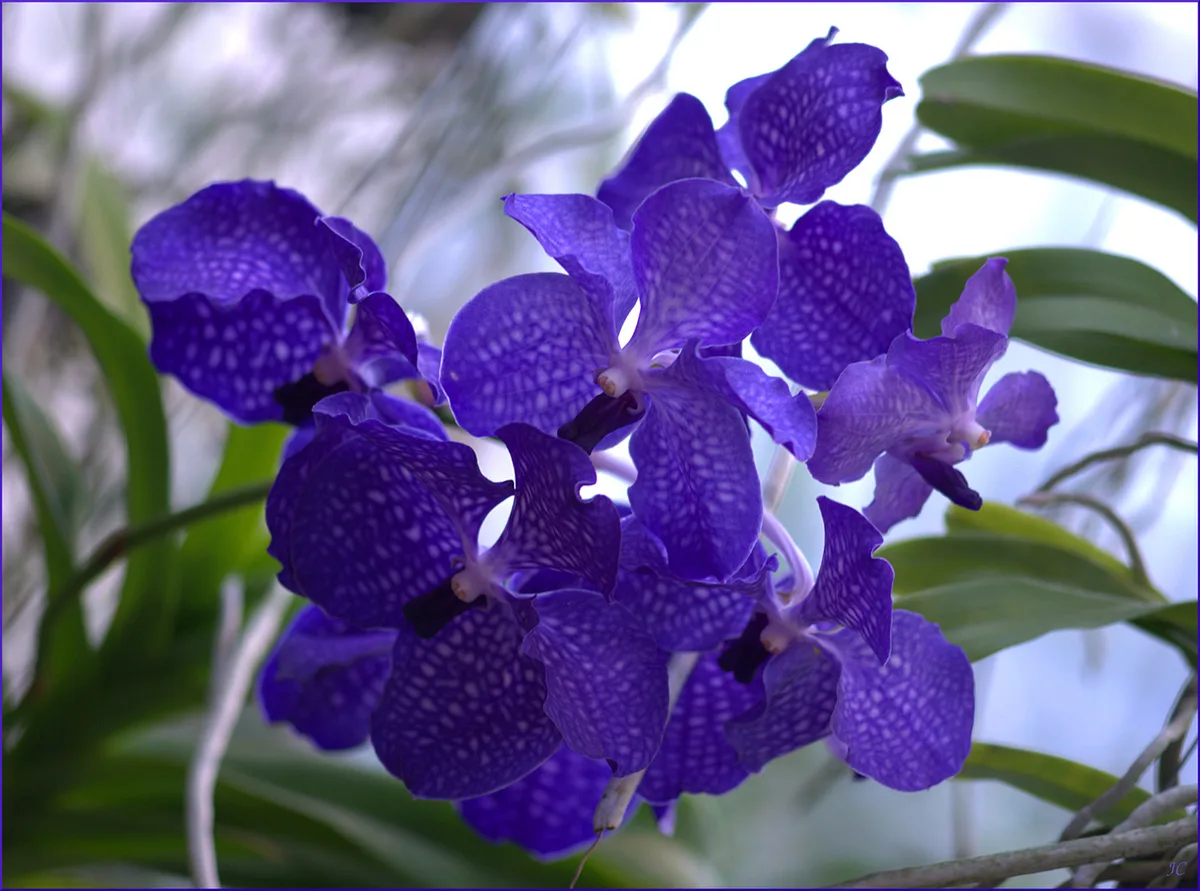
Distribution of Vanda coerulea
Distribution map
Eastern India and Southern China to Myanmar, Laos, and Thailand
Information to be completed
Culture
Information to be completed
Toxicity
Information to be completed
Quick identification of Vanda coerulea
Information to be completed
Vanda coerulea care guide
- Keep potting medium lightly moist, airy, and never stagnant
- Watering
- Partial shade · Full sun
- Sunlight
- Information to be completed
- Ideal temperature

Watering
Keep potting medium lightly moist, airy, and never stagnant
Fertilizing
 Fertilizing
Half-strength orchid feed every two to three weeks in active growth
Pruning
 Pruning
Remove spent flower stems at the base. Old, ''leggy'' plants with bare stems can be cut during their active growing season to reduce the size of the plant. Cut through the rhizome, below the new developed set of aerial roots. Lowering apical dominance by laying plant horizontally, or hanging upside down will support the growth of new roots.
Propagation
 Propagation
 by seed is only possible in a controlled laboratory environment. Mature plants produce sideshoots (keiki) which may be removed and potted separately, when the new roots (preferably 3 or more) are at least 2cm long.
Growing
 Growing
For successful cultivation and frequent flowering, plants require high light levels and long, light days. In summer, they would benefit from being in a warm and bright greenhouse or conservatory, but direct, mid-day sun should be avoided. Highly absorbent, sponge-like roots are the principal water-storage organs. Dark green or purplish tips of the roots may be observed as a sign of actively growing plant. They are heavy feeders and require regular application of orchid fertiliser between spring and autumn. High air humidity (70 -80%), good air circulation and regular misiting should be provided frequently when in active growth. In cooler climates with shorter days, plants may go dormant in winter. Misting may be reduced to avoid rots, but plants shouldn't be left dry for long periods. Ideal temperature range is 15°C in winter and up to 30°C during summer months. Plants can be grown in an open baskets, or in a coarse, bark-based epiphyte orchid mix.
People also ask
Information to be completed
Common pests and diseases
Diseases
Generally disease-free. Poor air movement may cause bacterial of fungal rots. Good hygiene practice and sterilising cutting tools prevent the spread of virus diseases.
Pests
May be susceptible to scale insect and mealybugs. Thrips can cause damage on flowers and developing flower buds.
Explore the plant health library →




