
boat orchid 'Pinkie'
Also known as: Information to be completed
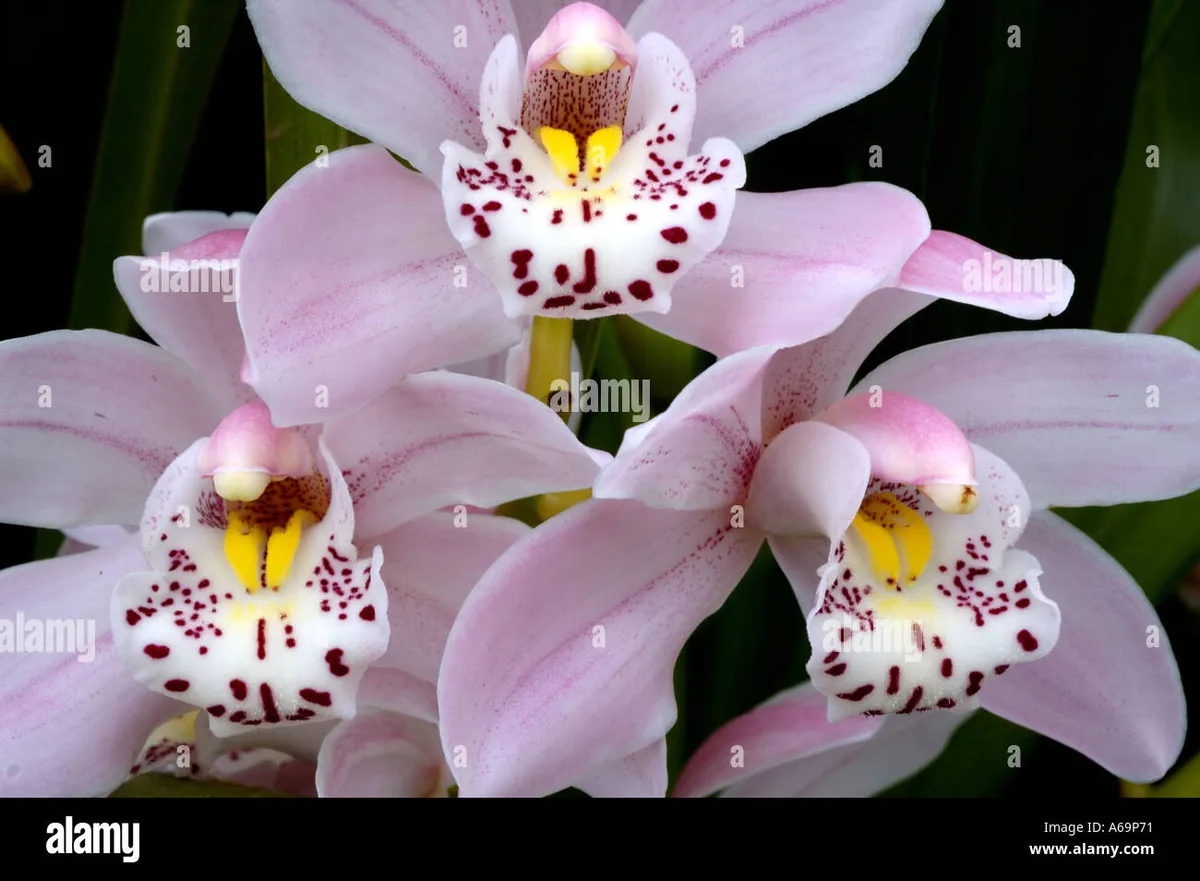
Pinkie' is an evergreen, miniature orchid to around 45cm tall with long, narrowly oval leaves. In winter and spring, flowers spikes bear ten or more pale pink flowers with a maroon-red spotted lip. Mature plants can produce multiple spikes
Scientific classification
- Species
- boat orchid 'Pinkie' (Cymbidium Castle of Mey gx 'Pinkie')
- Genus
- Cymbidium
- Family
- Orchidaceae
- Order
- Asparagales
- Class
- Liliopsida
- Phylum
- Magnoliophyta
- Skin allergen. Wear gloves and other protective equipment when handling
- Toxicity
- Conservatory Greenhouse
- Plant type
- 0.1-0.5 metres
- Height
- 0.1-0.5 metres
- Spread
- Evergreen
- Foliage
- Clump forming
- Habit
- Spring · Summer · Autumn · Winter
- Season of interest
- Partial shade
- Sunlight
- Information to be completed
- Ideal temperature









boat orchid 'Pinkie' pictures
Toxicity
Skin allergen. Wear gloves and other protective equipment when handling
boat orchid 'Pinkie' care guide
- Keep potting medium lightly moist, airy, and never stagnant
- Watering
- Partial shade
- Sunlight

Watering
Keep potting medium lightly moist, airy, and never stagnant
Fertilizing
 Fertilizing
Half-strength orchid feed every two to three weeks in active growth
Pruning
 Pruning
None required
Propagation
 Propagation
Propagate by division; remove and replant old pseudobulbs when repotting in spring
Growing
 Growing
Best grown at temperatures of around 16°C in the day and 10°C at night. Ensure adequate light levels, but avoid direct sunlight. Water thoroughly when the growing medium is almost dry and allow to drain; allow to dry out between watering during the winter. Fertilise regularly and re-pot after flowering when pot bound using a suitable orchid compost. If possible, put the plant outside in dappled shade after the last frost and bring back in before the frosts start to aid flower initiation
Common pests and diseases
Diseases
Generally disease-free. Sterilising cutting tools may prevent virus diseases, such as Cymbidium Mosaic Virus (CMV).
Pests
May be susceptible to aphids, glasshouse red spider mite, slugs and mealybugs
Explore the plant health library →




