
Hamburg parsley
Also known as: parsnip-rooted parsley; turnip-rooted parsley
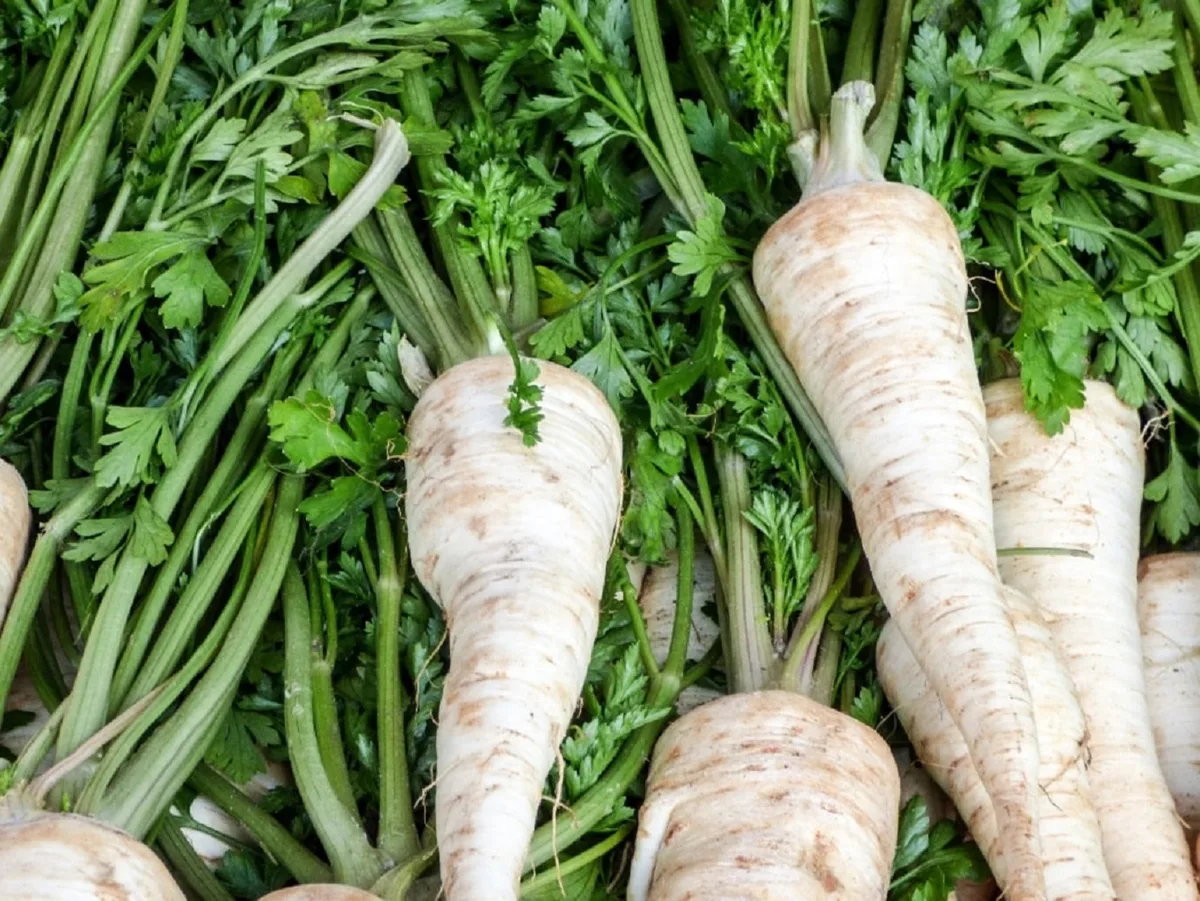
Introduced to England in the 18th century, this was popular for about 100 years and is still commonly eaten in Germany. The leaves are similar to that of parsley, in appearance and taste, and can be used in the same way but the difference to most parsleys in that the edible roots resemble parsnips and grow up to about 15cm long. The roots are described as tasting like a cross between parsnips and parsley or parsnips and celery - sweetest and tastiest if cooked. The roots are frost resistant and ready to harvest in late Autumn /early Winter and unusually the largest roots taste the best. This is a biennial, grown as an annual - if you let it flower the leaves will be inedible and the plant will then die.
Scientific classification
- Species
- Hamburg parsley (Petroselinum crispum var. tuberosum)
- Genus
- Petroselinum
- Family
- Apiaceae
- Order
- Apiales
- Class
- Magnoliopsida
- Phylum
- Magnoliophyta
- Information to be completed
- Toxicity
- Annual Biennial · Herbs - Culinary
- Plant type
- 0.1-0.5 metres
- Height
- 0.1-0.5 metres
- Spread
- Deciduous
- Foliage
- Bushy
- Habit
- Spring · Summer · Autumn · Winter
- Season of interest
- Full shade · Partial shade
- Sunlight
- Information to be completed
- Ideal temperature









Hamburg parsley pictures
Hamburg parsley care guide
- Moderate regular watering, avoid prolonged drought or waterlogging
- Watering
- Full shade · Partial shade
- Sunlight

Watering
Moderate regular watering, avoid prolonged drought or waterlogging
Fertilizing
 Fertilizing
Balanced feed in spring and light repeat in growth season
Pruning
 Pruning
Remove flowers unless wanted for seed
Propagation
 Propagation
Propagate by seed. See sowing vegetable seeds
Growing
 Growing
Grow in fertile, moist, but well-drained soil in full sun or partial shade. As this is a root crop seedlings will need to be thinned to about 20cm apart. Keep well watered all summer as this is when the roots put on the most growth. Harvest roots through autum and early winter. This is a biennial plant but is normally grown as an annual. See parsley cultivation for further advice.
Common pests and diseases
Diseases
May be susceptible to a leaf spot and a virus
Pests
May be susceptible to carrot fly, aphids, celery leaf miner and slugs.
Explore the plant health library →




