
sweet william Nigrescens Group
Also known as: Information to be completed
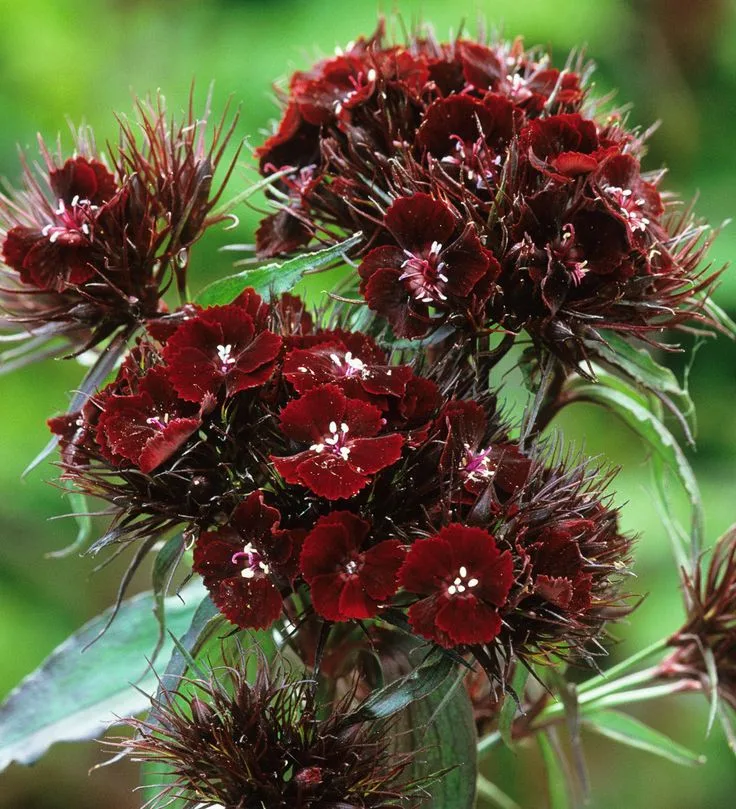
A bushy short-lived perennial, usually grown as a biennial to flower in spring and summer. Green leaves develop dark purple-maroon shades as they mature. The scented flowers are a deep-maroon, almost black colour and are held on long stems, some of which may exceed 50cm in height
Scientific classification
- Species
- sweet william Nigrescens Group (Dianthus barbatus (Nigrescens Group))
- Genus
- Dianthus
- Family
- Caryophyllaceae
- Order
- Caryophyllales
- Class
- Magnoliopsida
- Phylum
- Magnoliophyta
- Skin allergen, wear gloves and other protective equipment when handling]
- Toxicity
- Annual Biennial · Bedding
- Plant type
- 0.1-0.5 metres
- Height
- 0.1-0.5 metres
- Spread
- Evergreen
- Foliage
- Bushy
- Habit
- Spring · Summer · Autumn · Winter
- Season of interest
- Full sun
- Sunlight
- Information to be completed
- Ideal temperature









sweet william Nigrescens Group pictures
Distribution of sweet william Nigrescens Group
Distribution map
- Native
- Introduced
- Cultivated
Source:WCVP v16 · Royal Botanic Gardens, Kew · CC BY 3.0 · Boundaries:WGSRPD / TDWG
Toxicity
Skin allergen, wear gloves and other protective equipment when handling]
sweet william Nigrescens Group care guide
- Water moderately, allowing surface soil to dry slightly
- Watering
- Full sun
- Sunlight

Watering
Water moderately, allowing surface soil to dry slightly
Fertilizing
 Fertilizing
Light low nitrogen feed in spring and before flowering
Pruning
 Pruning
Deadhead regularly to prolong flowering
Propagation
 Propagation
Propagate by softwood cuttings of non-flowering shoots. Dianthus barbatus can be grown from seed, but seed collected from cultivars may result in plants with different characteristics
Growing
 Growing
Grow in a well-drained soil in a sunny position
Common pests and diseases
Diseases
May be susceptible to powdery mildews, a rust, a virus and fusarium wilt
Pests
May be susceptible to slugs and aphids
Explore the plant health library →




