
lesser Mount Olympus St John's wort
Also known as: Information to be completed
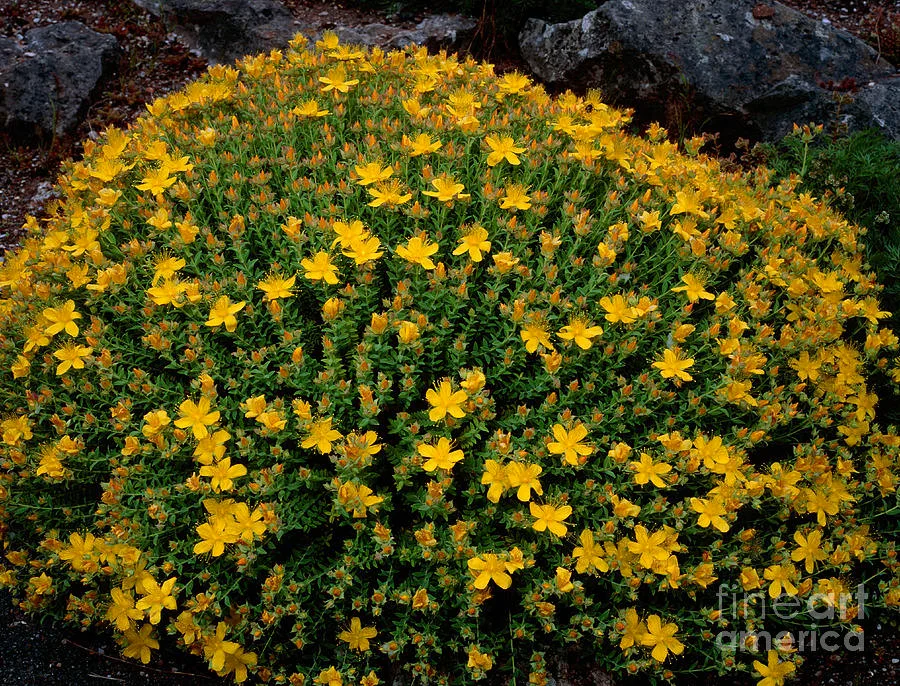
A dwarf, deciduous, prostrate or erect subshrub to 30cm tall with narrowly elliptic, glaucous-green leaves 3-4cm long. Bright yellow flowers are borne in small clusters at the ends of shoots in the summer
Scientific classification
- Species
- lesser Mount Olympus St John's wort (Hypericum olympicum f. minus)
- Genus
- Hypericum
- Family
- Hypericaceae
- Order
- Malpighiales
- Class
- Magnoliopsida
- Phylum
- Magnoliophyta
- Fruit are ornamental - not to be eaten. Wear gloves and other protective equipment when handling
- Toxicity
- Alpine Rockery · Shrubs
- Plant type
- 0.1-0.5 metres
- Height
- 0.1-0.5 metres
- Spread
- Deciduous
- Foliage
- Bushy
- Habit
- Spring · Summer · Autumn
- Season of interest
- Full sun · Partial shade
- Sunlight
- Information to be completed
- Ideal temperature









lesser Mount Olympus St John's wort pictures
Distribution of lesser Mount Olympus St John's wort
Distribution map
- Native
- Introduced
- Cultivated
Source:WCVP v16 · Royal Botanic Gardens, Kew · CC BY 3.0 · Boundaries:WGSRPD / TDWG
Toxicity
Fruit are ornamental - not to be eaten. Wear gloves and other protective equipment when handling
lesser Mount Olympus St John's wort care guide
- Sparse watering, allow full soil dryness between deep soakings
- Watering
- Full sun · Partial shade
- Sunlight

Watering
Sparse watering, allow full soil dryness between deep soakings
Fertilizing
 Fertilizing
Low-nitrogen diluted feed once monthly spring growth stage
Pruning
 Pruning
Little pruning is needed. Remove diseased, damaged, crowded or crossing shoots and unwanted growth. Timing depends on the plant: generally late winter or early spring; plants prone to bleeding and deciduous magnolias need different timing, and deciduous azaleas and lilacs are pruned after flowering.
Propagation
 Propagation
Propagate by softwood cutting or semi-ripe cuttings from late spring to early summer
Growing
 Growing
Grows best in a moderately fertile, moist but well-drained soil full sun but will tolerate partial shade
Common pests and diseases
Diseases
May be susceptible to a rust and honey fungus (rarely)
Pests
Generally pest-free
Explore the plant health library →




