
Baltic parsley
Also known as: Information to be completed
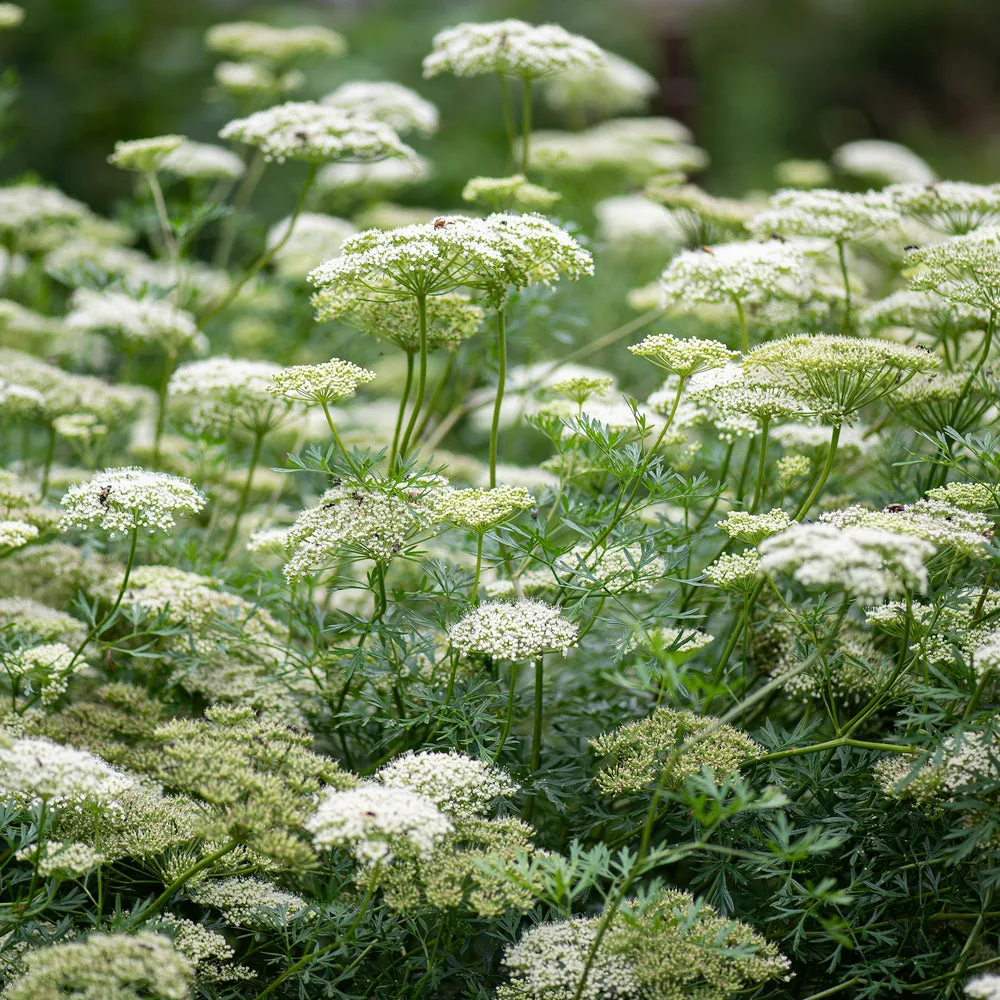
A fast-growing, semi-evergreen, clump-forming umbellifer, the stock thickened with the fibrous remains of previous stem growth. Growing 60-150cm tall, the sometimes purple flowering stems rise from abundant very finely-divided dark green leaves, and bear many flat umbels of greenish-white flowers in summer and autumn. Attractive to insects
Scientific classification
- Species
- Baltic parsley (Cenolophium denudatum)
- Genus
- Cenolophium
- Family
- Apiaceae
- Order
- Apiales
- Class
- Magnoliopsida
- Phylum
- Magnoliophyta
- Information to be completed
- Toxicity
- Herbaceous Perennial
- Plant type
- 1-1.5 metres
- Height
- 0.1-0.5 metres
- Spread
- Semi evergreen
- Foliage
- Bushy
- Habit
- Spring · Summer · Autumn
- Season of interest
- Full sun · Partial shade
- Sunlight
- Information to be completed
- Ideal temperature









Baltic parsley pictures
Distribution of Baltic parsley
Distribution map
- Native
- Introduced
- Cultivated
Source:WCVP v16 · Royal Botanic Gardens, Kew · CC BY 3.0 · Boundaries:WGSRPD / TDWG
Baltic parsley care guide
- Moderate regular watering, allowing brief slight drying between soakings
- Watering
- Full sun · Partial shade
- Sunlight

Watering
Moderate regular watering, allowing brief slight drying between soakings
Fertilizing
 Fertilizing
Balanced perennial feed every four weeks from spring through summer
Pruning
 Pruning
None required other than cutting back foliage at the end of the season
Propagation
 Propagation
Propagate by seed sown in containers in a cold frame in autumn or spring. Can also be propagated by root cuttings in mid-winter
Growing
 Growing
Grow in any moist, but well-drained soil in sun or partial shade
Common pests and diseases
Diseases
Usually trouble free
Pests
Usually trouble free
Explore the plant health library →




