
Columnea crassifolia
Also known as: Information to be completed
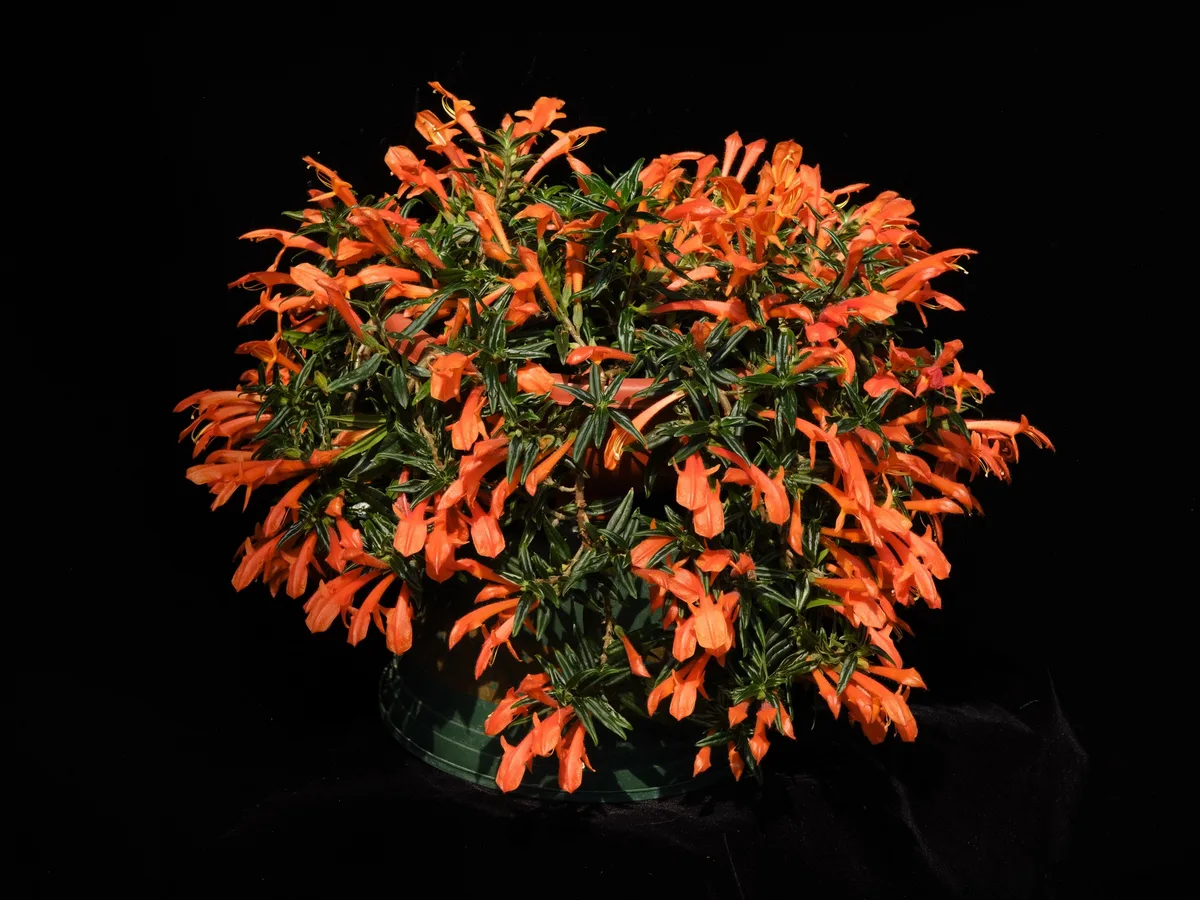
A bushy, upright, evergreen sub-shrub to 30cm, with shiny, lance-shaped leaves up to 10cm long, dark green above, yellow-green beneath. Produces hairy, tubular, vivid red flowers up to 10cm long in spring and summer
Scientific classification
- Species
- Columnea crassifolia (Columnea crassifolia)
- Genus
- Columnea
- Family
- Gesneriaceae
- Order
- Lamiales
- Class
- Magnoliopsida
- Phylum
- Tracheophyta
- Information to be completed
- Toxicity
- Conservatory Greenhouse · Shrubs
- Plant type
- 0.1-0.5 metres
- Height
- 0.1-0.5 metres
- Spread
- Evergreen
- Foliage
- Bushy
- Habit
- Spring · Summer · Autumn · Winter
- Season of interest
- Full sun · Partial shade
- Sunlight
- Information to be completed
- Ideal temperature









Columnea crassifolia pictures
Distribution of Columnea crassifolia
Distribution map
- Native
- Introduced
- Cultivated
Source:WCVP v16 · Royal Botanic Gardens, Kew · CC BY 3.0 · Boundaries:WGSRPD / TDWG
Columnea crassifolia care guide
- Evenly moist pot mix, mist stems frequently raise ambient humidity
- Watering
- Full sun · Partial shade
- Sunlight

Watering
Evenly moist pot mix, mist stems frequently raise ambient humidity
Fertilizing
 Fertilizing
Weak tropical flowering feed every two weeks active bloom period
Pruning
 Pruning
No pruning required
Propagation
 Propagation
Propagate by rooting tip cuttings with bottom heat in spring
Growing
 Growing
Grow under glass in a loam-free compost in bright, filtered light with protection from strong sun. Mist regularly with soft, tepid water to maintain high humidity. In the growing season water freely but carefully with soft water and apply quarter-strength, high- potash liquid fertiliser at each watering. Water sparingly in winter and avoid wetting the foliage
Common pests and diseases
Diseases
May be susceptible to root and stem rots if overwatered
Pests
May be susceptible to mealybugs, aphids and cyclamen mites
Explore the plant health library →




