
cherry laurel 'Castlewellan'
Also known as: Information to be completed
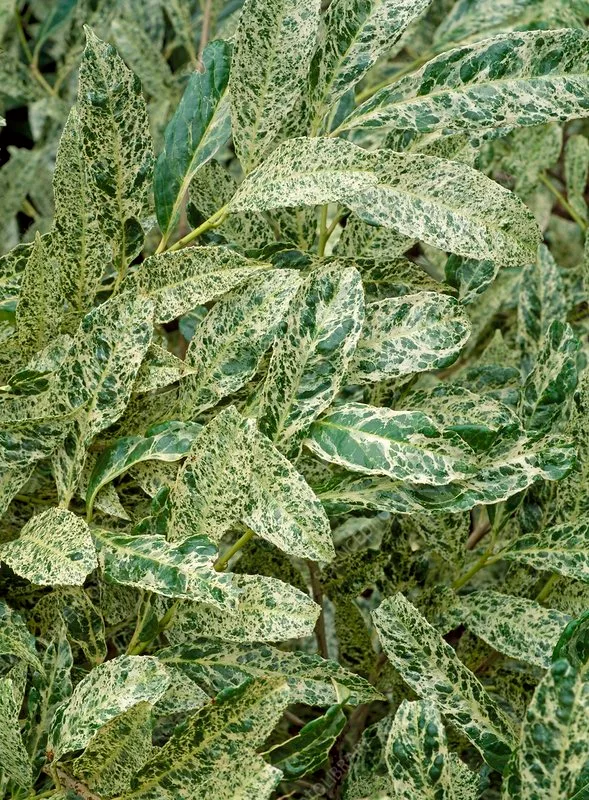
Castlewellan' is a slow-growing cultivar, but will eventually form a large dense, wide-spreading bush to 5m tall. Leaves are green and grey-green, marbled with white throughout
Scientific classification
- Species
- cherry laurel 'Castlewellan' (Prunus laurocerasus 'Castlewellan')
- Genus
- Prunus
- Family
- Rosaceae
- Order
- Rosales
- Class
- Magnoliopsida
- Phylum
- Magnoliophyta
- Leaves and fruit may be harmful if ingested. Wear gloves and wash hands after handling
- Toxicity
- Shrubs
- Plant type
- 4-8 metres
- Height
- 4-8 metres
- Spread
- Evergreen
- Foliage
- Bushy
- Habit
- Autumn · Spring · Summer · Winter
- Season of interest
- Full sun · Partial shade
- Sunlight
- Information to be completed
- Ideal temperature









cherry laurel 'Castlewellan' pictures
Distribution of cherry laurel 'Castlewellan'
Distribution map
- Native
- Introduced
- Cultivated
Source:WCVP v16 · Royal Botanic Gardens, Kew · CC BY 3.0 · Boundaries:WGSRPD / TDWG
Toxicity
Leaves and fruit may be harmful if ingested. Wear gloves and wash hands after handling
cherry laurel 'Castlewellan' care guide
- Deep watering during dry spells, allowing slight surface drying between soakings
- Watering
- Full sun · Partial shade
- Sunlight

Watering
Deep watering during dry spells, allowing slight surface drying between soakings
Fertilizing
 Fertilizing
Balanced shrub or tree feed once each early spring
Pruning
 Pruning
Usually little pruning is needed. Lightly shape if necessary, removing dead, damaged or diseased shoots. Prune after flowering.
Propagation
 Propagation
Propagate by semi-ripe cuttings from late summer to autumn or hardwood cuttings from late autumn to late winter
Growing
 Growing
Easy to grow in any moist but well-drained moderately fertile soil in sun or partial shade, but may become chlorotic on poorer, shallow chalky soils; ideal for hedging. Has the potential to become a nuisance if not managed well
Common pests and diseases
Diseases
May be affected by powdery mildews and other laurel leaf diseases
Pests
Leaves may be damaged by vine weevil and leaf-mining moths
Explore the plant health library →




