
Phillyrea angustifolia f. rosmarinifolia
Also known as: Information to be completed
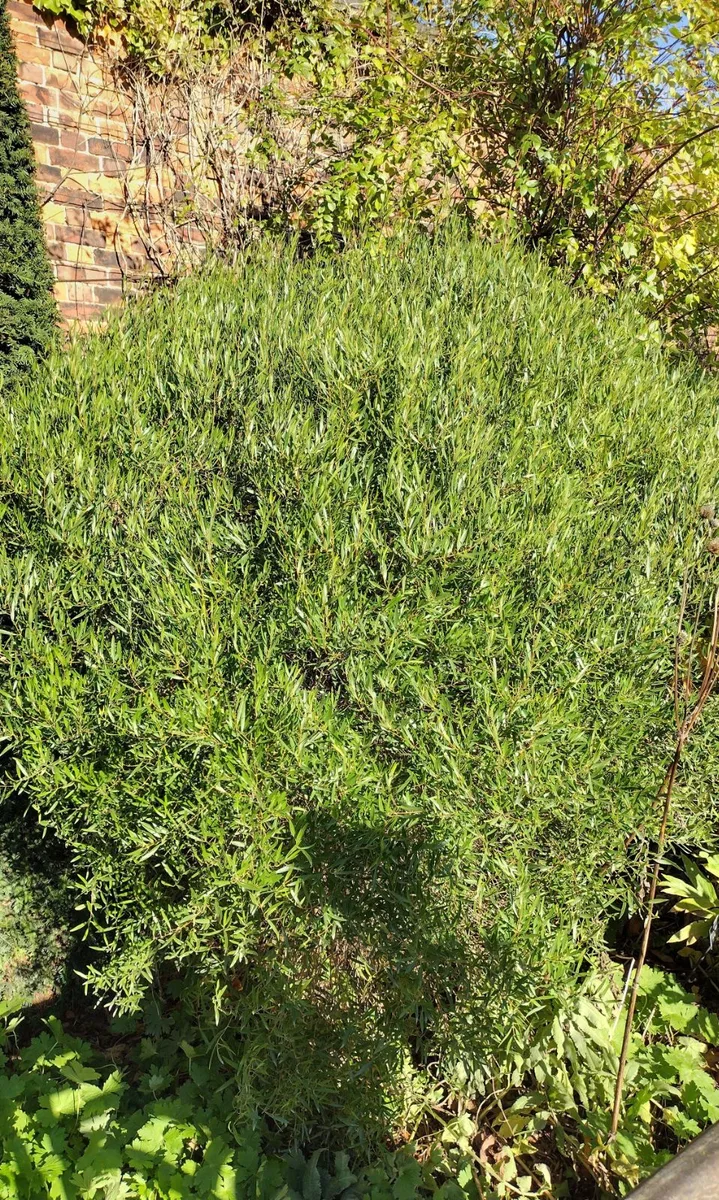
A dense and compact evergreen shrub to 1.5m tall, with narrowly linear, dark green leaves. In early summer it produces small, creamy-white flowers, which although insignificant are pleasantly fragrant. A good plant for hedging or topiary
Scientific classification
- Species
- Phillyrea angustifolia f. rosmarinifolia (Phillyrea angustifolia f. rosmarinifolia)
- Genus
- Phillyrea
- Family
- Oleaceae
- Order
- Lamiales
- Class
- Magnoliopsida
- Phylum
- Magnoliophyta
- Information to be completed
- Toxicity
- Shrubs
- Plant type
- 1-1.5 metres
- Height
- 1-1.5 metres
- Spread
- Evergreen
- Foliage
- Bushy
- Habit
- Spring · Summer · Autumn · Winter
- Season of interest
- Full sun · Partial shade
- Sunlight
- Information to be completed
- Ideal temperature









Phillyrea angustifolia f. rosmarinifolia pictures
Distribution of Phillyrea angustifolia f. rosmarinifolia
Distribution map
- Native
- Introduced
- Cultivated
Source:WCVP v16 · Royal Botanic Gardens, Kew · CC BY 3.0 · Boundaries:WGSRPD / TDWG
Phillyrea angustifolia f. rosmarinifolia care guide
- Moderate regular watering, allowing brief slight drying between soakings
- Watering
- Full sun · Partial shade
- Sunlight

Watering
Moderate regular watering, allowing brief slight drying between soakings
Fertilizing
 Fertilizing
Balanced perennial feed every four weeks from spring through summer
Pruning
 Pruning
Keep pruning to a minimum: remove dead, damaged or unwanted growth; if shaping is needed, trim lightly after flowering.
Propagation
 Propagation
Propagate by semi-ripe cuttings in summer or layering in autumn
Growing
 Growing
Grow in fertile, well-drained soil in full sun or partial shade, with shelter from cold, drying winds
Common pests and diseases
Diseases
May be susceptible to honey fungus in gardens where it is present but insufficient data to determine degree of susceptibility
Pests
May be susceptible to Phillyrea whitefly
Explore the plant health library →




