
Orostachys iwarenge
Also known as: Information to be completed
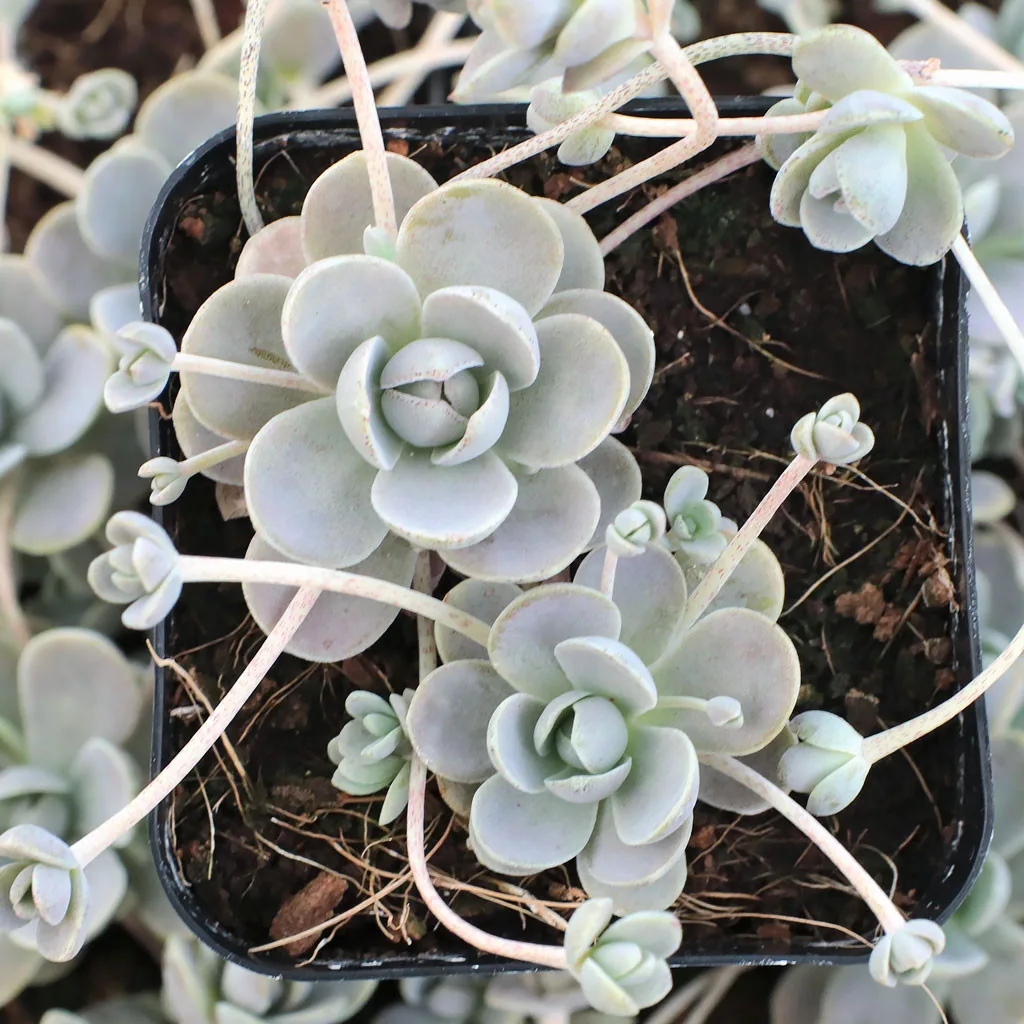
A spreading succulent, forming grey-green rosettes to 5cm across of rounded leaves sometimes lightly tinted with pink, and sending out fine stolons that develop into new plants at the tips. Conical spikes of creamy yellow or white flowers are produced from the centre of mature rosettes in late summer; rosettes die off after flowering to be replaced by the growing offsets
Scientific classification
- Species
- Orostachys iwarenge (Orostachys iwarenge)
- Genus
- Orostachys
- Family
- Crassulaceae
- Information to be completed
- Toxicity
- Cactus Succulent
- Plant type
- 0.1-0.5 metres
- Height
- 0.1-0.5 metres
- Spread
- Evergreen
- Foliage
- Matforming
- Habit
- Spring · Summer · Autumn · Winter
- Season of interest
- Partial shade
- Sunlight
- Information to be completed
- Ideal temperature









Orostachys iwarenge pictures
Distribution of Orostachys iwarenge
Distribution map
Far East
Information to be completed
Culture
Information to be completed
Toxicity
Information to be completed
Quick identification of Orostachys iwarenge
Information to be completed
Orostachys iwarenge care guide
- Very sparse watering, total substrate dryness required between soaks
- Watering
- Partial shade
- Sunlight
- Information to be completed
- Ideal temperature

Watering
Very sparse watering, total substrate dryness required between soaks
Fertilizing
 Fertilizing
Ultra weak succulent low-nitrogen feed every eight weeks summer only
Pruning
 Pruning
Carefully remove spent rosettes after flowering
Propagation
 Propagation
Propagate by division, separating offsets in spring
Growing
 Growing
Grow in well-drained soil in filtered light or part shade, with protection from hot sun. Plants dislike excess humidity and winter wet, and may benefit from overwintering in a cool greenhouse or cold frame to keep moisture levels down. May lose some foliage or die back to the ground in cold winters. See hardy cacti and succulent cultivation
People also ask
Information to be completed
Common pests and diseases
Diseases
Generally disease-free
Pests
May be susceptible to mealybugs
Explore the plant health library →




