
Parma violet 'D'Udine'
Also known as: Information to be completed
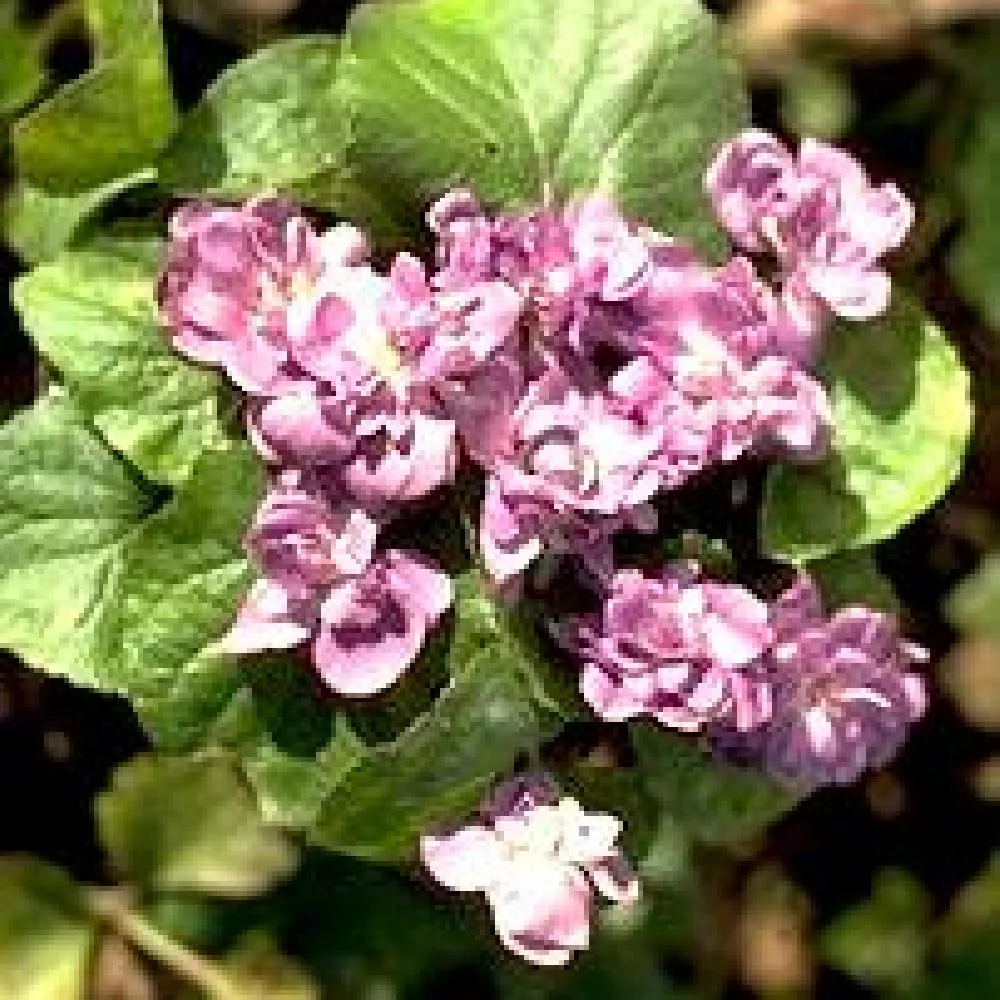
A compact, evergreen to semi-evergreen perennial forming a mound of toothed, shiny leaves and bearing scented, double, mauve-blue flowers with white throats and some red veining in winter and spring
Scientific classification
- Species
- Parma violet 'D'Udine' (Viola 'D'Udine')
- Genus
- Viola
- Family
- Violaceae
- Information to be completed
- Toxicity
- Herbaceous Perennial
- Plant type
- 0.1-0.5 metres
- Height
- 0.1-0.5 metres
- Spread
- Evergreen
- Foliage
- Matforming
- Habit
- Spring · Summer · Autumn · Winter
- Season of interest
- Full sun · Partial shade
- Sunlight
- Information to be completed
- Ideal temperature









Parma violet 'D'Udine' pictures
Distribution of Parma violet 'D'Udine'
Distribution map
Information to be completed
Information to be completed
Culture
Information to be completed
Toxicity
Information to be completed
Quick identification of Parma violet 'D'Udine'
Information to be completed
Parma violet 'D'Udine' care guide
- Frequent light watering, substrate holds slight dampness always
- Watering
- Full sun · Partial shade
- Sunlight
- Information to be completed
- Ideal temperature

Watering
Frequent light watering, substrate holds slight dampness always
Fertilizing
 Fertilizing
Weak pansy blooming feed weekly warm growing season
Pruning
 Pruning
Deadhead to prolong flowering. After flowering cut back vigorous plants to keep compact
Propagation
 Propagation
Propagate by stem cuttings
Growing
 Growing
Grow in fertile, humus-rich, moist but well-drained soil in full sun or partial shade. In cold areas overwinter indoors or under glass
People also ask
Information to be completed
Common pests and diseases
Diseases
May be susceptible to powdery mildews, pansy leaf spot, a virus and a rust
Pests
May be susceptible to slugs, snails, aphids, glasshouse red spider mite and violet gall midge
Explore the plant health library →




