
Turkey oak 'Argenteovariegata'
Also known as: Information to be completed
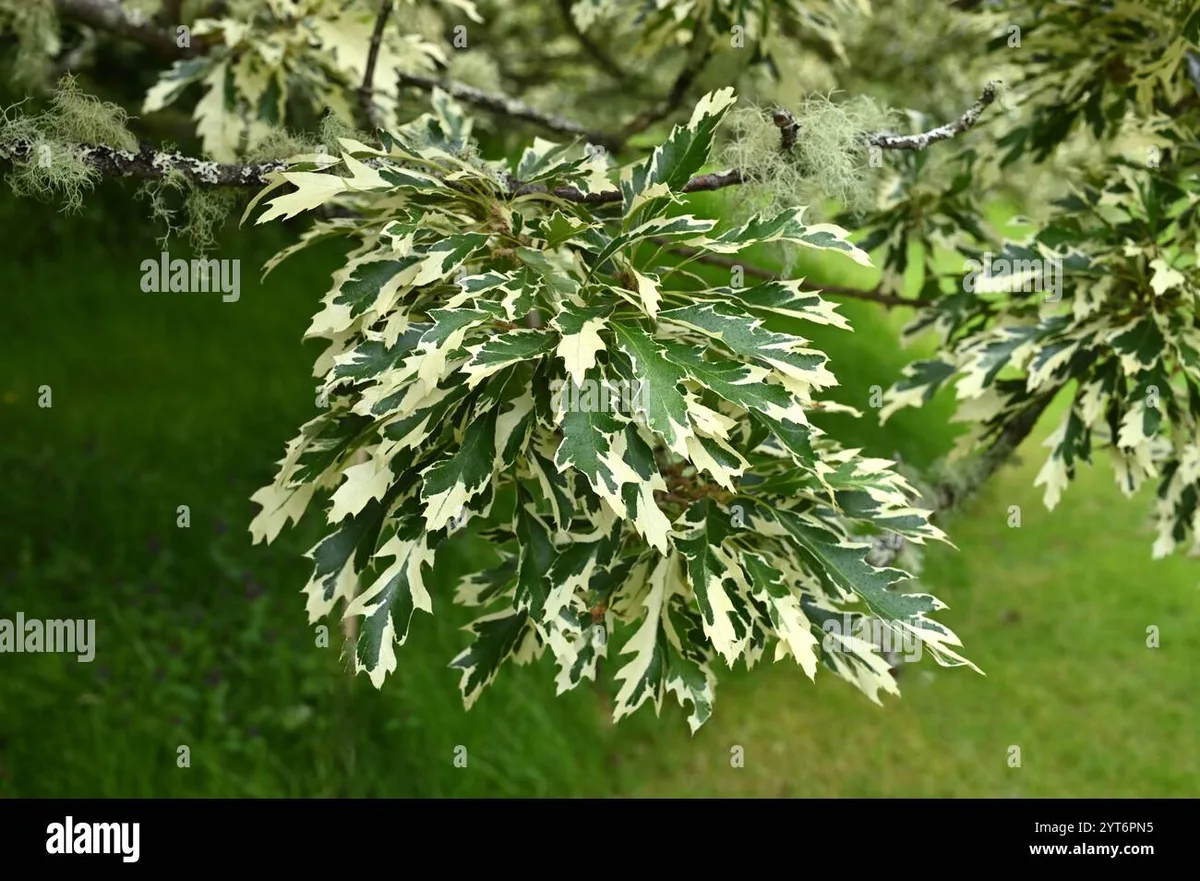
A small deciduous tree of 10m after 20 years The narrow, dark green leaves typically have deep, pointed lobes and have striking creamy white margins. The acorns are up to 4cm long, and the cups covered in shaggy scales
Scientific classification
- Species
- Turkey oak 'Argenteovariegata' (Quercus cerris 'Argenteovariegata')
- Genus
- Quercus
- Family
- Fagaceae
- Order
- Fagales
- Class
- Magnoliopsida
- Phylum
- Magnoliophyta
- Information to be completed
- Toxicity
- Trees
- Plant type
- 4-8 metres
- Height
- 4-8 metres
- Spread
- Deciduous
- Foliage
- Information to be completed
- Habit
- Spring · Summer · Autumn
- Season of interest
- Full sun · Partial shade
- Sunlight
- Information to be completed
- Ideal temperature









Turkey oak 'Argenteovariegata' pictures
Turkey oak 'Argenteovariegata' care guide
- Infrequent deep watering, tolerate mild drought once fully established
- Watering
- Full sun · Partial shade
- Sunlight

Watering
Infrequent deep watering, tolerate mild drought once fully established
Fertilizing
 Fertilizing
Slow-release tree nutrient applied one time each early spring growing year
Pruning
 Pruning
Little pruning is needed. Remove diseased, damaged, crowded or crossing shoots and unwanted growth. Timing depends on the plant: generally late winter or early spring; plants prone to bleeding and deciduous magnolias need different timing, and deciduous azaleas and lilacs are pruned after flowering.
Propagation
 Propagation
Propagate by seed, sown as soon as ripe, in a cold frame or by grafting
Growing
 Growing
Grows well in most deep, fertile soils
Common pests and diseases
Diseases
May be susceptible to powdery mildews and honey fungus
Pests
May be susceptible to oak processionary moth, aphids, caterpillars, leaf-mining moths and oak gall wasps
Explore the plant health library →




