
water canna 'Ra'
Also known as: Information to be completed
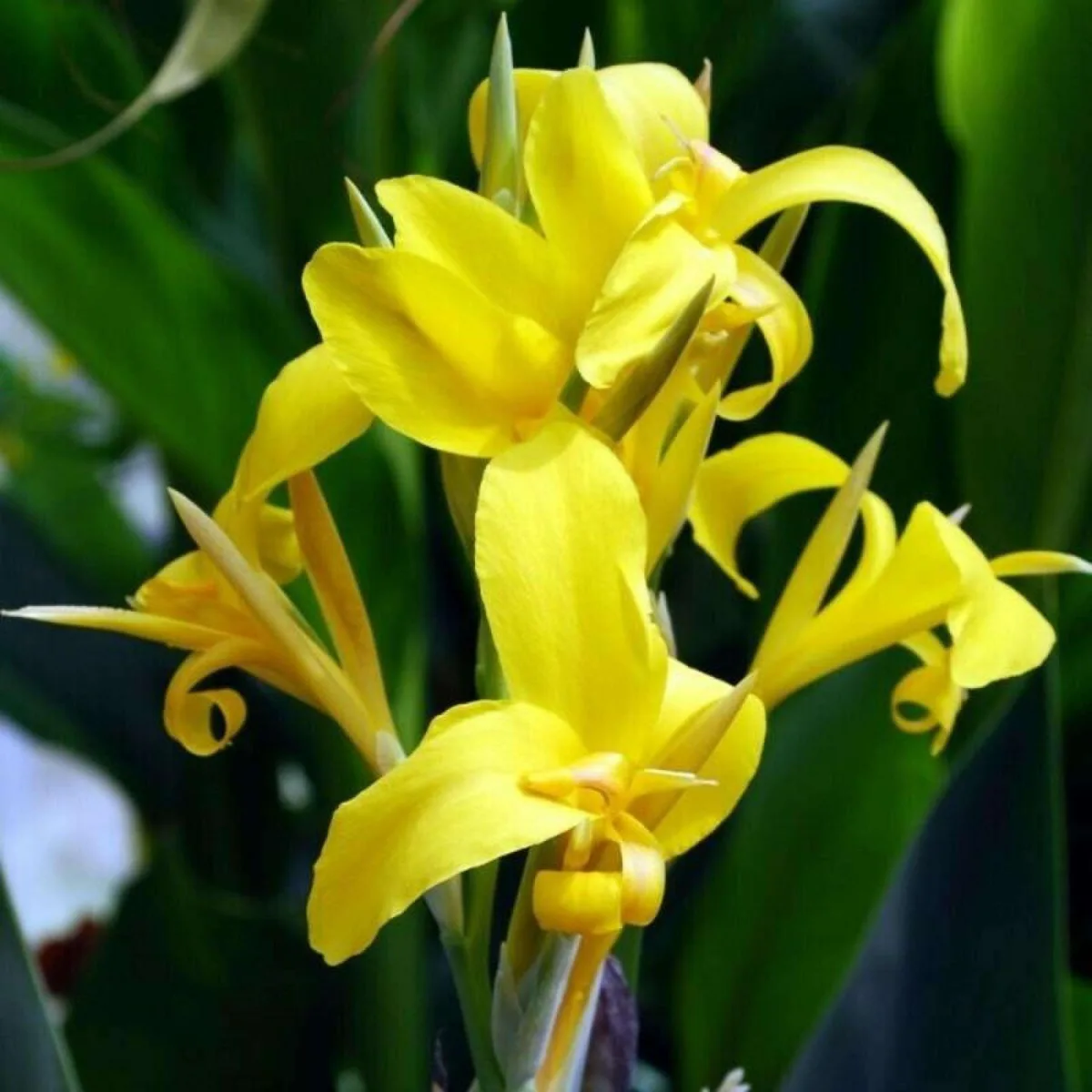
Very large perennial suited to aquatic and bog gardens, growing into a spreading clump 1.8m or more tall, with narrow grey-green leaves, and bearing large lemon-yellow flowers above tall stems, from midsummer to autumn
Scientific classification
- Species
- water canna 'Ra' (Canna 'Ra')
- Genus
- Canna
- Family
- Cannaceae
- Information to be completed
- Toxicity
- Conservatory Greenhouse · Bogs · Herbaceous Perennial · Aquatic
- Plant type
- 1.5-2.5 metres
- Height
- 0.5-1 metres
- Spread
- Deciduous
- Foliage
- Clump forming
- Habit
- Spring · Summer · Autumn
- Season of interest
- Full sun
- Sunlight
- Information to be completed
- Ideal temperature









water canna 'Ra' pictures
Distribution of water canna 'Ra'
Distribution map
Information to be completed
Information to be completed
Culture
Information to be completed
Toxicity
Information to be completed
Quick identification of water canna 'Ra'
Information to be completed
water canna 'Ra' care guide
- Keep moisture even through flowering and fruiting, avoiding hard dry swings
- Watering
- Full sun
- Sunlight
- Information to be completed
- Ideal temperature

Watering
Keep moisture even through flowering and fruiting, avoiding hard dry swings
Fertilizing
 Fertilizing
Tomato or pepper feed every one to two weeks in fruiting season
Pruning
 Pruning
Deadhead regularly to promote flowering, allow to die back naturally in autumn
Propagation
 Propagation
Propagate by division of rhizomes in spring
Growing
 Growing
In summer, water cannas (often bred from Canna glauca) can be placed in containers in ponds with no more than 15cm (6in) of water over the roots. They are also suitable for well-watered borders or conservatories where potted plants can be stood in deep saucers of water. Before autumn frosts, bring plants from outdoors into a frost-free greenhouse or conservatory. Keep the pots moist but not saturated. In April, increase temperatures and plant the sprouted plants out in late May when the risk of frost has passed
People also ask
Information to be completed
Common pests and diseases
Diseases
May be susceptible to canna viruses
Pests
May be susceptible to glasshouse red spider mite, aphids, slugs and caterpillars
Explore the plant health library →




