
climbing monk's hood
Also known as: Information to be completed
A scrambling, climbing perennial about 2-5m tall, with vine-like, divided, 3-lobed mid-green leaves. Hooded lilac flowers are borne in hanging clusters in late summer and early autumn
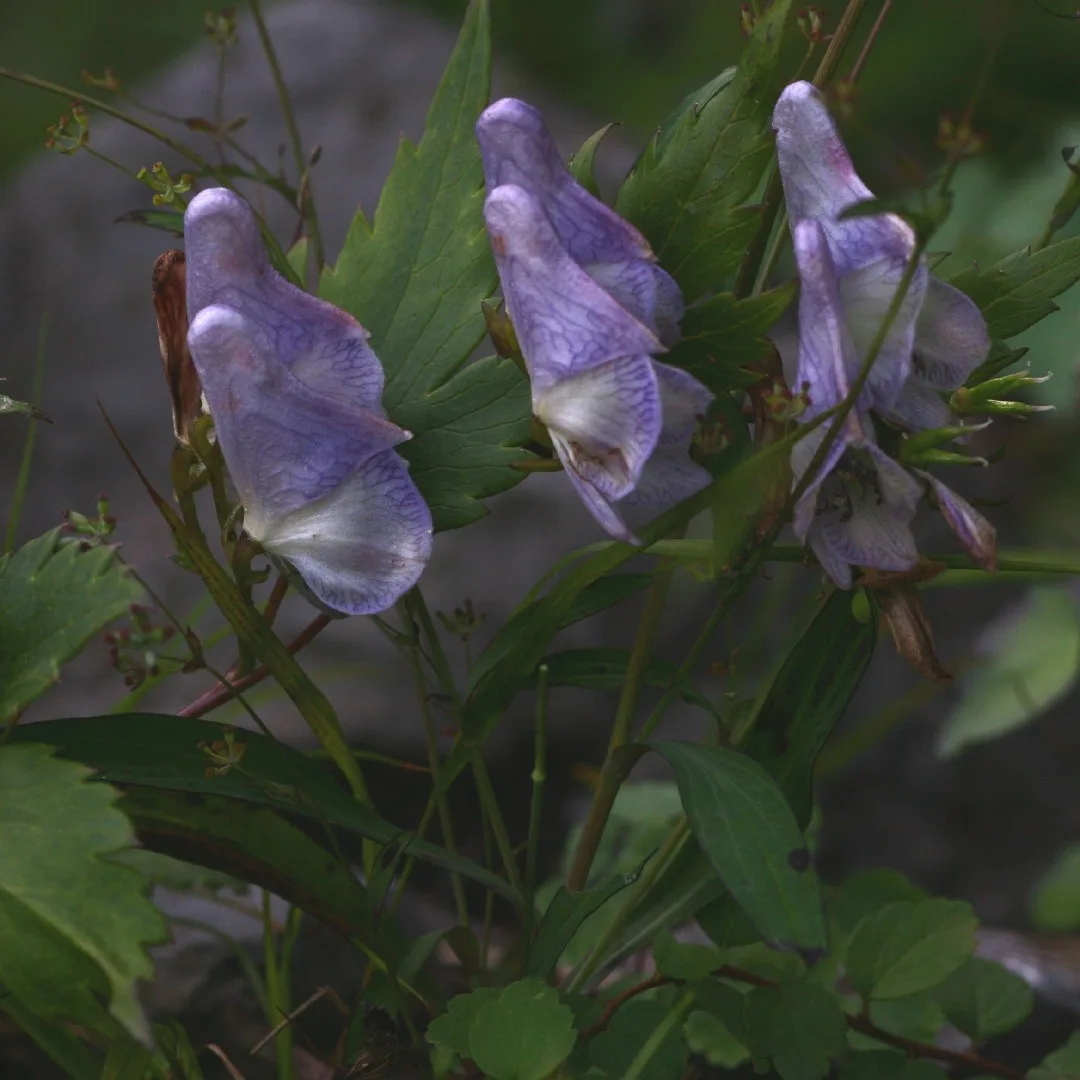
Scientific classification
- Species
- climbing monk's hood (Aconitum hemsleyanum)
- Genus
- Aconitum
- Family
- Ranunculaceae
- Order
- Ranunculales
- Class
- Magnoliopsida
- Phylum
- Magnoliophyta
- All parts are highly toxic if ingested, all parts may be harmful through skin contact. Wear gloves and other protective equipment when handling]
- Toxicity
- Climber Wall Shrub
- Plant type
- 2.5-4 metres
- Height
- 1-1.5 metres
- Spread
- Deciduous
- Foliage
- Climbing
- Habit
- Spring · Summer · Autumn
- Season of interest
- Full sun · Partial shade
- Sunlight
- Information to be completed
- Ideal temperature









climbing monk's hood pictures
Distribution of climbing monk's hood
Distribution map
- Native
- Introduced
- Cultivated
Source:WCVP v16 · Royal Botanic Gardens, Kew · CC BY 3.0 · Boundaries:WGSRPD / TDWG
Toxicity
All parts are highly toxic if ingested, all parts may be harmful through skin contact. Wear gloves and other protective equipment when handling]
climbing monk's hood care guide
- Moderate regular watering, allowing brief slight drying between soakings
- Watering
- Full sun · Partial shade
- Sunlight

Watering
Moderate regular watering, allowing brief slight drying between soakings
Fertilizing
 Fertilizing
Balanced perennial feed every four weeks from spring through summer
Pruning
 Pruning
Cut back in winter; use protective gloves
Propagation
 Propagation
Propagate by seed. Use protective gloves when handling any part of the plant
Growing
 Growing
Ideally grown where it may scramble through a shrub or hedge in moisture-retentive fertile soil in part shade. Sun and most soils are tolerated
Common pests and diseases
Diseases
May be susceptible to fungal stem rot, powdery mildews, and Verticillium wilt
Pests
Generally pest-free but may be susceptible to aphids
Explore the plant health library →




