
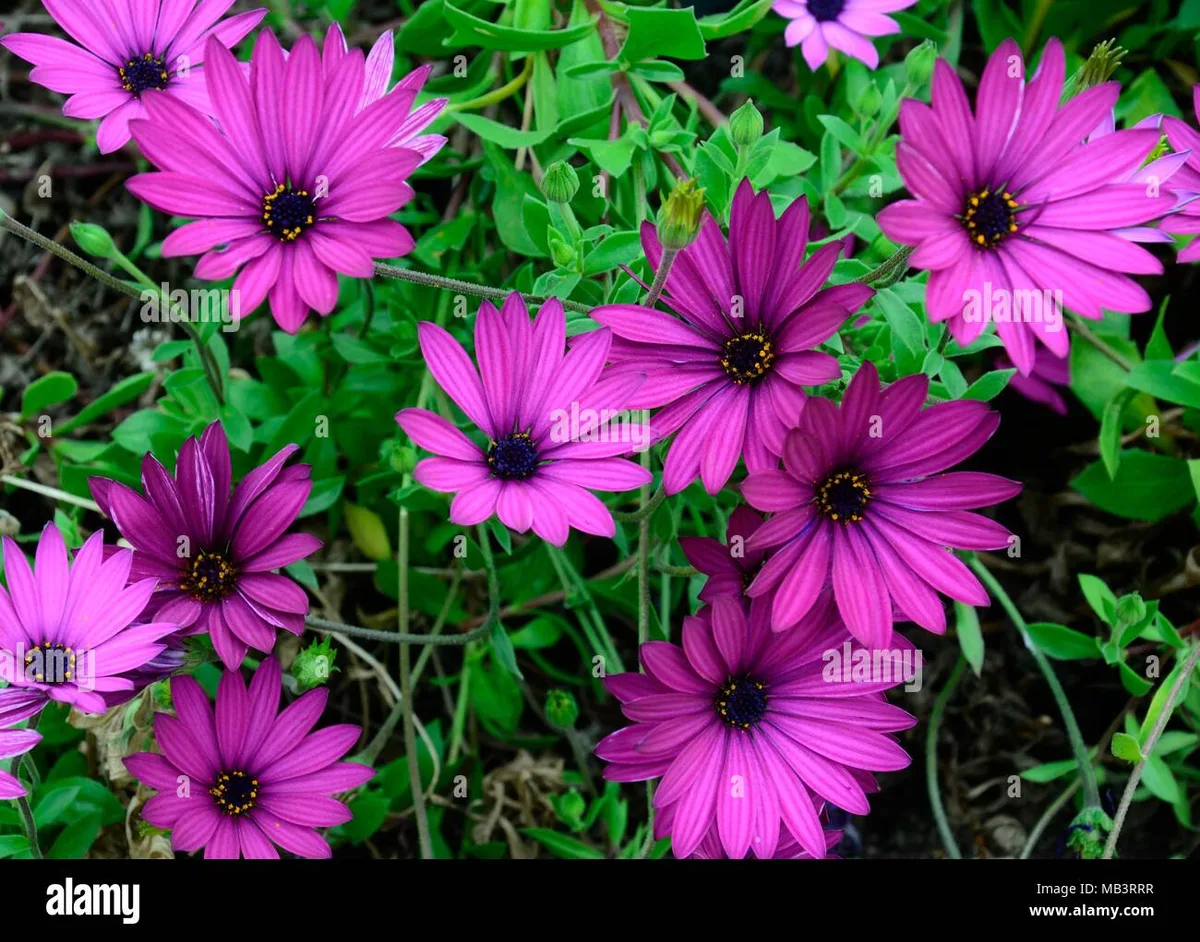
deep purple African daisy
Also known as: Information to be completed
O. ecklonis is an erect or spreading evergreen shrub or subshrub, up to 1m high, with aromatic grey-green leaves, up to 10cm long, which may be linear-oblong, elliptic or lance-shaped, and entire, partly or wholly toothed, and flowerheads, 5-8cm across, with dark blue disc florets and ray florets which are white above and indigo below, throughout the summer
Scientific classification
- Species
- deep purple African daisy (Osteospermum ecklonis)
- Genus
- Osteospermum
- Family
- Asteraceae
- Information to be completed
- Toxicity
- Shrubs
- Plant type
- 0.5-1 metres
- Height
- 0.5-1 metres
- Spread
- Evergreen
- Foliage
- Information to be completed
- Habit
- Spring · Summer · Autumn · Winter
- Season of interest
- Full sun
- Sunlight
- Information to be completed
- Ideal temperature









deep purple African daisy pictures
Distribution of deep purple African daisy
Distribution map
Eastern Cape
Information to be completed
Culture
Information to be completed
Toxicity
Information to be completed
Quick identification of deep purple African daisy
Information to be completed
deep purple African daisy care guide
- Water moderately, allowing slight drying between waterings
- Watering
- Full sun
- Sunlight
- Information to be completed
- Ideal temperature

Watering
Water moderately, allowing slight drying between waterings
Fertilizing
 Fertilizing
Light flowering feed during spring and summer
Pruning
 Pruning
No pruning required, but deadheading will prolong flowering
Propagation
 Propagation
Propagate by seed, sown at 18°C in spring; by softwood cuttings in late spring; or by semi-ripe cuttings in late summer
Growing
 Growing
Grow in light, moderately fertile, very well-drained soil in a warm site in full sun with shelter from cold winds; in frost-prone climates, propagate reserve plants every year, and overwinter young plants in frost-free conditions
People also ask
Information to be completed
Common pests and diseases
Diseases
Generally pest-free but may be susceptible to downy mildews and verticillium wilt
Pests
Generally pest-free but may be susceptible to aphids
Explore the plant health library →




