
Tamarix ramosissima 'Pink Cascade'
Also known as: Information to be completed
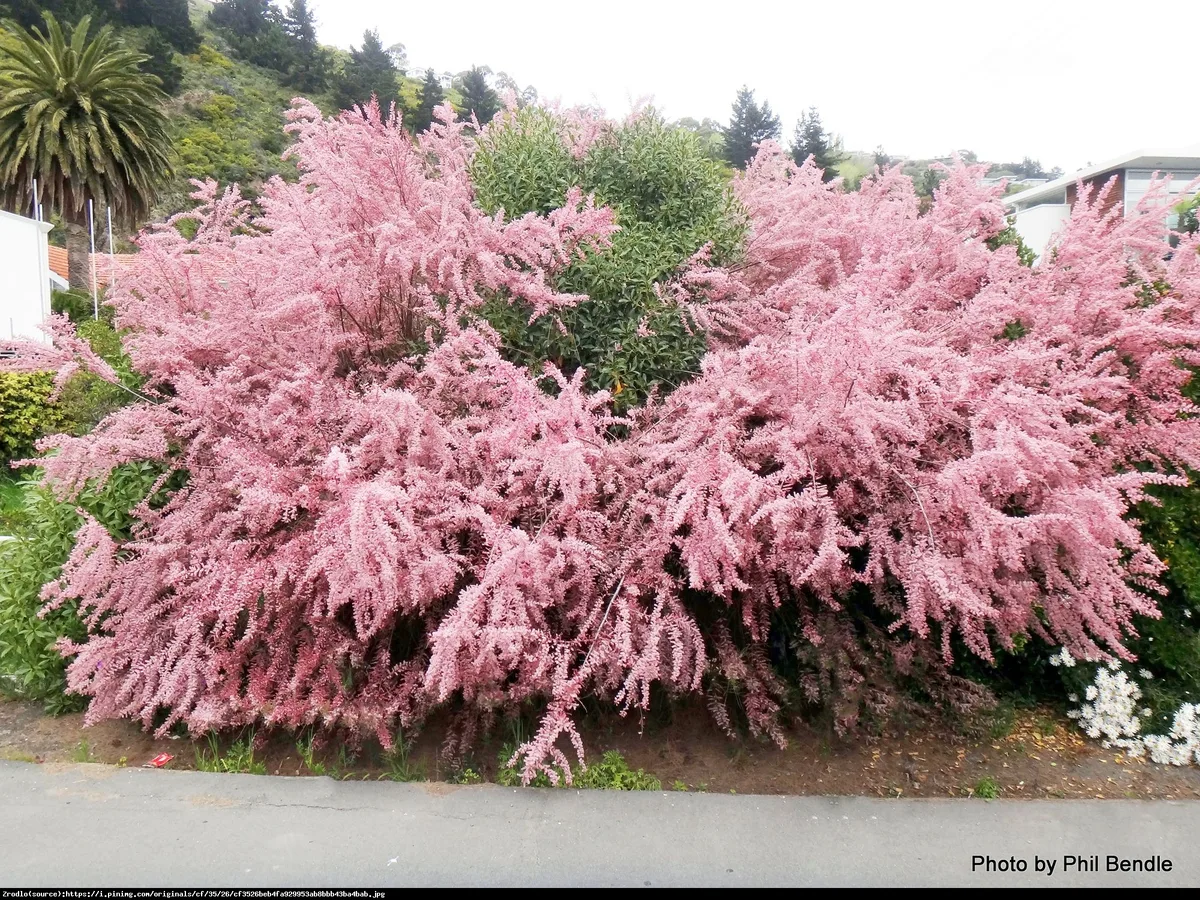
An arching, medium-sized deciduous shrub or small tree to 5m, with reddish branches and slender shoots clothed with tiny scale-like green leaves. Small pink flowers in long feathery racemes are borne in late summer and autumn on the new shoots
Scientific classification
- Species
- Tamarix ramosissima 'Pink Cascade' (Tamarix ramosissima 'Pink Cascade')
- Genus
- Tamarix
- Family
- Tamaricaceae
- Order
- Caryophyllales
- Class
- Magnoliopsida
- Phylum
- Magnoliophyta
- Information to be completed
- Toxicity
- Shrubs
- Plant type
- 4-8 metres
- Height
- 4-8 metres
- Spread
- Deciduous
- Foliage
- Bushy
- Habit
- Spring · Summer · Autumn
- Season of interest
- Full sun
- Sunlight
- Information to be completed
- Ideal temperature









Tamarix ramosissima 'Pink Cascade' pictures
Distribution of Tamarix ramosissima 'Pink Cascade'
Distribution map
- Native
- Introduced
- Cultivated
Source:WCVP v16 · Royal Botanic Gardens, Kew · CC BY 3.0 · Boundaries:WGSRPD / TDWG
Tamarix ramosissima 'Pink Cascade' care guide
- Deep infrequent watering, highly tolerant of saline dry conditions
- Watering
- Full sun
- Sunlight

Watering
Deep infrequent watering, highly tolerant of saline dry conditions
Fertilizing
 Fertilizing
Minimal balanced shrub feed once yearly at early spring budding
Pruning
 Pruning
Shorten last year's flowering stems to one or two buds from the older woody framework. Remove thin, weak and dead shoots. Prune in early to mid-spring as growth resumes; avoid winter pruning that exposes new shoots to frost.
Propagation
 Propagation
Propagate by semi-hardwood cuttings in summer or hardwood cuttings in winter. Propagate by seed sown, when ripe, in containers in a cold-frame
Growing
 Growing
Grows well in most soils but dislikes shallow chalky soil. Requires full sun and a well-drained sandy soil in coastal plantings but it requires shelter from cold drying winds when planted inland
Common pests and diseases
Diseases
May be susceptible to honey fungus (rarely)
Pests
Generally pest-free
Explore the plant health library →




