
hart's tongue fern 'Angustatum'
Also known as: Information to be completed
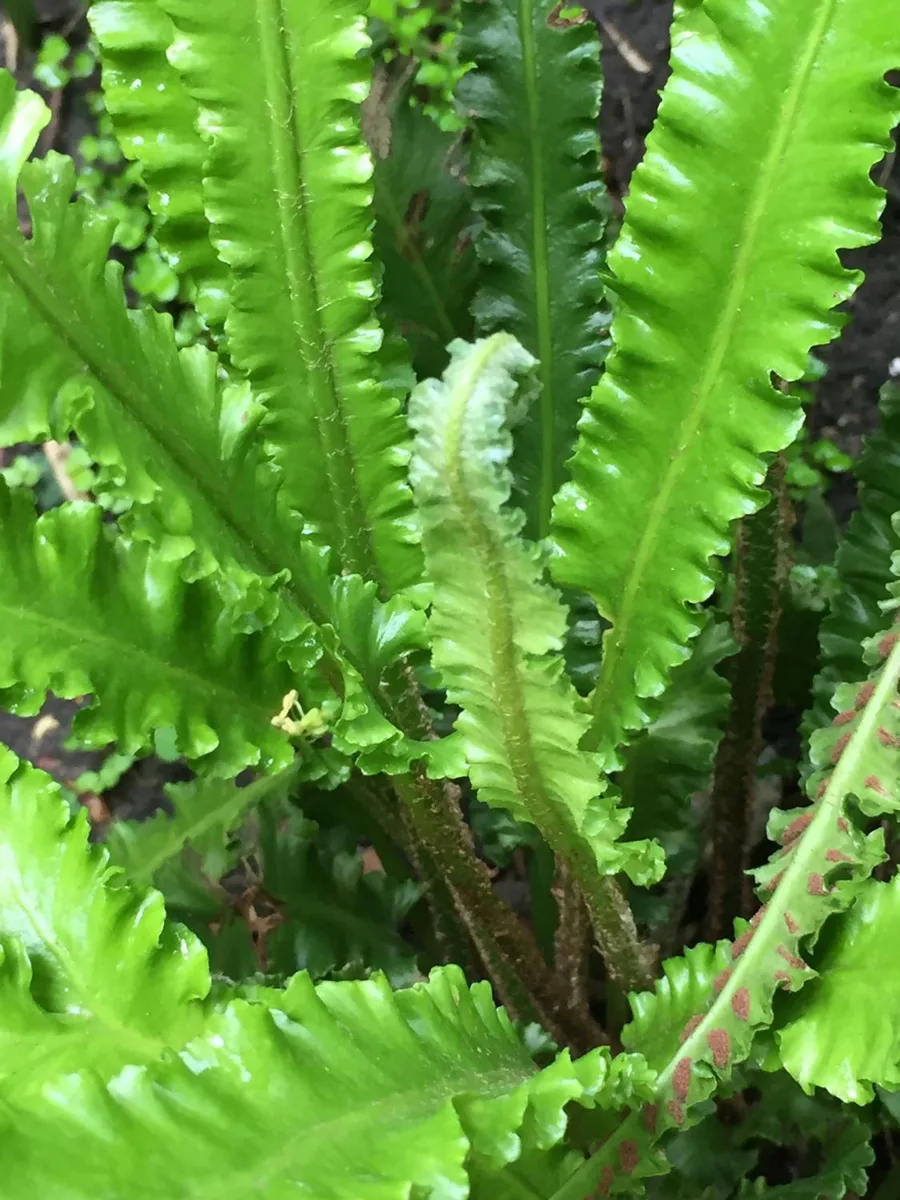
A compact, evergreen fern growing to 45cm tall. Rosette-forming, erect to arching leaves are narrow, glossy, and bright green with ruffled edges
Scientific classification
- Species
- hart's tongue fern 'Angustatum' (Asplenium scolopendrium 'Angustatum')
- Genus
- Asplenium
- Family
- Aspleniaceae
- Information to be completed
- Toxicity
- Ferns
- Plant type
- 0.1-0.5 metres
- Height
- 0.1-0.5 metres
- Spread
- Evergreen
- Foliage
- Bushy
- Habit
- Spring · Summer · Autumn · Winter
- Season of interest
- Full shade · Partial shade
- Sunlight
- Information to be completed
- Ideal temperature









hart's tongue fern 'Angustatum' pictures
Distribution of hart's tongue fern 'Angustatum'
Distribution map
Information to be completed
Information to be completed
Culture
Information to be completed
Toxicity
Information to be completed
Quick identification of hart's tongue fern 'Angustatum'
Information to be completed
hart's tongue fern 'Angustatum' care guide
- Keep soil consistently moist with higher humidity and no hot drying winds
- Watering
- Full shade · Partial shade
- Sunlight
- Information to be completed
- Ideal temperature

Watering
Keep soil consistently moist with higher humidity and no hot drying winds
Fertilizing
 Fertilizing
Very dilute fern feed monthly during warm active frond growth
Pruning
 Pruning
Dead or damaged fronds may be removed as necessary
Propagation
 Propagation
Propagate by division in spring. Peeled leaf bases can be taken off from where the stem joins with the root. Old leaf bases that are green at the base are incubated in a plastic bag of loam based media. Green swellings can be found and potted to raise new plants
Growing
 Growing
Grows well in humus-rich, moist but well-drained soil. Bright mid-day sun can cause damage. Tolerant of dry shade but water regularly during the first season and mulch well
People also ask
Information to be completed
Common pests and diseases
Diseases
May be infected by a rust in mild, damp winters
Pests
Generally pest-free outdoors
Explore the plant health library →




