
Dianthus 'Alan Titchmarsh'
Also known as: Information to be completed
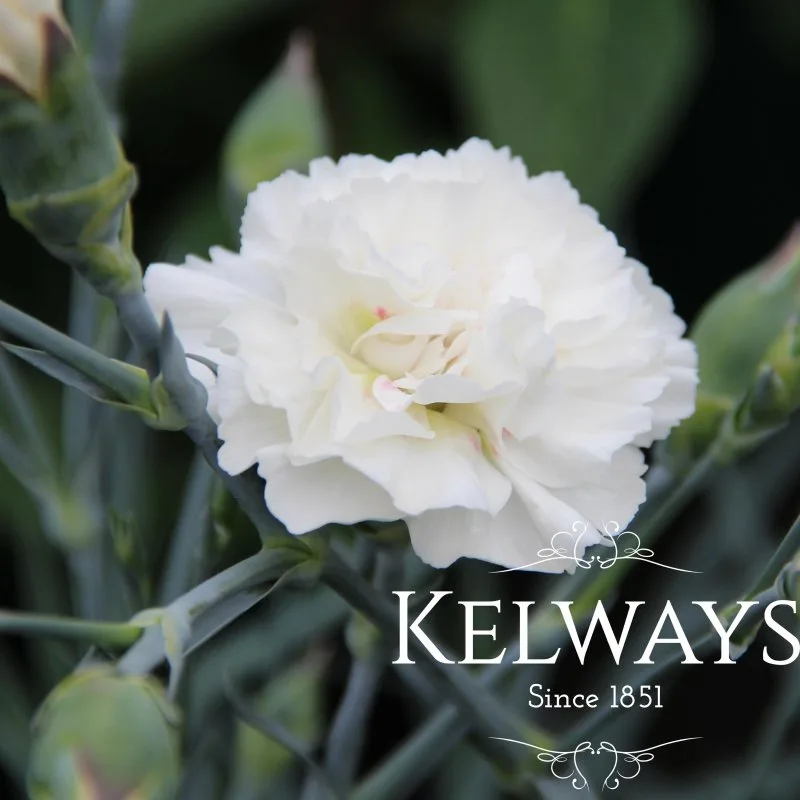
An evergreen short-lived perennial which forms mounds of grey-green narrow leaves reaching 20cm. In summer it has long-stemmed semi-double white flowers with a pink trace towards the centre and a green eye. They are very sweetly scented
Scientific classification
- Species
- Dianthus 'Alan Titchmarsh' (Dianthus 'Alan Titchmarsh')
- Genus
- Dianthus
- Family
- Caryophyllaceae
- Order
- Caryophyllales
- Class
- Magnoliopsida
- Phylum
- Magnoliophyta
- Skin allergen, wear gloves and other protective equipment when handling]
- Toxicity
- Herbaceous Perennial
- Plant type
- 0.1-0.5 metres
- Height
- 0.1-0.5 metres
- Spread
- Evergreen
- Foliage
- Tufted
- Habit
- Spring · Summer · Autumn · Winter
- Season of interest
- Full sun
- Sunlight
- Information to be completed
- Ideal temperature









Dianthus 'Alan Titchmarsh' pictures
Toxicity
Skin allergen, wear gloves and other protective equipment when handling]
Dianthus 'Alan Titchmarsh' care guide
- Light regular watering, partial soil dryness between irrigation
- Watering
- Full sun
- Sunlight

Watering
Light regular watering, partial soil dryness between irrigation
Fertilizing
 Fertilizing
Low-nitrogen dianthus feed monthly spring blooming season
Pruning
 Pruning
Deadhead regularly to prolong flowering
Propagation
 Propagation
Propagate by softwood cuttings of non-flowering shoots in summer
Growing
 Growing
Grow in any well-drained soil, ideally slightly alkaline, in good light
Common pests and diseases
Diseases
May be susceptible to powdery mildews, a rust, a virus and fusarium wilt
Pests
May be susceptible to slugs and aphids
Explore the plant health library →




