
purple moor-grass
Also known as: Information to be completed
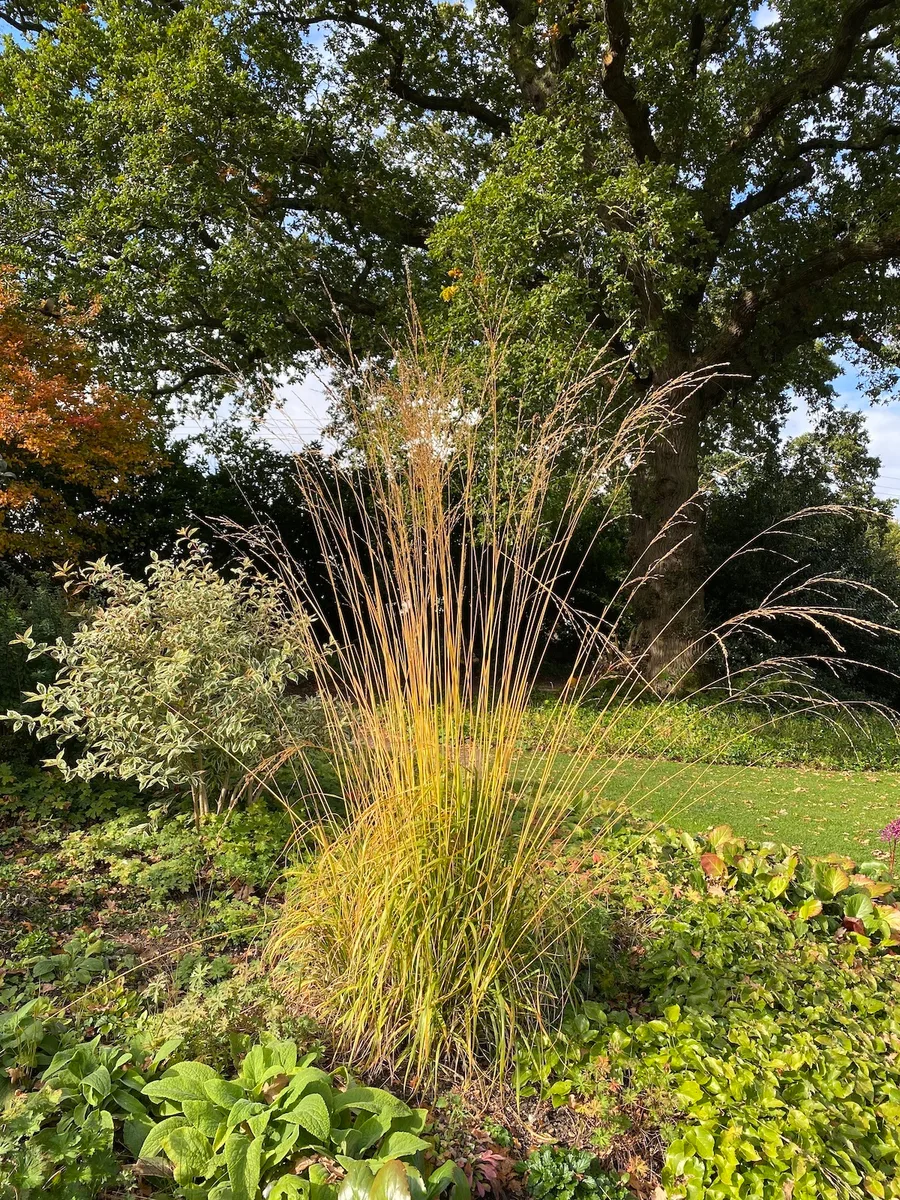
M. caerulea subsp. arundinacea is a tussocky, deciduous grass with arching, linear leaves that turn yellow in autumn, and fine sprays of small, purplish flowers in summer
Scientific classification
- Species
- purple moor-grass (Molinia caerulea subsp. arundinacea)
- Genus
- Molinia
- Family
- Poaceae
- Information to be completed
- Toxicity
- Grass Like
- Plant type
- 1-1.5 metres
- Height
- 0.5-1 metres
- Spread
- Deciduous
- Foliage
- Tufted
- Habit
- Autumn · Spring · Summer
- Season of interest
- Full sun · Partial shade
- Sunlight
- Information to be completed
- Ideal temperature









purple moor-grass pictures
Distribution of purple moor-grass
Distribution map
Western Europe
Information to be completed
Culture
Information to be completed
Toxicity
Information to be completed
Quick identification of purple moor-grass
Information to be completed
purple moor-grass care guide
- Water regularly, keeping the soil moist; reduce watering once established.
- Watering
- Full sun · Partial shade
- Sunlight
- Information to be completed
- Ideal temperature

Watering
Water regularly, keeping the soil moist; reduce watering once established.
Fertilizing
 Fertilizing
Apply a balanced fertilizer in spring and again in early summer.
Pruning
 Pruning
Remove dead foliage and old flowered stems in spring
Propagation
 Propagation
Propagate by seed sown in pots in a cold frame in spring or by division in spring
Growing
 Growing
Will grow in any moderately fertile, moist but well-drained soil but prefers acidic soil
People also ask
Information to be completed
Common pests and diseases
Diseases
Generally disease free
Pests
Generally pest-free
Explore the plant health library →




