
pampas grass 'Pink Feather'
Also known as: Information to be completed
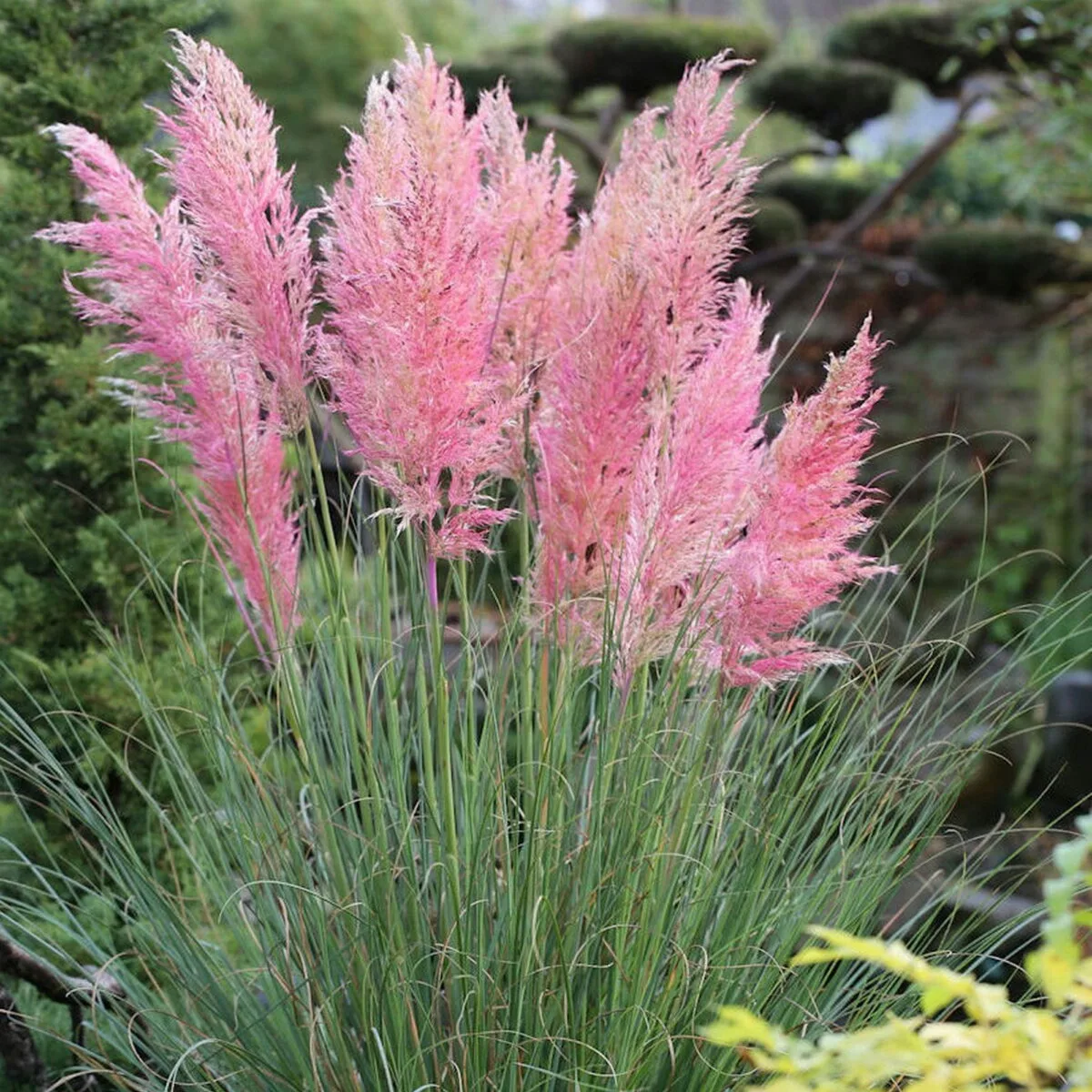
Pink Feather' is a densely tufted, clump-forming, perennial grass, up to 2.5 m high and 1.5m wide, with evergreen, arching, sharply toothed, blue-green leaves, and plume-like panicles of glistening pink spikelets, in late summer or early autumn
Scientific classification
- Species
- pampas grass 'Pink Feather' (Cortaderia selloana 'Pink Feather')
- Genus
- Cortaderia
- Family
- Poaceae
- Order
- Poales
- Class
- Liliopsida
- Phylum
- Tracheophyta
- Information to be completed
- Toxicity
- Grass Like
- Plant type
- 1.5-2.5 metres
- Height
- 1-1.5 metres
- Spread
- Evergreen
- Foliage
- Tufted
- Habit
- Spring · Summer · Autumn · Winter
- Season of interest
- Full sun
- Sunlight
- Information to be completed
- Ideal temperature









pampas grass 'Pink Feather' pictures
Distribution of pampas grass 'Pink Feather'
Distribution map
- Native
- Introduced
- Cultivated
Source:WCVP v16 · Royal Botanic Gardens, Kew · CC BY 3.0 · Boundaries:WGSRPD / TDWG
pampas grass 'Pink Feather' care guide
- Moderate regular watering, avoid prolonged drought or waterlogging
- Watering
- Full sun
- Sunlight

Watering
Moderate regular watering, avoid prolonged drought or waterlogging
Fertilizing
 Fertilizing
Balanced feed in spring and light repeat in growth season
Pruning
 Pruning
Cut and comb out the last year's flower stems and dead leaves in late winter or early spring; wear gloves as protection from the sharp leaf edges
Propagation
 Propagation
Propagate by division in late spring
Growing
 Growing
Grow in fertile, deep, well-drained soil in full sun, and cover with a deep dry mulch to protect plants from frost in their first winter; choose planting positions carefully, because they need plenty of space, because of the sharp leaf edges, and because seedlings can be invasive; for more advice, see ornamental grasses cultivation
Common pests and diseases
Diseases
Generally disease-free
Pests
Generally pest-free
Explore the plant health library →




