
chicory (white form)
Also known as: Information to be completed
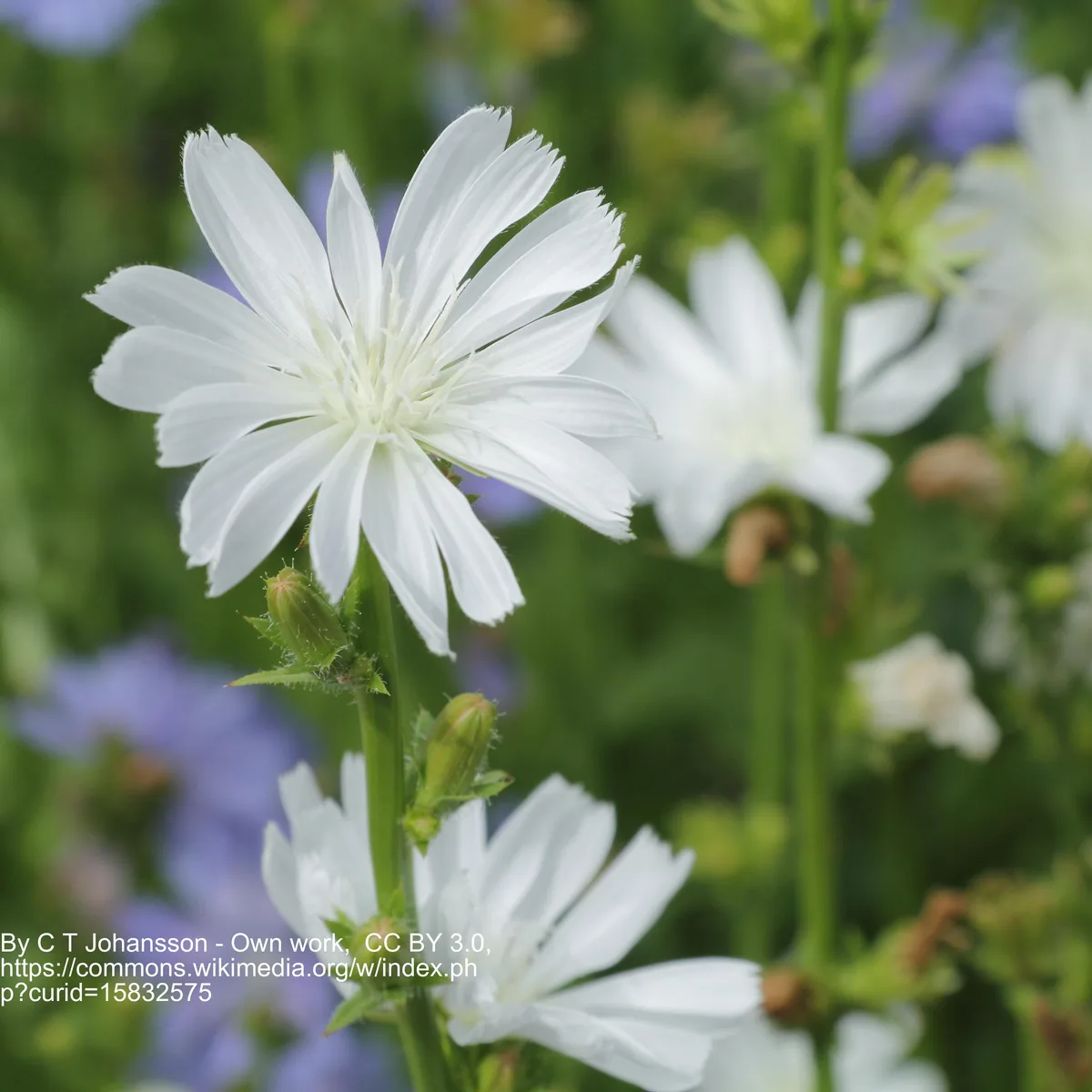
A rosette-forming perennial with substantial tap root and deeply lobed to toothed, roughly lance-shaped leaves up to 30cm long. The stiff, erect flower stems bear short-stalked white flowers open somewhat sporadically over a long succession from mid-summer to autumn.
Scientific classification
- Species
- chicory (white form) (Cichorium intybus f. album)
- Genus
- Cichorium
- Family
- Asteraceae
- Order
- Asterales
- Class
- Magnoliopsida
- Phylum
- Tracheophyta
- Information to be completed
- Toxicity
- Herbaceous Perennial
- Plant type
- 1-1.5 metres
- Height
- 0.5-1 metres
- Spread
- Deciduous
- Foliage
- Bushy
- Habit
- Spring · Summer · Autumn
- Season of interest
- Full sun
- Sunlight
- Information to be completed
- Ideal temperature









chicory (white form) pictures
Distribution of chicory (white form)
Distribution map
- Native
- Introduced
- Cultivated
Source:WCVP v16 · Royal Botanic Gardens, Kew · CC BY 3.0 · Boundaries:WGSRPD / TDWG
chicory (white form) care guide
- Keep soil consistently moist for tender leafy growth
- Watering
- Full sun
- Sunlight

Watering
Keep soil consistently moist for tender leafy growth
Fertilizing
 Fertilizing
Nitrogen-rich vegetable feed during active growth
Pruning
 Pruning
Remove spent flower spikes
Propagation
 Propagation
Propagate by seed, in containers in a cold frame in autumn or spring but it may not come true from seed. Propagate by root cuttings. See sowing vegetable seeds or sowing seeds indoors for further advice
Growing
 Growing
Grow in poor to moderately fertile, well-drained soil in full sun
Common pests and diseases
Diseases
Powdery mildews and rust diseases may occur
Pests
Slugs and snails can be problematic
Explore the plant health library →




