
jasmine 'Argenteovariegatum'
Also known as: Information to be completed
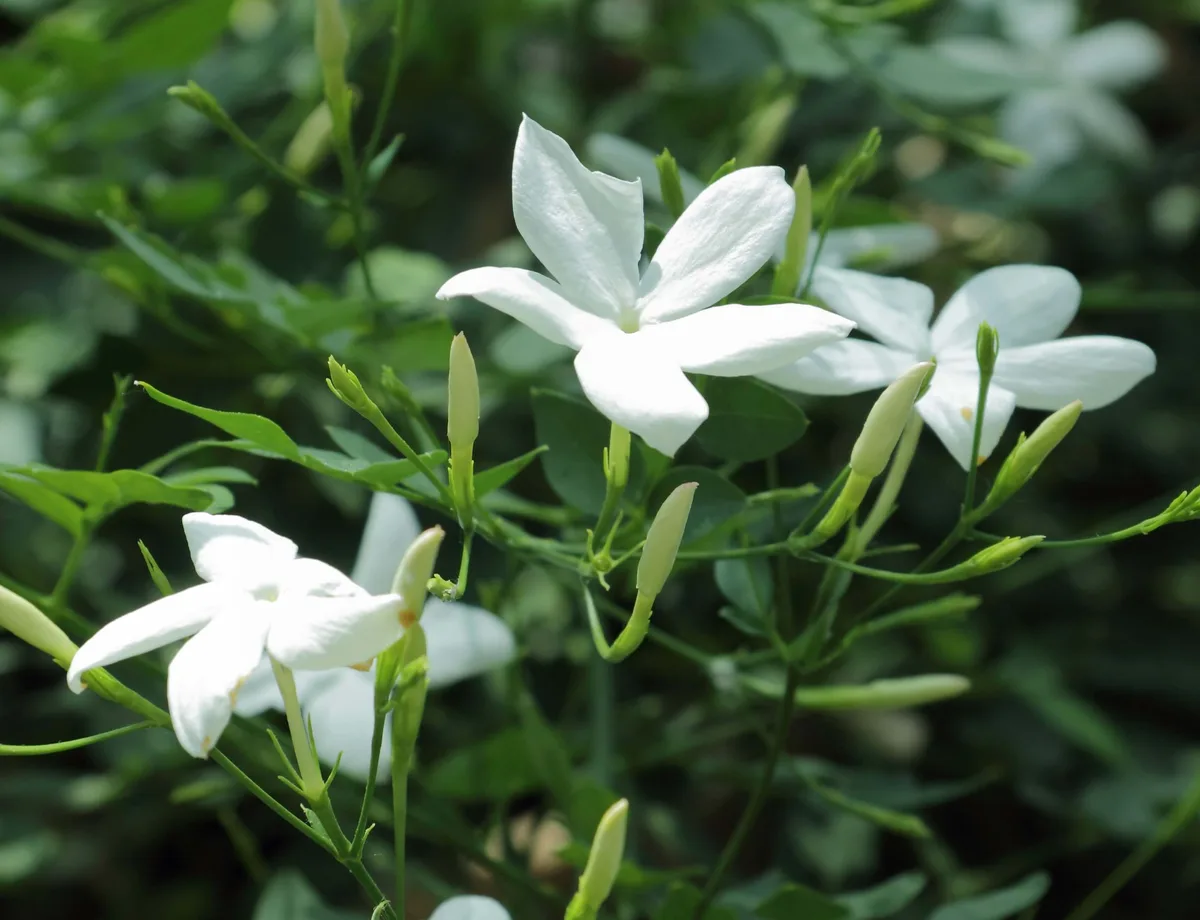
A large deciduous climbing shrub. Leaves pinnate with 5-9 ovate leaflets, grey-green edged with cream. Flowers 2cm in width, white, scented
Scientific classification
- Species
- jasmine 'Argenteovariegatum' (Jasminum officinale 'Argenteovariegatum')
- Genus
- Jasminum
- Family
- Oleaceae
- Order
- Lamiales
- Class
- Magnoliopsida
- Phylum
- Magnoliophyta
- Information to be completed
- Toxicity
- Climber Wall Shrub
- Plant type
- 2.5-4 metres
- Height
- 0.5-1 metres
- Spread
- Deciduous
- Foliage
- Climbing
- Habit
- Spring · Summer · Autumn
- Season of interest
- Full sun · Partial shade
- Sunlight
- Information to be completed
- Ideal temperature









jasmine 'Argenteovariegatum' pictures
Distribution of jasmine 'Argenteovariegatum'
Distribution map
- Native
- Introduced
- Cultivated
Source:WCVP v16 · Royal Botanic Gardens, Kew · CC BY 3.0 · Boundaries:WGSRPD / TDWG
jasmine 'Argenteovariegatum' care guide
- Deep regular watering, retain slight dampness surrounding root mass always
- Watering
- Full sun · Partial shade
- Sunlight

Watering
Deep regular watering, retain slight dampness surrounding root mass always
Fertilizing
 Fertilizing
Balanced climbing jasmine feed monthly spring through mid-summer growth
Pruning
 Pruning
Prune out thin, old shoots after flowering
Propagation
 Propagation
Propagate by layering, hardwood cuttings or semi-hardwood cuttings
Growing
 Growing
To bring out the sweet fragrance of the flowers, the ideal planting position should be warm, sunny and sheltered but it will cope with partial shade and colder positions provided the soil is well-drained
Common pests and diseases
Diseases
May be susceptible to honey fungus (rarely)
Pests
May be susceptible to aphids, scale insects and mealybugs and glasshouse red spider mite under glass
Explore the plant health library →




