
Shasta red fir
Also known as: Information to be completed
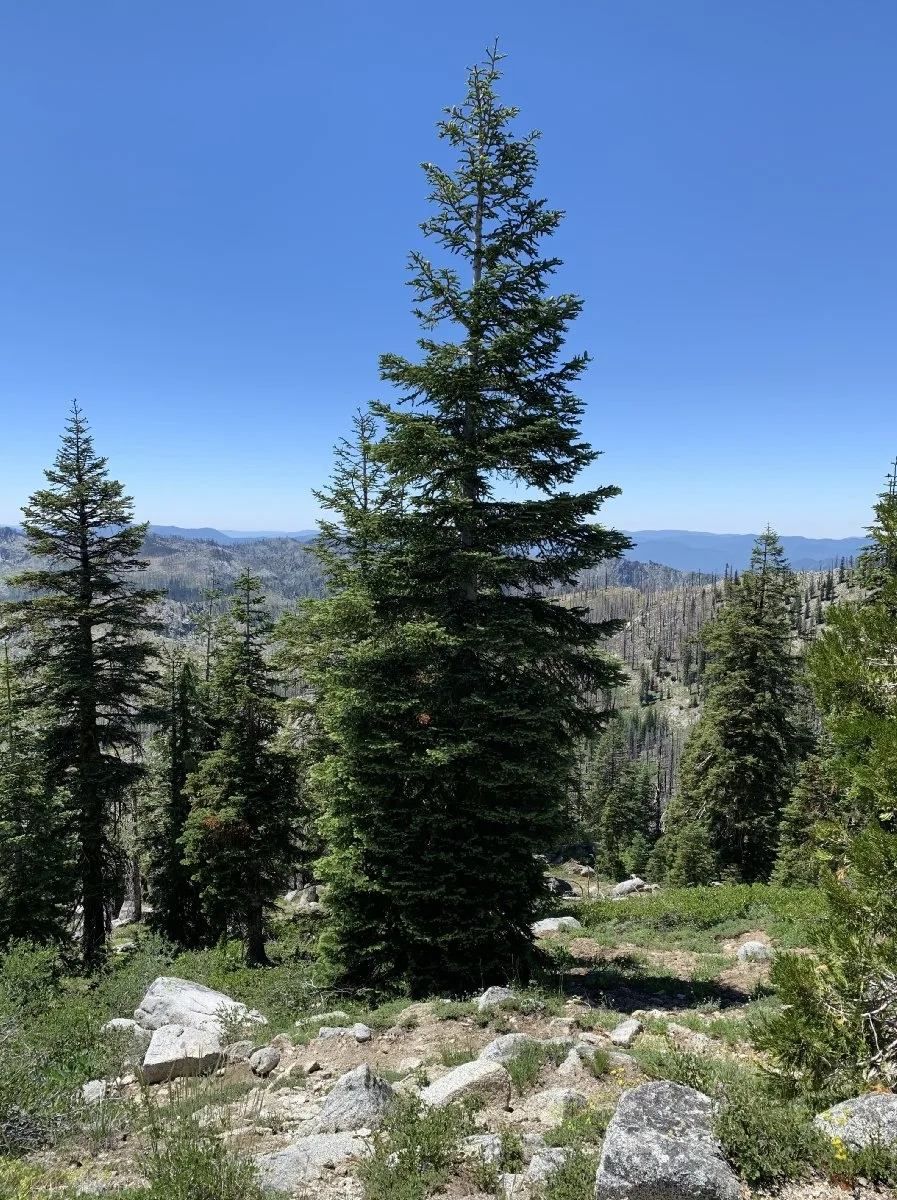
A large conifer tree with a narrowly columnar crown, broadening with age. This variety of Californian Red Fir is similar to the species. The difference is the smaller-sized seed cones that are 7-10cm long and approximately 2-3cm in diameter, and the bract scales are protruding.
Scientific classification
- Species
- Shasta red fir (Abies magnifica var. shastensis)
- Genus
- Abies
- Family
- Pinaceae
- Order
- Pinales
- Class
- Pinopsida
- Phylum
- Coniferophyta
- Information to be completed
- Toxicity
- Conifers · Trees
- Plant type
- Higher than 12 metres
- Height
- 4-8 metres
- Spread
- Evergreen
- Foliage
- Columnar upright
- Habit
- Spring · Summer · Autumn · Winter
- Season of interest
- Full sun
- Sunlight
- Information to be completed
- Ideal temperature









Shasta red fir pictures
Distribution of Shasta red fir
Distribution map
- Native
- Introduced
- Cultivated
Source:WCVP v16 · Royal Botanic Gardens, Kew · CC BY 3.0 · Boundaries:WGSRPD / TDWG
Shasta red fir care guide
- Deep occasional watering with excellent drainage, less once established
- Watering
- Full sun
- Sunlight

Watering
Deep occasional watering with excellent drainage, less once established
Fertilizing
 Fertilizing
Light conifer feed once yearly in early spring only
Pruning
 Pruning
No pruning required
Propagation
 Propagation
Propagate by seed or by grafting.
Growing
 Growing
Grows best in deep, slightly acidic, moist but well-drained soils in cooler climates. See conifer cultivation
Common pests and diseases
Diseases
Generally disease-free, but may be affected by honey fungus.
Pests
May be susceptible to adelgids and aphids
Explore the plant health library →




