
iris 'Alcazar'
Also known as: Information to be completed
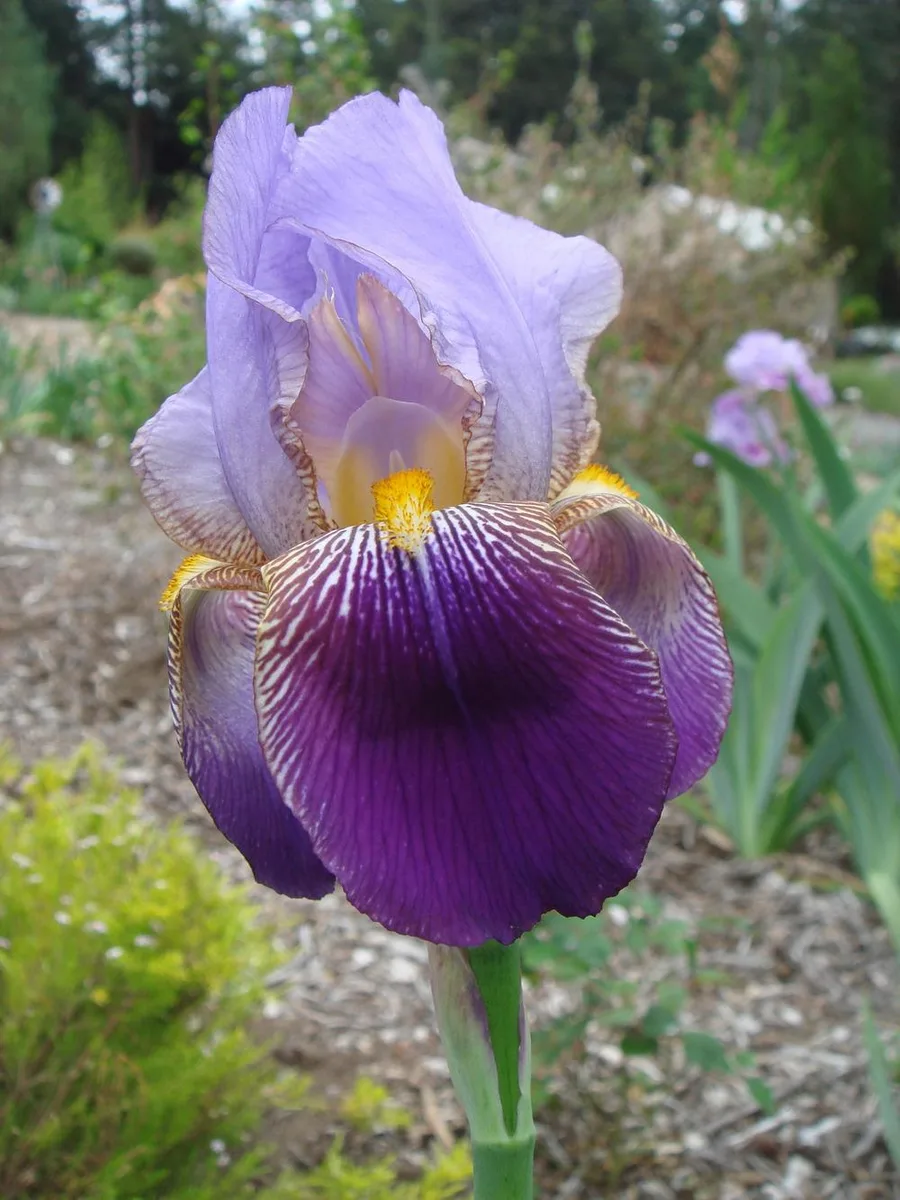
A rhizomatous, herbaceous perennial, up to 1m high in flower, with glaucous, sword-shaped leaves and scented, purple flowers with bronze-violet veined purple fall petals, lavender standards and deep orange-yellow beards on branching flower stalks, in early summer
Scientific classification
- Species
- iris 'Alcazar' (Iris 'Alcazar')
- Genus
- Iris
- Family
- Iridaceae
- Harmful if eaten. Wear gloves and other protective equipment when handling
- Toxicity
- Herbaceous Perennial
- Plant type
- 0.5-1 metres
- Height
- 0.1-0.5 metres
- Spread
- Semi evergreen · Evergreen
- Foliage
- Clump forming
- Habit
- Spring · Summer · Autumn · Winter
- Season of interest
- Full sun
- Sunlight
- Information to be completed
- Ideal temperature









iris 'Alcazar' pictures
Distribution of iris 'Alcazar'
Distribution map
Information to be completed
Information to be completed
Culture
Information to be completed
Toxicity
Harmful if eaten. Wear gloves and other protective equipment when handling
Quick identification of iris 'Alcazar'
Information to be completed
iris 'Alcazar' care guide
- Even moist soil during leaf growth, reduce water post flowering season
- Watering
- Full sun
- Sunlight
- Information to be completed
- Ideal temperature

Watering
Even moist soil during leaf growth, reduce water post flowering season
Fertilizing
 Fertilizing
Diluted iris nutrient feed biweekly before flower bud formation stage
Pruning
 Pruning
Remove any dying foliage in autumn, old flower stems can be cut down after flowering
Propagation
 Propagation
Propagate by division of rhizomes from midsummer to early autumn, every 3-4 years, see dividing irises
Growing
 Growing
Grow in well-drained, fertile, neutral to slightly alkaline loam in full sun, with upper part of rhizomes exposed. See bearded iris cultivation
People also ask
Information to be completed
Common pests and diseases
Diseases
May be susceptible to aphid-borne viruses, bacterial soft rot and grey moulds; see Iris diseases
Pests
May be susceptible to slugs, snails and thrips
Explore the plant health library →




