
Viola 'Devon Cream'
Also known as: Information to be completed
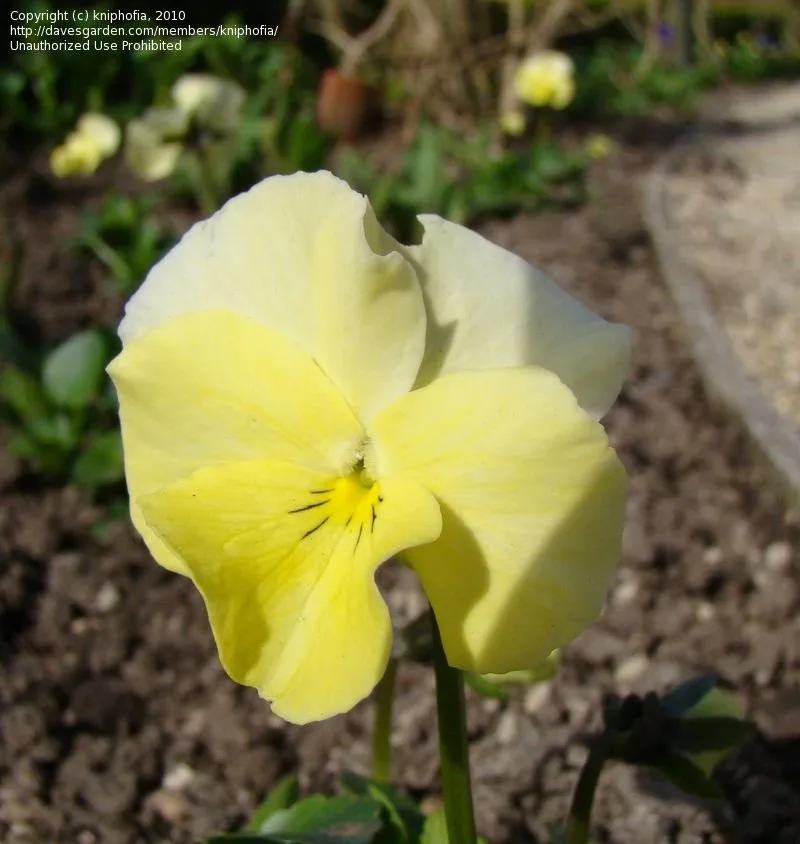
A compact, clump-forming evergreen perennial with dark green, toothed foliage and fragrant primrose-yellow and cream flowers which are produced from spring through until the autumn
Scientific classification
- Species
- Viola 'Devon Cream' (Viola 'Devon Cream')
- Genus
- Viola
- Family
- Violaceae
- Information to be completed
- Toxicity
- Herbaceous Perennial
- Plant type
- 0.1-0.5 metres
- Height
- 0.1-0.5 metres
- Spread
- Evergreen
- Foliage
- Bushy · Clump forming
- Habit
- Spring · Summer · Autumn · Winter
- Season of interest
- Partial shade
- Sunlight
- Information to be completed
- Ideal temperature









Viola 'Devon Cream' pictures
Distribution of Viola 'Devon Cream'
Distribution map
Information to be completed
Information to be completed
Culture
Information to be completed
Toxicity
Information to be completed
Quick identification of Viola 'Devon Cream'
Information to be completed
Viola 'Devon Cream' care guide
- Keep soil evenly moist, especially in cool active growth
- Watering
- Partial shade
- Sunlight
- Information to be completed
- Ideal temperature

Watering
Keep soil evenly moist, especially in cool active growth
Fertilizing
 Fertilizing
Light balanced feed during flowering season
Pruning
 Pruning
Deadhead regularly and cut back in autumn
Propagation
 Propagation
Propagate by softwood tip cuttings in spring
Growing
 Growing
Grow in fertile, humus-rich, moist but well-drained soil in full sun or partial shade
People also ask
Information to be completed
Common pests and diseases
Diseases
May be susceptible to powdery mildews, pansy leaf spot, pansy downy mildew, a virus and a rust
Pests
May be susceptible to slugs, snails, aphids, glasshouse red spider mite and violet gall midge
Explore the plant health library →




