
fig 'White Marseilles'
Also known as: Information to be completed
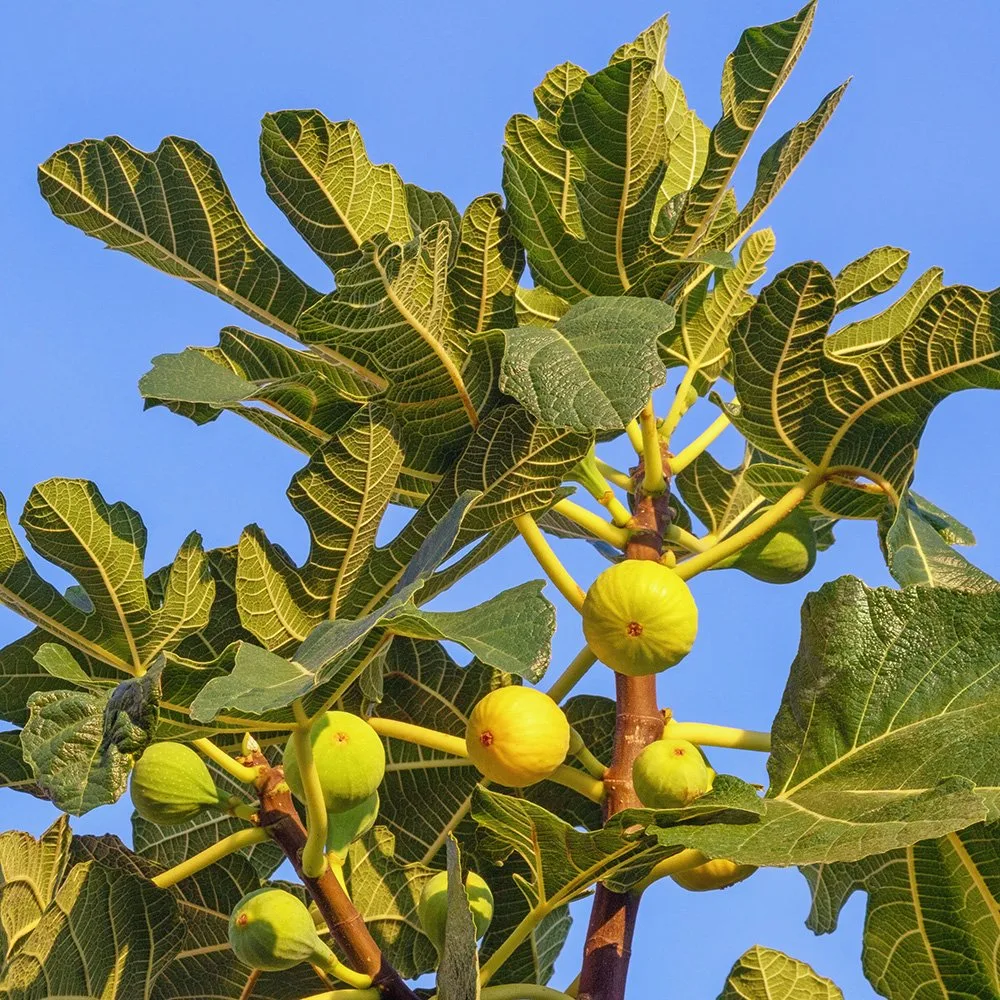
A large, deciduous shrub with bold, deeply-lobed leaves and insignificant flowers followed by pale green, edible fruit . Usually one crop of fruit per year, but sometimes two in a hot summer or under protection. Many cultivated varieties of fig have been developed from this species.
Scientific classification
- Species
- fig 'White Marseilles' (Ficus carica 'White Marseilles')
- Genus
- Ficus
- Family
- Moraceae
- Order
- Rosales
- Class
- Magnoliopsida
- Phylum
- Tracheophyta
- Harmful to skin with sunlight. Wear gloves and other protective equipment when handling
- Toxicity
- Shrubs · Fruit Edible
- Plant type
- 2.5-4 metres
- Height
- 2.5-4 metres
- Spread
- Deciduous
- Foliage
- Bushy
- Habit
- Spring · Summer · Autumn
- Season of interest
- Full sun
- Sunlight
- Information to be completed
- Ideal temperature









fig 'White Marseilles' pictures
Distribution of fig 'White Marseilles'
Distribution map
- Native
- Introduced
- Cultivated
Source:WCVP v16 · Royal Botanic Gardens, Kew · CC BY 3.0 · Boundaries:WGSRPD / TDWG
Toxicity
Harmful to skin with sunlight. Wear gloves and other protective equipment when handling
fig 'White Marseilles' care guide
- Moderate regular watering, allowing brief slight drying between soakings
- Watering
- Full sun
- Sunlight

Watering
Moderate regular watering, allowing brief slight drying between soakings
Fertilizing
 Fertilizing
Balanced perennial feed every four weeks from spring through summer
Pruning
 Pruning
In mid-spring remove a proportion (1/4 to 1/3) of older branches
Propagation
 Propagation
Propagate by hardwood cuttings
Growing
 Growing
Best grown fan-trained against a warm wall or fence, using a root restriction method such as a box of paving slabs with the bottom filled with a warm layer of rubble or broken crocks. Also suitable for cultivation in a container. See fig cultivation
Common pests and diseases
Diseases
May be susceptible to honey fungus
Pests
May be susceptible to glasshouse red spider mite, thrips, mealybugs and scale insects under glass
Explore the plant health library →




