
daisy fleabane
Also known as: sweet scabious; tall daisy; tall fleabane; daisy fleabane
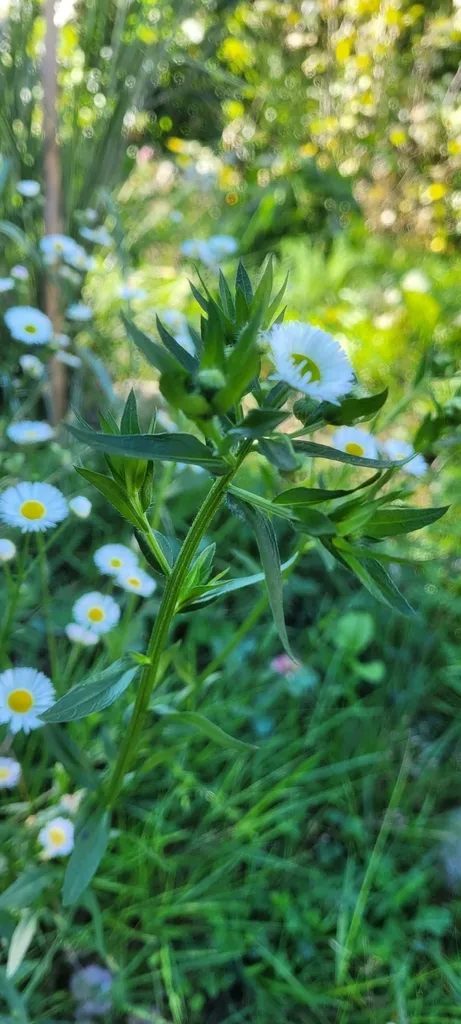
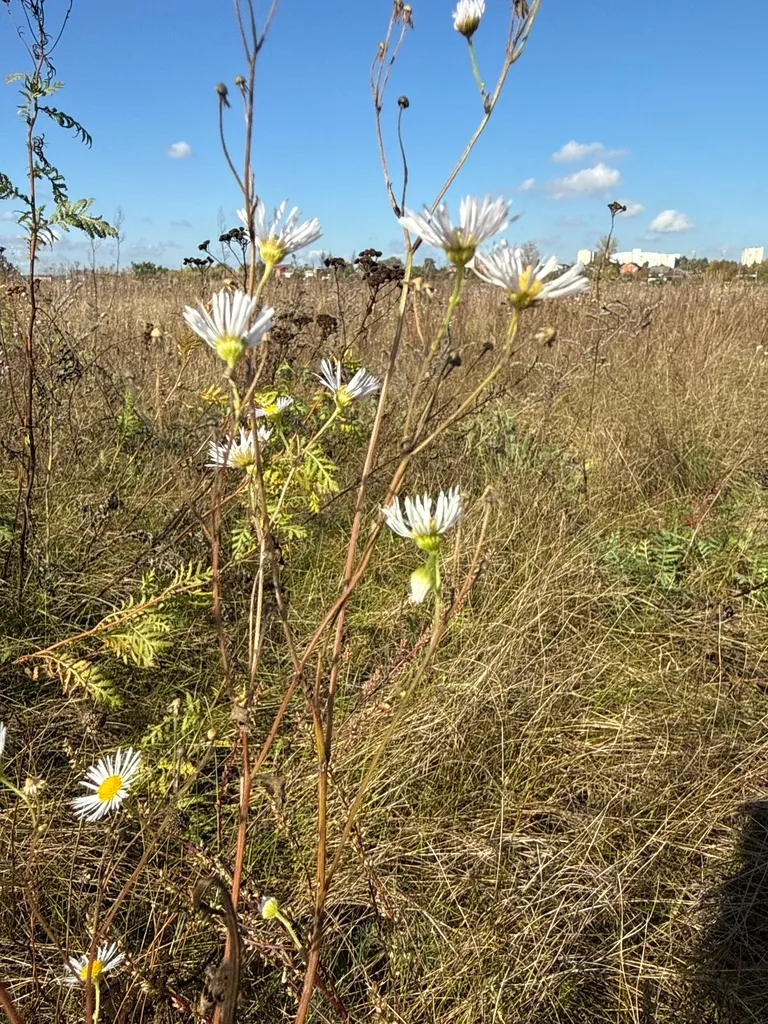
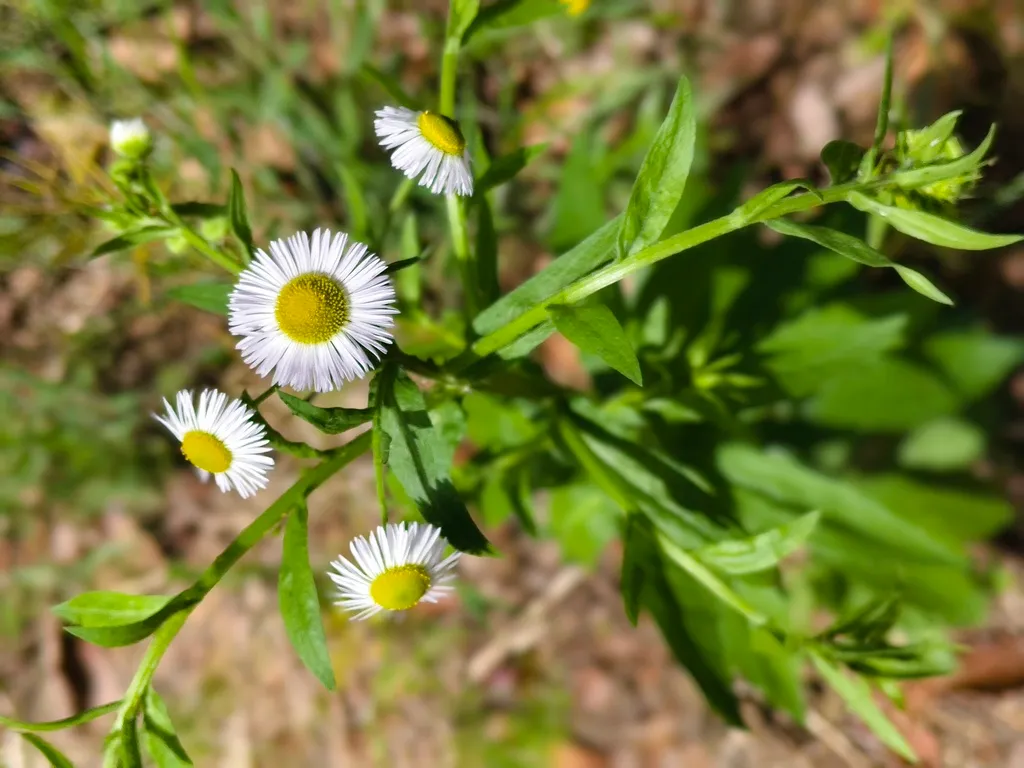
A short-lived perennial that produces tall (up to 1m) flower stems. Plants often produce just a few (one to three) flower stems, but as this plant self seeds, it creates groups of plants that appear like a larger clump, making a larger impact in a border. The daisy-like flowers are white with yellow centre, although the petals become slightly pink with age. The foliage is bright green and deciduous.
Scientific classification
- Species
- daisy fleabane (Erigeron annuus)
- Genus
- Erigeron
- Family
- Asteraceae
- Order
- Asterales
- Class
- Magnoliopsida
- Phylum
- Magnoliophyta
- Information to be completed
- Toxicity
- Herbaceous Perennial
- Plant type
- 0.5-1 metres
- Height
- 0.5-1 metres
- Spread
- Deciduous
- Foliage
- Columnar upright · Clump forming
- Habit
- Spring · Autumn · Summer
- Season of interest
- Full sun
- Sunlight
- Information to be completed
- Ideal temperature









daisy fleabane pictures
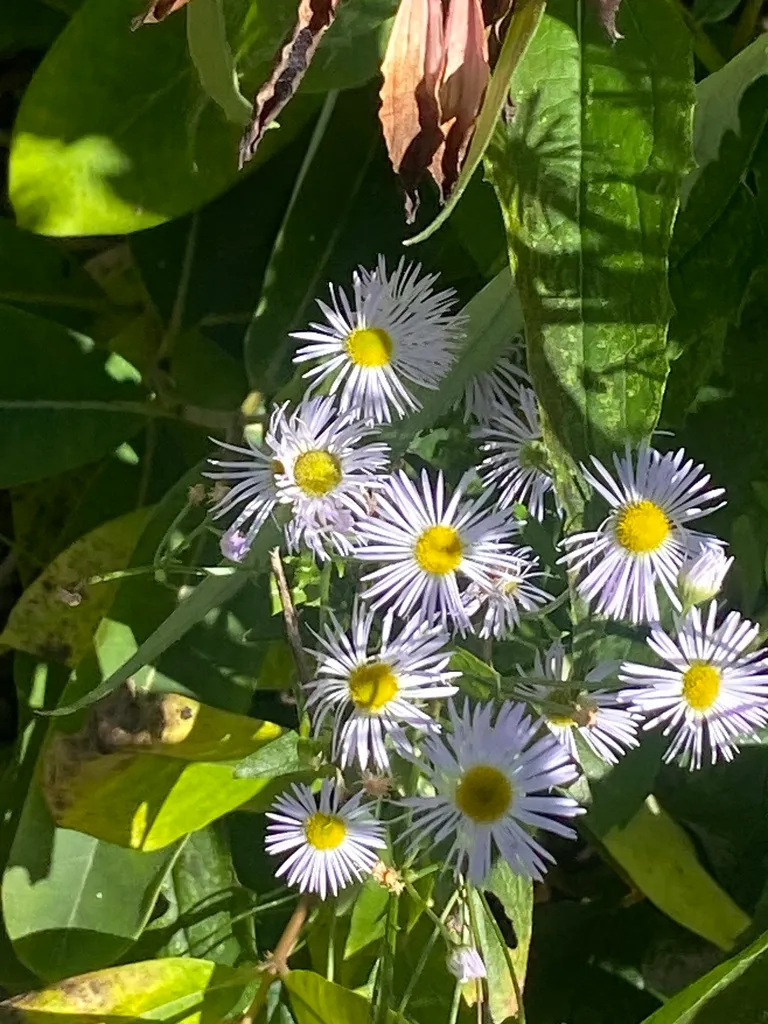
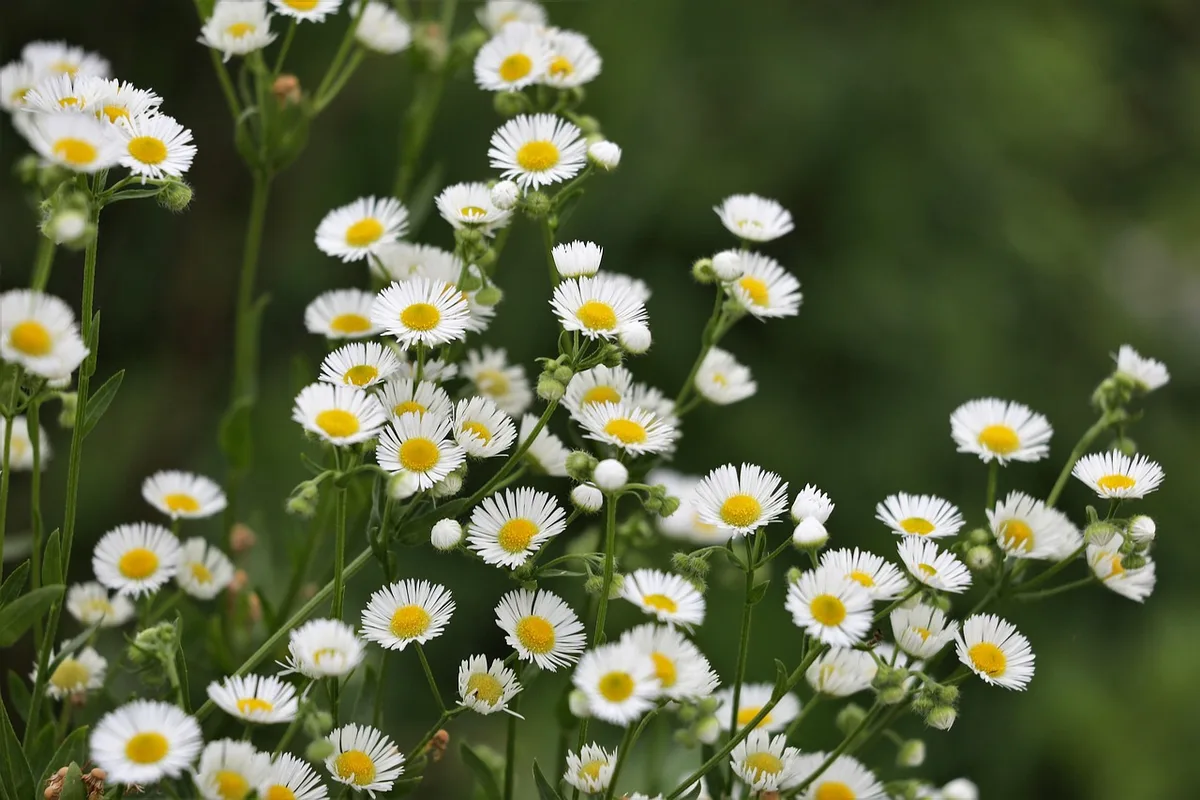
Distribution of daisy fleabane
Distribution map
- Native
- Introduced
- Cultivated
Source:WCVP v16 · Royal Botanic Gardens, Kew · CC BY 3.0 · Boundaries:WGSRPD / TDWG
daisy fleabane care guide
- Moderate regular watering, allowing brief slight drying between soakings
- Watering
- Full sun
- Sunlight

Watering
Moderate regular watering, allowing brief slight drying between soakings
Fertilizing
 Fertilizing
Balanced perennial feed every four weeks from spring through summer
Pruning
 Pruning
Cut back to new shoots close to ground level in early spring. There is no need to deadhead
Propagation
 Propagation
Propagate by seed. It is also possible to propagate by division or from basal softwood cuttings
Growing
 Growing
Grow in fertile well-drained soil that ideally does not dry out in summer, in full sun.
Common pests and diseases
Diseases
Generally disease-free
Pests
Generally pest-free
Explore the plant health library →




