
zebra plant
Also known as: Information to be completed
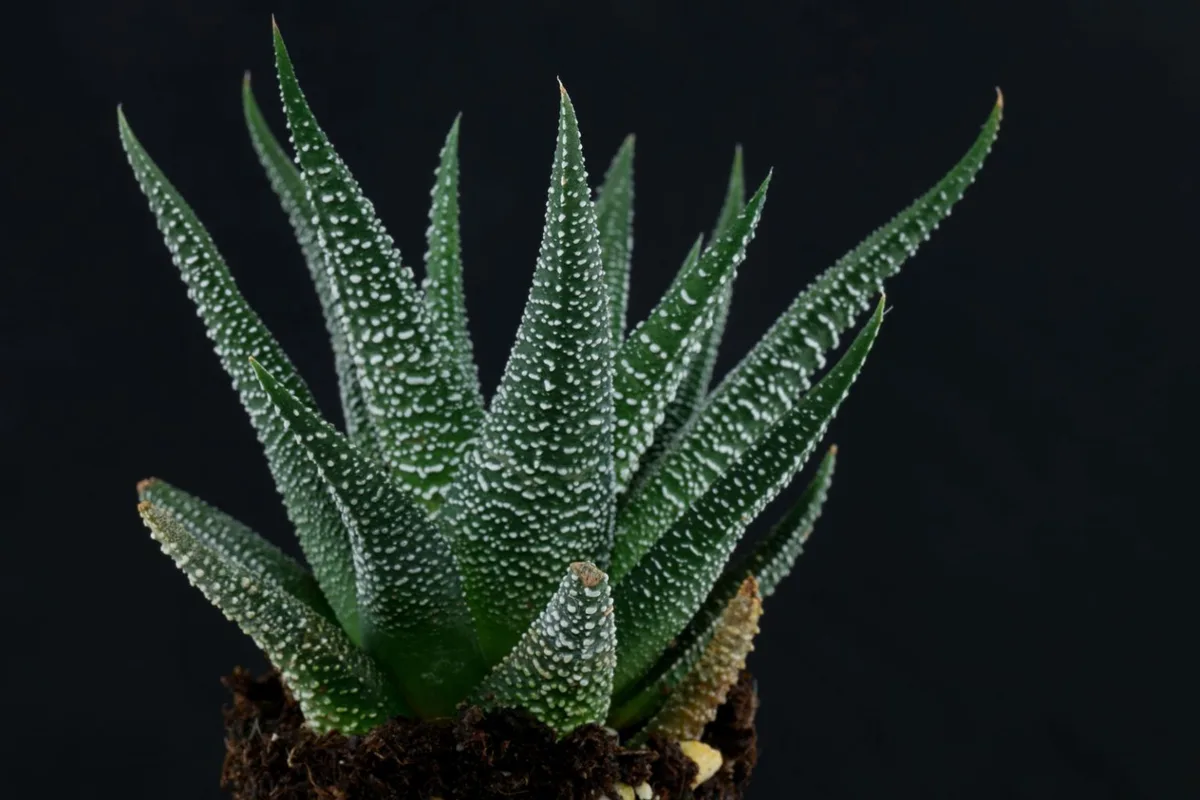
A rosette-forming succulent to 12cm tall, with stiffly fleshy, narrowly triangular, dark green leaves; these bear bands of white, warty tubercules on the outer surface, and also scattered on the upper surface. In summer, wiry stems to 40cm long carry tubular white flowers
Scientific classification
- Species
- zebra plant (Haworthiopsis attenuata)
- Genus
- Haworthiopsis
- Family
- Asphodelaceae
- Order
- Asparagales
- Class
- Liliopsida
- Phylum
- Magnoliophyta
- Information to be completed
- Toxicity
- Cactus Succulent
- Plant type
- 0.1-0.5 metres
- Height
- 0.1-0.5 metres
- Spread
- Evergreen
- Foliage
- Clump forming
- Habit
- Spring · Summer · Autumn · Winter
- Season of interest
- Full sun
- Sunlight
- 18 – 28 °C
- Ideal temperature









zebra plant pictures
Distribution of zebra plant
Distribution map
- Native
- Introduced
- Cultivated
Source:WCVP v16 · Royal Botanic Gardens, Kew · CC BY 3.0 · Boundaries:WGSRPD / TDWG
zebra plant care guide
- Let gritty soil dry fully before each thorough watering cycle
- Watering
- Full sun
- Sunlight
- 18 – 28 °C
- Ideal temperature

Watering
Let gritty soil dry fully before each thorough watering cycle
Fertilizing
 Fertilizing
Very dilute low-nitrogen succulent feed monthly in warm growth
Pruning
 Pruning
No pruning required
Propagation
 Propagation
Sow seed at 21-24°C in spring, separate offsets or take leaf cuttings in spring and summer
Growing
 Growing
Grow in cactus compost in full light with protection from hot sun. Provide low humidity and good ventilation. When in growth water moderately and apply a half-strength, low-nitrogen fertiliser once or twice. Keep almost dry in winter. See houseplant cacti and succulent cultivation for further advice
Common pests and diseases
Diseases
Generally disease-free
Pests
May be susceptible to mealybugs
Explore the plant health library →




