
dill 'Dukat'
Also known as: Information to be completed
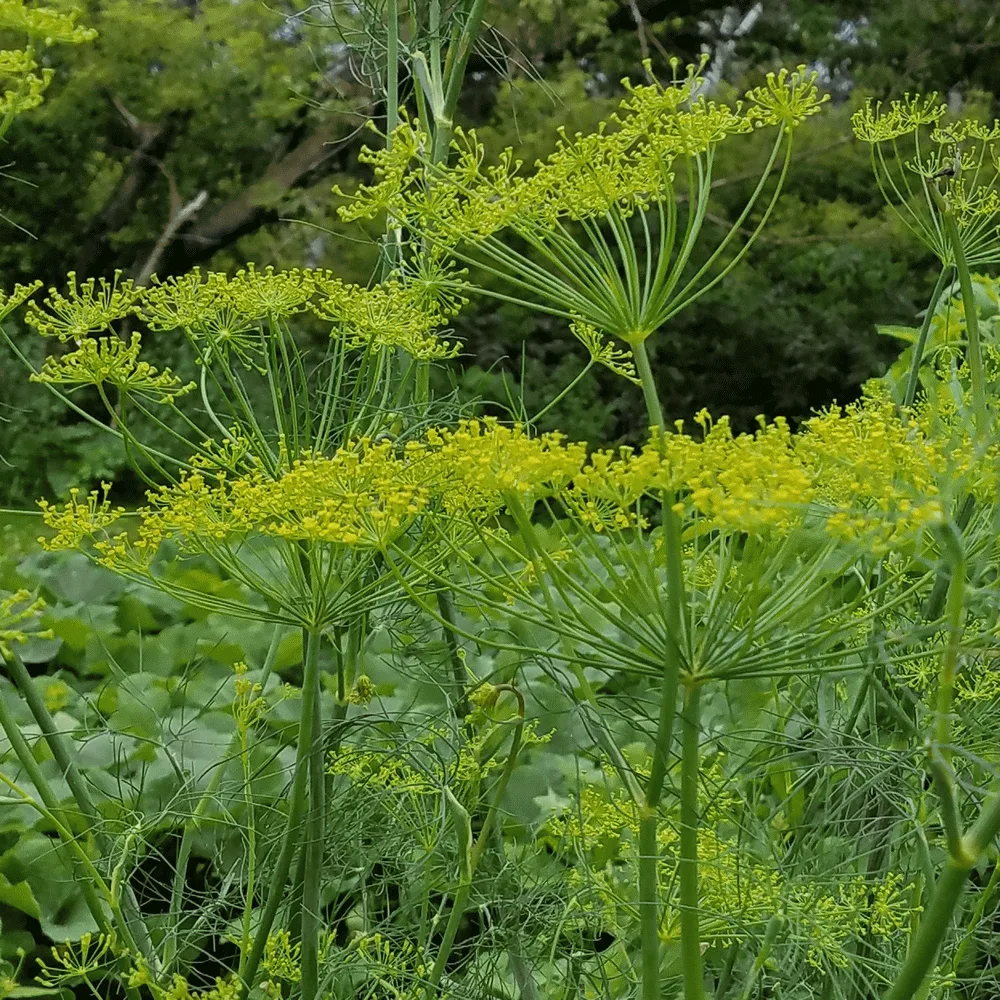
A vigorous upright annual or biennial with finely dissected, aromatic blue-green leaves, and large flat umbels of tiny yellow flowers in summer. This variety is grown for its bushy dark green strongly smelling foliage and neat habit. Dill is grown popularly each year as an annual for fresh leaves and used as a herb in cooking - particulalry fish eggs and potatoes, and also grown as a cut flower and for cut scented foliage. Dill will often flower and go to seed in its second year. The leaves, the flowers and the aromatic seeds are all edible. Dill seeds are important culinary additions, and their flavour can provide a more subdued flavour. Dill seed is used in pickling, and features in vinaigrettes and marinades.
Scientific classification
- Species
- dill 'Dukat' (Anethum graveolens 'Dukat')
- Genus
- Anethum
- Family
- Apiaceae
- Order
- Apiales
- Class
- Magnoliopsida
- Phylum
- Magnoliophyta
- Information to be completed
- Toxicity
- Annual Biennial · Herbs - Culinary
- Plant type
- 0.5-1 metres
- Height
- 0.1-0.5 metres
- Spread
- Deciduous
- Foliage
- Columnar upright · Bushy
- Habit
- Autumn · Spring · Summer
- Season of interest
- Full sun
- Sunlight
- Information to be completed
- Ideal temperature









dill 'Dukat' pictures
dill 'Dukat' care guide
- Consistently damp garden soil, deep watering to reach full vegetable roots
- Watering
- Full sun
- Sunlight

Watering
Consistently damp garden soil, deep watering to reach full vegetable roots
Fertilizing
 Fertilizing
Diluted herb vegetable feed every two weeks active leaf growth period
Pruning
 Pruning
Deadhead to prevent self-seeding.
Propagation
 Propagation
Propagate by seed.
Growing
 Growing
Grow in fertile, well-drained soil in full sun. Sow direct in 1cm deep rows and lightly cover with soil, thin to 15cm apart when large enough to handle. The roots don't like disturbance so don't transplant. See cultivating herbs.
Common pests and diseases
Diseases
Generally disease-free.
Pests
Generally pest-free
Explore the plant health library →




