
Ipomoea batatas Tahiti ('La17-120')
Also known as: Information to be completed
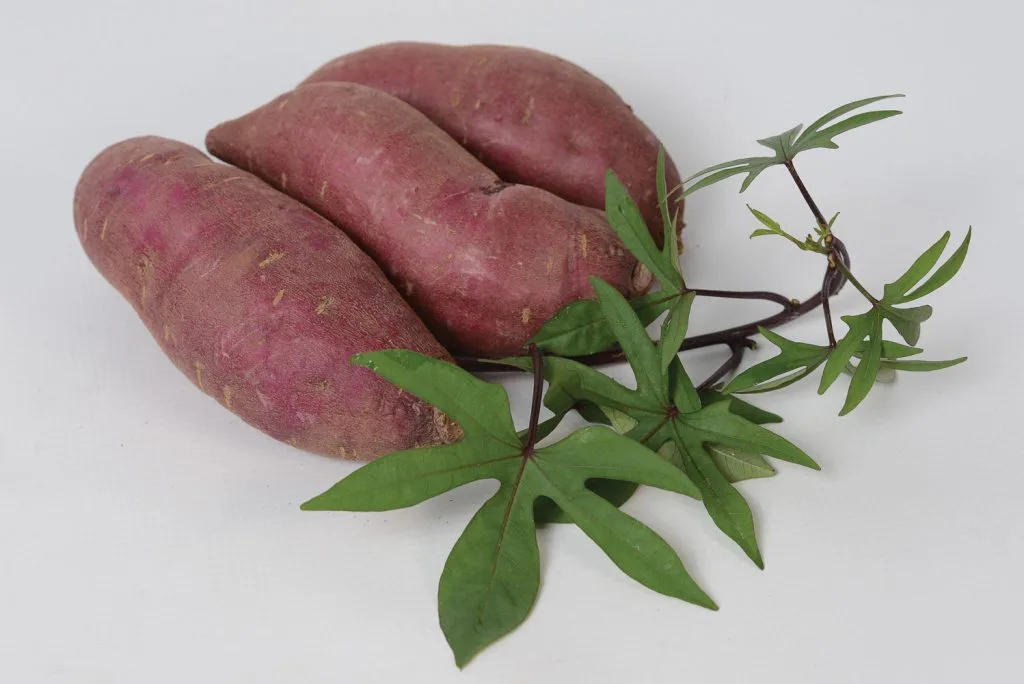
A tender herbaceous perennial which is treated as an annual in the UK climate. It scrambles or climbs with support, to reach 1.5m. Its attractive green leaves are edible and at the end of the growing season, the underground tuber can also be eaten. This variety has a purple skin and pale flesh.
Scientific classification
- Species
- Ipomoea batatas Tahiti ('La17-120') (Ipomoea batatas Tahiti ('La17-120'))
- Genus
- Ipomoea
- Family
- Convolvulaceae
- Order
- Solanales
- Class
- Magnoliopsida
- Phylum
- Magnoliophyta
- Harmful if eaten. Wear gloves and other protective equipment when handling
- Toxicity
- Herbaceous Perennial · Annual Biennial
- Plant type
- 1-1.5 metres
- Height
- 0.1-0.5 metres
- Spread
- Deciduous
- Foliage
- Climbing · Trailing
- Habit
- Spring · Summer · Autumn
- Season of interest
- Full sun
- Sunlight
- Information to be completed
- Ideal temperature









Ipomoea batatas Tahiti ('La17-120') pictures
Toxicity
Harmful if eaten. Wear gloves and other protective equipment when handling
Ipomoea batatas Tahiti ('La17-120') care guide
- Moderate regular watering, avoid prolonged drought or waterlogging
- Watering
- Full sun
- Sunlight

Watering
Moderate regular watering, avoid prolonged drought or waterlogging
Fertilizing
 Fertilizing
Balanced feed in spring and light repeat in growth season
Pruning
 Pruning
No pruning required
Propagation
 Propagation
Propagate by dividing a tuber into 'slips', which are slices of tuber that include a bud. For more advice see sweet potato cultivation
Growing
 Growing
Grow in deep fertile soil in a frost free spot with full light. Can be grown outdoors once all danger of frost is past, but needs a long growing period to produce a root crop. Can be grown in a large container. Train up a cane to save space, along the ground as ground cover, or allow to trail downards from a container. Eating the leaves as a vegetable will limit its size, but at the expense of the root harvest. For more advice see sweet potato cultivation
Common pests and diseases
Diseases
Generally disease-free
Pests
May be susceptible to glasshoouse red spider mite and glasshouse whitefly
Explore the plant health library →




