
long-flowered corydalis
Also known as: Information to be completed
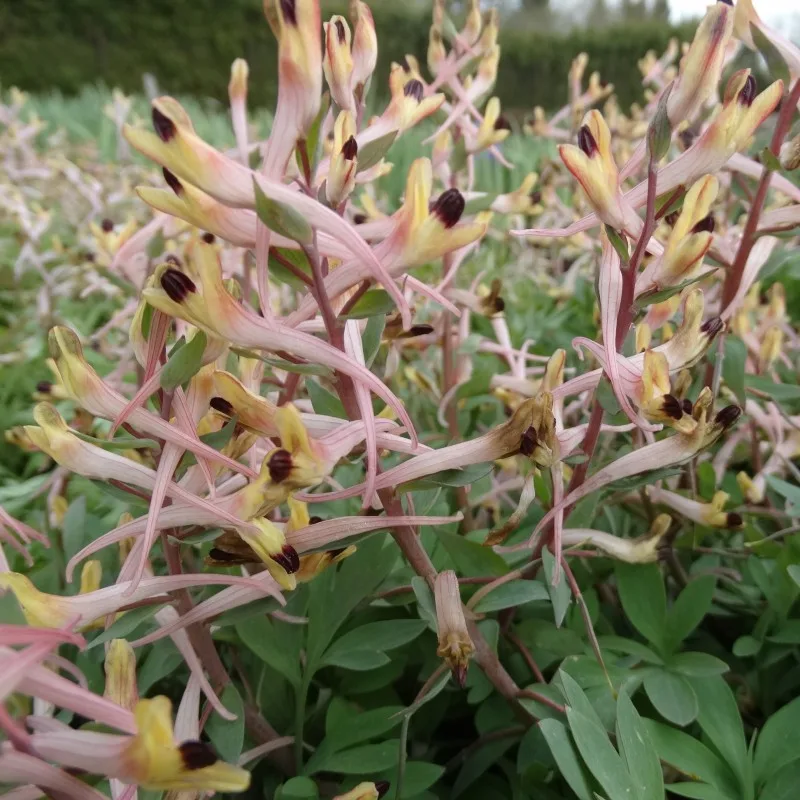
A tender tuberous perennial to 30cm, with divided foliage and lax racemes of fragrant bright yellow flowers, marked with dark brown in the mouth and with a slender white spur
Scientific classification
- Species
- long-flowered corydalis (Corydalis schanginii subsp. ainae)
- Genus
- Corydalis
- Family
- Papaveraceae
- Information to be completed
- Toxicity
- Alpine Rockery · Bulbs
- Plant type
- 0.1-0.5 metres
- Height
- 0-0.1 metre
- Spread
- Deciduous
- Foliage
- Clump forming
- Habit
- Spring · Summer · Winter
- Season of interest
- Full sun
- Sunlight
- Information to be completed
- Ideal temperature









long-flowered corydalis pictures
Distribution of long-flowered corydalis
Distribution map
- Native
- Introduced
- Cultivated
Source:WCVP v16 · Royal Botanic Gardens, Kew · CC BY 3.0 · Boundaries:WGSRPD / TDWG
Culture
Information to be completed
Toxicity
Information to be completed
Quick identification of long-flowered corydalis
Information to be completed
long-flowered corydalis care guide
- Moderate regular watering, allowing brief slight drying between soakings
- Watering
- Full sun
- Sunlight
- Information to be completed
- Ideal temperature

Watering
Moderate regular watering, allowing brief slight drying between soakings
Fertilizing
 Fertilizing
Balanced perennial feed every four weeks from spring through summer
Pruning
 Pruning
No pruning required
Propagation
 Propagation
Propagate by allowing tubers to increase each year. Propagate by seed sown as soon as it is ripe in pots in an open frame; germination may be erratic
Growing
 Growing
Ideally grown in sharply drained, moderately fertile soil in sun or partial shade in pots in an alpine house. Prefers more moisture in winter and partially drying out in summer, plant tubers in autumn. Plunge the pots in damp sand up to the collar of the pot to prevent drying out. Repot annually
People also ask
Information to be completed
Common pests and diseases
Diseases
Generally disease free
Pests
Slugs and snails may be a problem
Explore the plant health library →




