
nemesia 'Raspberry Cream'
Also known as: Information to be completed
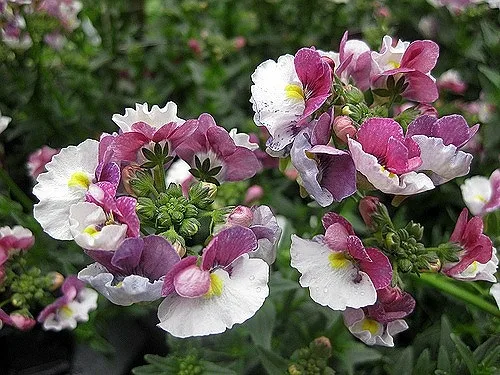
A half-hardy, bushy deciduous perennial with a neat and compact habit and dark green foliage. Clouds of sweetly-fragranced dark raspberry pink and white flowers with yellow centres appear from summer through until the autumn
Scientific classification
- Species
- nemesia 'Raspberry Cream' (Nemesia 'Raspberry Cream')
- Genus
- Nemesia
- Family
- Scrophulariaceae
- Information to be completed
- Toxicity
- Herbaceous Perennial · Bedding
- Plant type
- 0.1-0.5 metres
- Height
- 0.1-0.5 metres
- Spread
- Deciduous
- Foliage
- Bushy
- Habit
- Spring · Summer · Autumn
- Season of interest
- Full sun · Partial shade
- Sunlight
- Information to be completed
- Ideal temperature









nemesia 'Raspberry Cream' pictures
Distribution of nemesia 'Raspberry Cream'
Distribution map
Information to be completed
Information to be completed
Culture
Information to be completed
Toxicity
Information to be completed
Quick identification of nemesia 'Raspberry Cream'
Information to be completed
nemesia 'Raspberry Cream' care guide
- Keep compost lightly moist, never fully drying out while blooming
- Watering
- Full sun · Partial shade
- Sunlight
- Information to be completed
- Ideal temperature

Watering
Keep compost lightly moist, never fully drying out while blooming
Fertilizing
 Fertilizing
Weak flowering feed every two to three weeks in active bloom
Pruning
 Pruning
Pinch out growing tips to produce bushy plants, and trim off flowering shoots when initial flowering is finished to promote more flowers
Propagation
 Propagation
Propagate by seed, or take softwood cuttings from the ends of non-flowering shoots in late summer and overwinter in frost-free conditions or take softwood cuttings in spring
Growing
 Growing
Grow in moist but well-drained, fertile, ideally slightly acid, soil in full sun. Water well in dry spells to maintain flowering
People also ask
Information to be completed
Common pests and diseases
Diseases
Generally disease-free, but may be susceptible to foot and root rots in wet soils
Pests
Generally pest-free but may be susceptible to aphids
Explore the plant health library →




