
Malva × clementii Red Rum ('Rigrum')
Also known as: Information to be completed
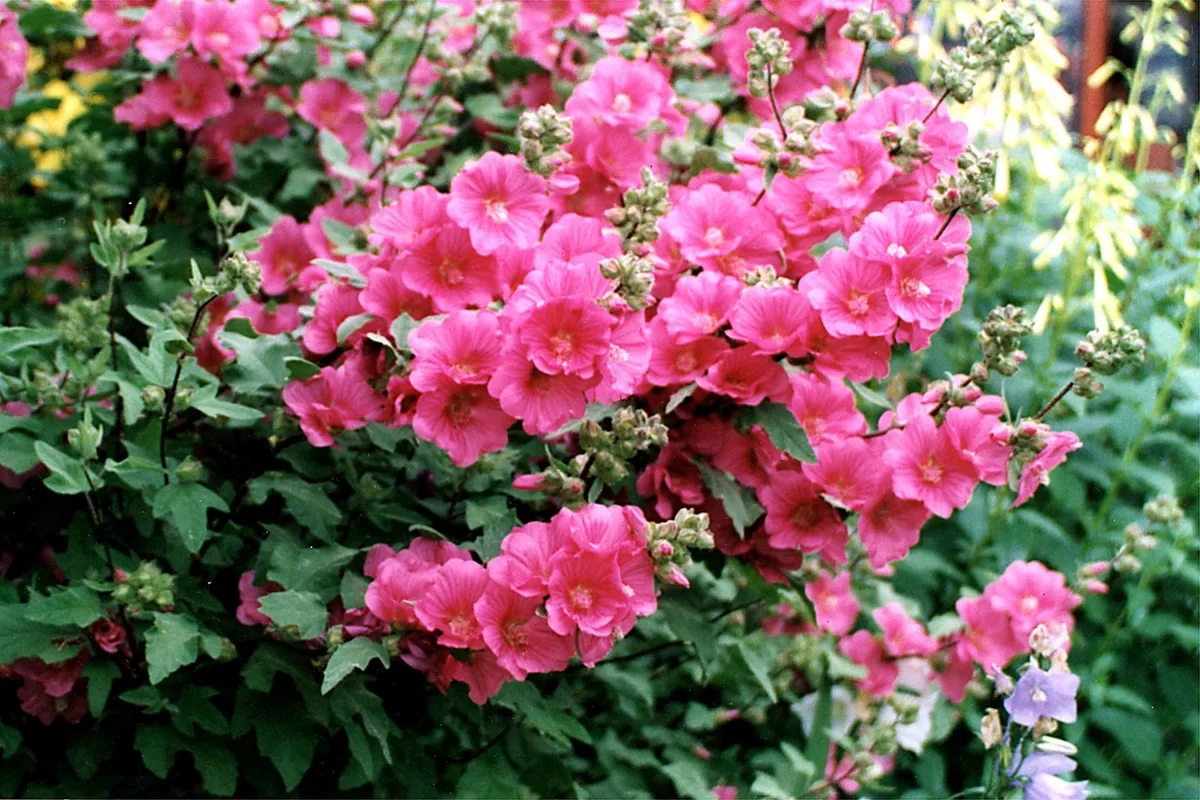
A semi-evergreen subshrub to around 1.5m high, with lobed, slightly wrinkled grey-green leaves on dark red-brown stems. Clusters of deep reddish-pink flowers with darker veins are produced at the tips of the stems from early to late summer
Scientific classification
- Species
- Malva × clementii Red Rum ('Rigrum') (Malva × clementii Red Rum ('Rigrum'))
- Genus
- Malva
- Family
- Malvaceae
- Order
- Malvales
- Class
- Magnoliopsida
- Phylum
- Magnoliophyta
- Information to be completed
- Toxicity
- Shrubs
- Plant type
- 1-1.5 metres
- Height
- 1-1.5 metres
- Spread
- Semi evergreen
- Foliage
- Bushy
- Habit
- Spring · Summer · Autumn · Winter
- Season of interest
- Full sun
- Sunlight
- Information to be completed
- Ideal temperature









Malva × clementii Red Rum ('Rigrum') pictures
Malva × clementii Red Rum ('Rigrum') care guide
- Moderate regular watering, allowing brief slight drying between soakings
- Watering
- Full sun
- Sunlight

Watering
Moderate regular watering, allowing brief slight drying between soakings
Fertilizing
 Fertilizing
Balanced perennial feed every four weeks from spring through summer
Pruning
 Pruning
Shorten last year's flowering stems to one or two buds from the older woody framework. Remove thin, weak and dead shoots. Prune in early to mid-spring as growth resumes; avoid winter pruning that exposes new shoots to frost.
Propagation
 Propagation
Propagate by softwood cuttings from stems or basal shoots in early summer. Plants can be short-lived so regular propagation is recommended. As this plant is protected by Plant Breeders' Rights, any propagation should be for personal rather than commercial use
Growing
 Growing
Thrives in light, moderately fertile, well drained soil in full sun; may need support if grown in richer soils (see staking perennials). Shelter from cold winds in areas prone to frosts. May die back to a woody base in cold winters
Common pests and diseases
Diseases
May be susceptible to stem rot, a rust, and soil-borne fungal diseases
Pests
May be susceptible to aphids
Explore the plant health library →




