
Coleus scutellarioides 'Durham Gala'
Also known as: Information to be completed
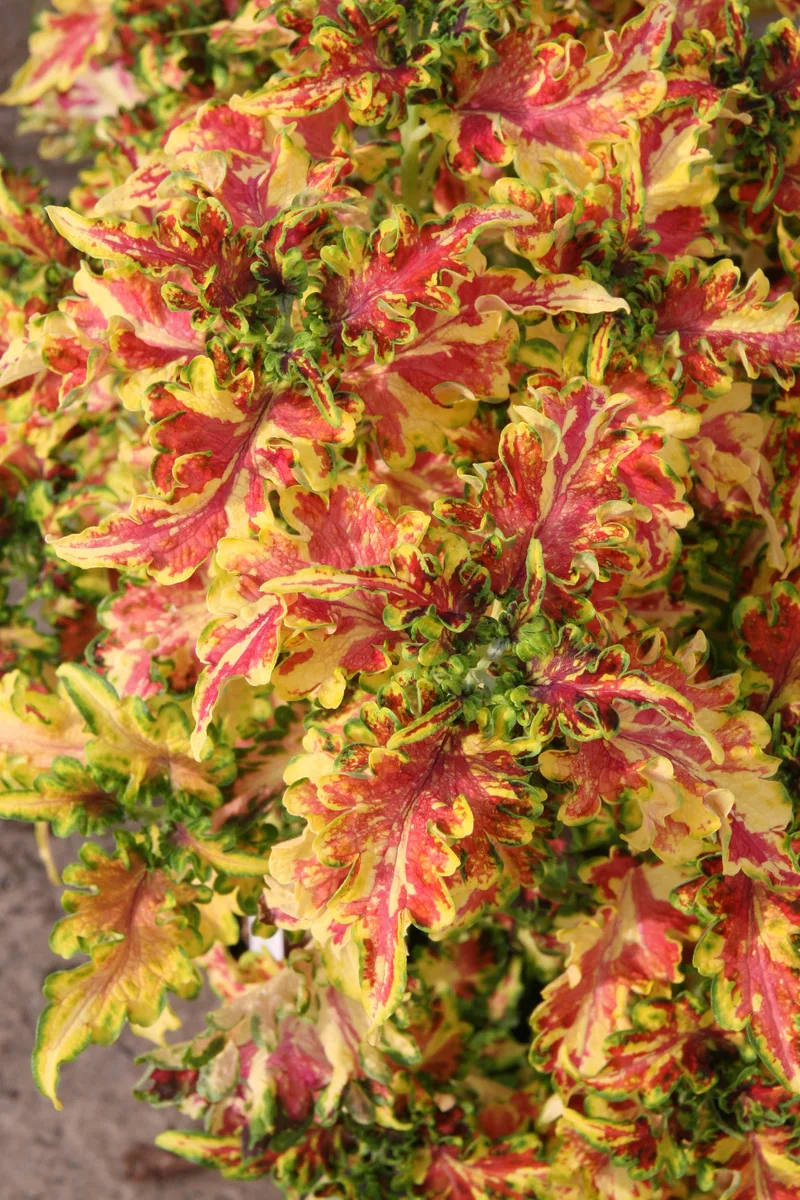
Bushy evergreen perennial to 75cm tall, with green stems bearing wavy-margined multi-coloured leaves of raspberry-red, paler red-purple and creamy-yellow with a green margin and pale green to yellow petioles; insignificant pale blue flowers sporadically throughout the year
Scientific classification
- Species
- Coleus scutellarioides 'Durham Gala' (Coleus scutellarioides 'Durham Gala')
- Genus
- Coleus
- Family
- Lamiaceae
- Order
- Lamiales
- Class
- Magnoliopsida
- Phylum
- Tracheophyta
- Information to be completed
- Toxicity
- Houseplants
- Plant type
- 0.5-1 metres
- Height
- 0.1-0.5 metres
- Spread
- Evergreen
- Foliage
- Bushy
- Habit
- Spring · Summer · Autumn · Winter
- Season of interest
- Full sun · Partial shade
- Sunlight
- Information to be completed
- Ideal temperature









Coleus scutellarioides 'Durham Gala' pictures
Distribution of Coleus scutellarioides 'Durham Gala'
Distribution map
- Native
- Introduced
- Cultivated
Source:WCVP v16 · Royal Botanic Gardens, Kew · CC BY 3.0 · Boundaries:WGSRPD / TDWG
Coleus scutellarioides 'Durham Gala' care guide
- Moderate regular watering, avoid prolonged drought and stagnant waterlogging
- Watering
- Full sun · Partial shade
- Sunlight

Watering
Moderate regular watering, avoid prolonged drought and stagnant waterlogging
Fertilizing
 Fertilizing
Balanced perennial feed every four weeks spring through summer growth
Pruning
 Pruning
No pruning required but pinch out tips to keep plants bushy and shapely
Propagation
 Propagation
Propagate by softwood cuttings with bottom heat in spring or summer or propagate by seed for free-flowering but smaller plants
Growing
 Growing
Grow under glass in loam-based potting compost in bright filtered to moderate light. Pot up annually in spring for larger specimens. Grow outdoors in humus-rich moist but well-drained soil, enriched with well rotted manure. Provide a sheltered frost-free environment over winter
Common pests and diseases
Diseases
Generally disease-free
Pests
May be susceptible to mealybugs, scale insects and glasshouse whitefly
Explore the plant health library →




