
knotweed 'Purple Fantasy'
Also known as: Information to be completed
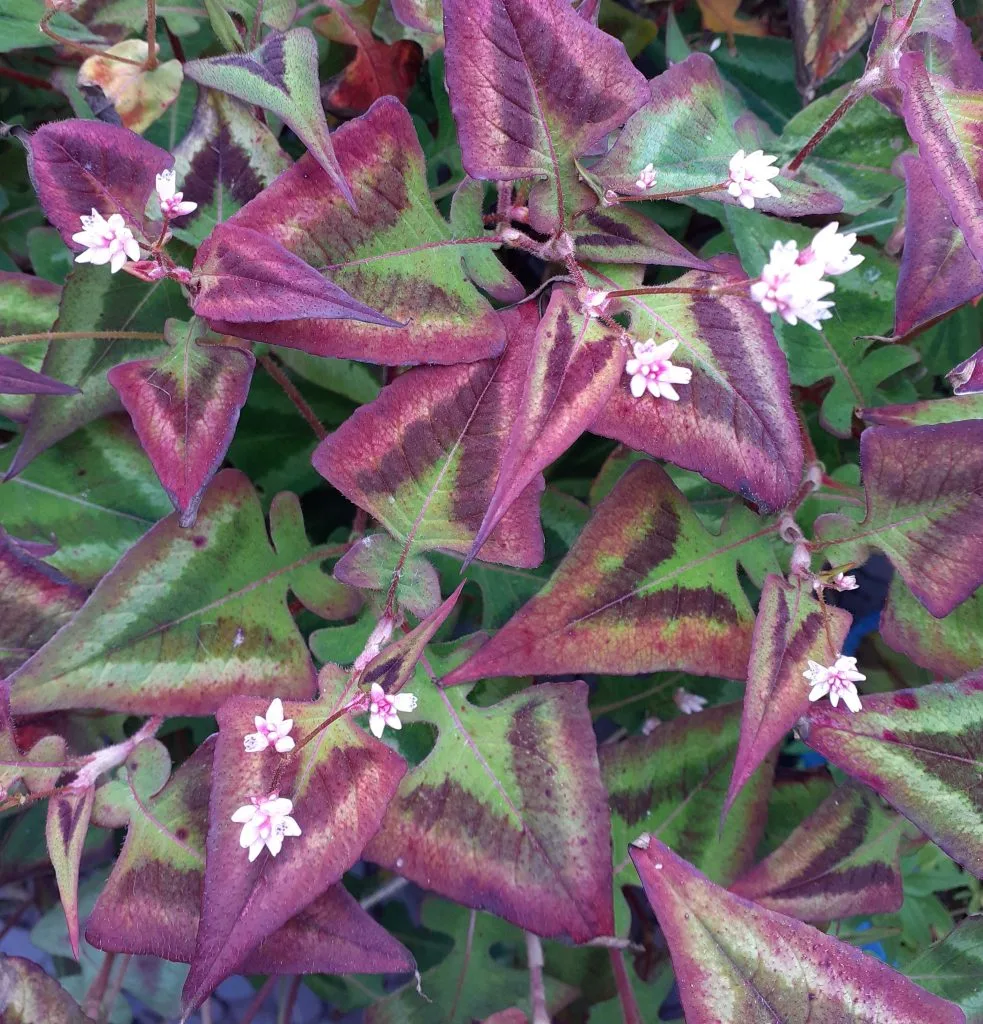
Purple Fantasy' is a perennial plant with low mounds of upright stems, creeping vigorously from stout rhizomes. Triangular leaves emerge maroon-purple in spring, turning green and developing purple markings, with leaf undersides tinged pink; these are held on short winged stalks. Tiny pink or white flowers in 1cm pompoms bloom in profusion and are borne on stem tips of slender stems to 60cm high from midsummer to autumn
Scientific classification
- Species
- knotweed 'Purple Fantasy' (Persicaria 'Purple Fantasy')
- Genus
- Persicaria
- Family
- Polygonaceae
- Order
- Caryophyllales
- Class
- Magnoliopsida
- Phylum
- Magnoliophyta
- Contact with all parts may irritate skin, the sap may cause mild stomach upset if ingested. Wear gloves and other protective equipment when handling]
- Toxicity
- Herbaceous Perennial
- Plant type
- 0.5-1 metres
- Height
- 1-1.5 metres
- Spread
- Semi evergreen
- Foliage
- Trailing
- Habit
- Spring · Summer · Autumn · Winter
- Season of interest
- Full sun · Partial shade
- Sunlight
- Information to be completed
- Ideal temperature









knotweed 'Purple Fantasy' pictures
Toxicity
Contact with all parts may irritate skin, the sap may cause mild stomach upset if ingested. Wear gloves and other protective equipment when handling]
knotweed 'Purple Fantasy' care guide
- Moderate regular watering, avoid prolonged drought or waterlogging
- Watering
- Full sun · Partial shade
- Sunlight

Watering
Moderate regular watering, avoid prolonged drought or waterlogging
Fertilizing
 Fertilizing
Balanced feed in spring and light repeat in growth season
Pruning
 Pruning
Cut back in autumn
Propagation
 Propagation
Propagate by stem tip cuttings of non flowering shoots or by division
Growing
 Growing
Grow in moist soil in sun or part-shade. Dense groundcover, may be invasive and needs space to spread so careful siting is necessary
Common pests and diseases
Diseases
Usually trouble free
Pests
Usually trouble free
Explore the plant health library →




