
Monstera 'Monkey Mask'
Also known as: Information to be completed
An evergreen climber, grown in temperate areas as a greenhouse, conservatory or house plant, and is up to 1m high, with elliptic to oblong-lanceolate, rich green leaves, up to about 20cm long, each with several perforations; flowers are borne on a spadix up to 3.5cm long, and followed by white fruits 5-8mm across, but plants grown in containers rarely produce flowers or fruit
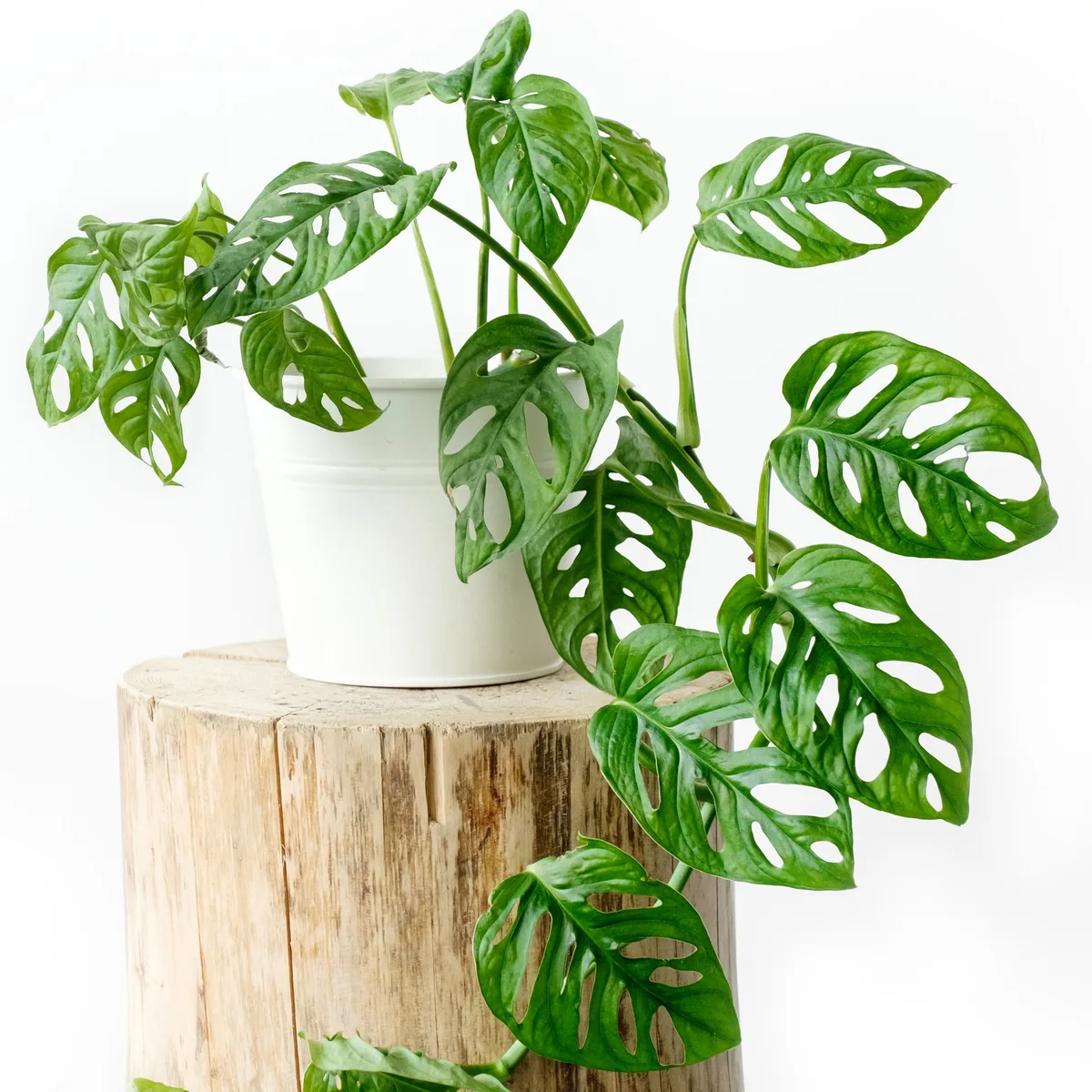
Scientific classification
- Species
- Monstera 'Monkey Mask' (Monstera 'Monkey Mask')
- Genus
- Monstera
- Family
- Araceae
- Harmful if eaten; skin/eye irritant. Wear gloves and other protective equipment when handling
- Toxicity
- Climber Wall Shrub · Conservatory Greenhouse · Houseplants
- Plant type
- 0.5-1 metres
- Height
- 0.5-1 metres
- Spread
- Evergreen
- Foliage
- Climbing · Trailing
- Habit
- Spring · Summer · Autumn · Winter
- Season of interest
- Partial shade
- Sunlight
- Information to be completed
- Ideal temperature









Monstera 'Monkey Mask' pictures
Distribution of Monstera 'Monkey Mask'
Distribution map
Information to be completed
Information to be completed
Culture
Information to be completed
Toxicity
Harmful if eaten; skin/eye irritant. Wear gloves and other protective equipment when handling
Quick identification of Monstera 'Monkey Mask'
Information to be completed
Monstera 'Monkey Mask' care guide
- Moderate regular watering, allowing brief slight drying between soakings
- Watering
- Partial shade
- Sunlight
- Information to be completed
- Ideal temperature

Watering
Moderate regular watering, allowing brief slight drying between soakings
Fertilizing
 Fertilizing
Balanced perennial feed every four weeks from spring through summer
Pruning
 Pruning
Routine pruning is unnecessary; shorten overlong shoots to fit the available space. For last-year flowering growth, prune after flowering; for current-year flowering growth, prune in late winter or spring. This guidance is for established plants.
Propagation
 Propagation
Propagate by internodal softwood cuttings, by tip cuttings with one leaf attached, or by leaf cuttings, all with bottom heat in a sandy propagating mix in summer; or by air-layering in autumn
Growing
 Growing
In cooler climates, grow in a warm greenhouse or as houseplant (minimum 10-15ºC) in a draught-free position, in moist but well-drained, loam-based potting compost such as John Innes No. 2, in bright indirect light with moderate to high humidity; sponge the leaves to keep them free of dust and dirt, and water freely and apply a balanced liquid fertilizer once a month in the growing season, but water sparingly in winter; it can use its aerial roots to climb if given support, for example on a moss-covered pole; in warmer climates, grow outdoors in moderately fertile, humus-rich, moist but well-drained soil in partial shade. See houseplant cultivation and Monstera for further information
People also ask
Information to be completed
Common pests and diseases
Diseases
Generally disease-free
Pests
May be susceptible to scale insects and glasshouse red spider mite
Explore the plant health library →




