
rock jasmine
Also known as: Information to be completed
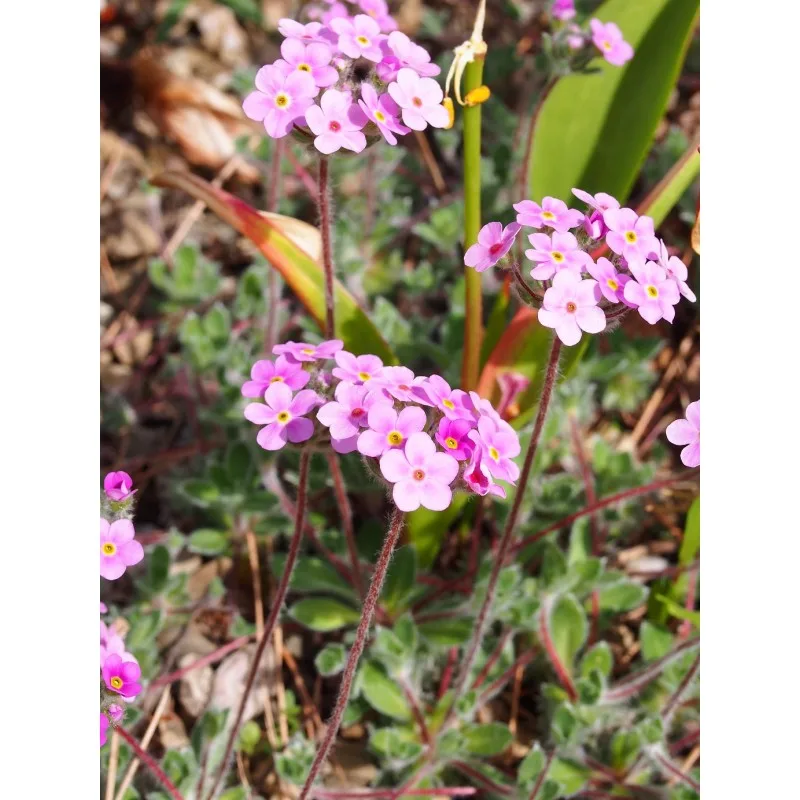
A mat-forming, evergreen perennial spreading by stolons. The rosettes are covered in silky hairs, and appear more silvery over winter. The flowers are a deep, rich pink with a small yellow eye, borne in generous clusters on red stems in spring
Scientific classification
- Species
- rock jasmine (Androsace sarmentosa subsp. primuloides)
- Genus
- Androsace
- Family
- Primulaceae
- Information to be completed
- Toxicity
- Alpine Rockery
- Plant type
- Up to 10 cm
- Height
- 0.1-0.5 metres
- Spread
- Evergreen
- Foliage
- Matforming
- Habit
- Spring · Summer · Autumn · Winter
- Season of interest
- Full sun
- Sunlight
- Information to be completed
- Ideal temperature









rock jasmine pictures
Distribution of rock jasmine
Distribution map
Himalaya
Information to be completed
Culture
Information to be completed
Toxicity
Information to be completed
Quick identification of rock jasmine
Information to be completed
rock jasmine care guide
- Moderate regular watering, avoid prolonged drought and stagnant waterlogging
- Watering
- Full sun
- Sunlight
- Information to be completed
- Ideal temperature

Watering
Moderate regular watering, avoid prolonged drought and stagnant waterlogging
Fertilizing
 Fertilizing
Balanced perennial feed every four weeks spring through summer growth
Pruning
 Pruning
No pruning required
Propagation
 Propagation
Propagate by seed sown in containers in an open cold frame as soon as ripe, or in autumn. Root single rosettes as cuttings in early to mid summer. Keep moist but water from below to avoid wetting the rosettes
Growing
 Growing
Grow in a scree bed, in vertical crevices in rock or in moist but gritty, well-drained soil
People also ask
Information to be completed
Common pests and diseases
Diseases
Vulnerable to fungal disease in damp conditions. Remove dead rosettes to reduce the risk of infection
Pests
Generally pest-free. May be susceptible to aphids under glass
Explore the plant health library →




