
rock jasmine 'Doksa'
Also known as: Information to be completed
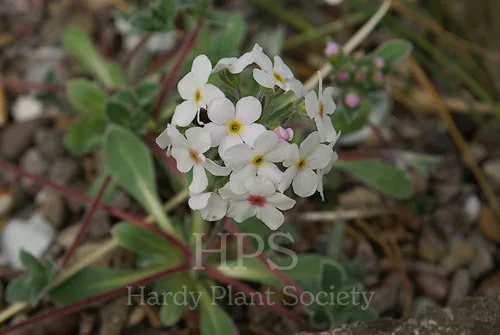
Doksa' is an alpine herbaceous perennial, up to 8cm high and spreading by stolons, with rosettes of grey-green leaves and clusters of large pale pink flowers with yellow centres in spring
Scientific classification
- Species
- rock jasmine 'Doksa' (Androsace sarmentosa subsp. primuloides 'Doksa')
- Genus
- Androsace
- Family
- Primulaceae
- Order
- Ericales
- Class
- Magnoliopsida
- Phylum
- Magnoliophyta
- Information to be completed
- Toxicity
- Conservatory Greenhouse · Alpine Rockery
- Plant type
- Up to 10 cm
- Height
- 0.1-0.5 metres
- Spread
- Evergreen
- Foliage
- Matforming
- Habit
- Spring · Summer · Autumn · Winter
- Season of interest
- Full sun
- Sunlight
- Information to be completed
- Ideal temperature









rock jasmine 'Doksa' pictures
Distribution of rock jasmine 'Doksa'
Distribution map
- Native
- Introduced
- Cultivated
Source:WCVP v16 · Royal Botanic Gardens, Kew · CC BY 3.0 · Boundaries:WGSRPD / TDWG
rock jasmine 'Doksa' care guide
- Moderate regular watering, allowing brief slight drying between soakings
- Watering
- Full sun
- Sunlight

Watering
Moderate regular watering, allowing brief slight drying between soakings
Fertilizing
 Fertilizing
Balanced perennial feed every four weeks from spring through summer
Pruning
 Pruning
No pruning required, but removing dead rosettes will reduce the risk of fungal infections
Propagation
 Propagation
Propagate by rooting single rosettes as softwood cuttings, and keep moist by watering from below
Growing
 Growing
Grow in moist but gritty well-drained soil in sun, in a rock garden, scree bed, or trough, in vertical crevices in rock-work or walls, or in an alpine house, where it can be protected from winter wet, in a mixture of sharp sand and leaf mould
Common pests and diseases
Diseases
May be affected by fungal diseases in damp conditions
Pests
May be susceptible to aphids, root mealybugs, root aphid, and glasshouse red spider mite; birds may tear at rosettes
Explore the plant health library →




