
two-lobed false hydrangea
Also known as: Information to be completed
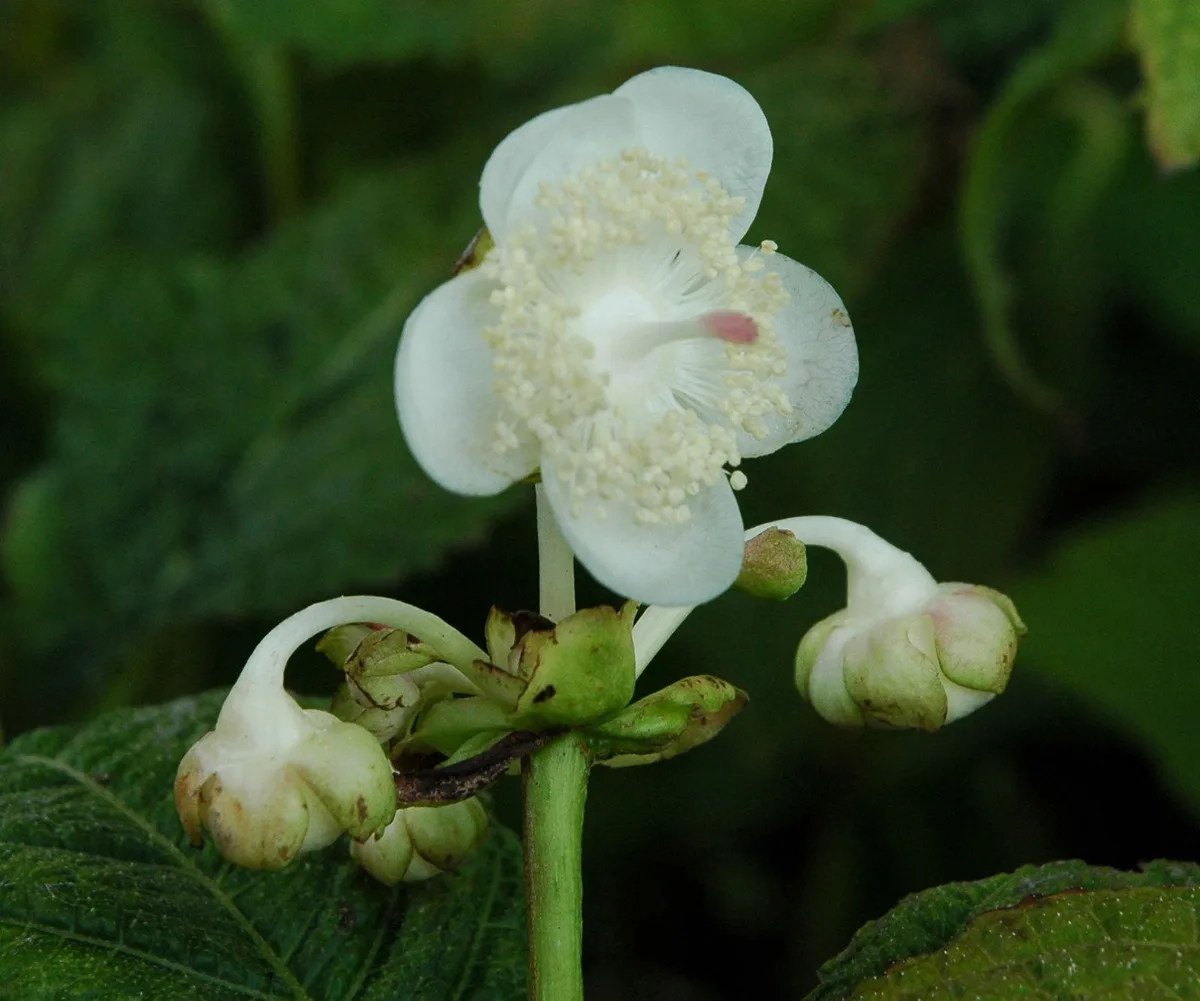
A clump-forming perennial with toothed, oval leaves with a characteristic fish-tail split at the tip. Height 40cm (16in). In summer branched clusters of pure white, hydrangea-like flowers with yellow stamens are borne above the foliage.
Scientific classification
- Species
- two-lobed false hydrangea (Hydrangea bifida)
- Genus
- Hydrangea
- Family
- Hydrangeaceae
- Skin allergen. Wear gloves and other protective equipment when handling
- Toxicity
- Herbaceous Perennial
- Plant type
- 0.1-0.5 metres
- Height
- 0.1-0.5 metres
- Spread
- Deciduous
- Foliage
- Bushy
- Habit
- Spring · Summer · Autumn
- Season of interest
- Partial shade
- Sunlight
- Information to be completed
- Ideal temperature









two-lobed false hydrangea pictures
Distribution of two-lobed false hydrangea
Distribution map
Japan
Information to be completed
Culture
Information to be completed
Toxicity
Skin allergen. Wear gloves and other protective equipment when handling
Quick identification of two-lobed false hydrangea
Information to be completed
two-lobed false hydrangea care guide
- Maintain evenly moist root soil, avoid standing water around roots
- Watering
- Partial shade
- Sunlight
- Information to be completed
- Ideal temperature

Watering
Maintain evenly moist root soil, avoid standing water around roots
Fertilizing
 Fertilizing
Acidic flowering shrub feed monthly spring through mid-autumn season
Pruning
 Pruning
No pruning required. Cut back dead stems in autumn/winter
Propagation
 Propagation
Propagate from seed sown in containers in a cold frame as soon as ripe. Germination is erratic. Seedlings take several years to reach flowering size. Alternatively, divide clumps in early spring. These can be slow to re-establish.
Growing
 Growing
Grow in any reliably moist, humus-rich soil in partial shade. Shelter from cold, drying winds. Dislikes heat or drought.
People also ask
Information to be completed
Common pests and diseases
Diseases
May be susceptible to a leaf spot, powdery mildews, grey moulds (Botrytis) and honey fungus (rarely)
Pests
May be susceptible to slugs
Explore the plant health library →




