
Physalis alkekengi var. franchetii 'Gigantea'
Also known as: Information to be completed
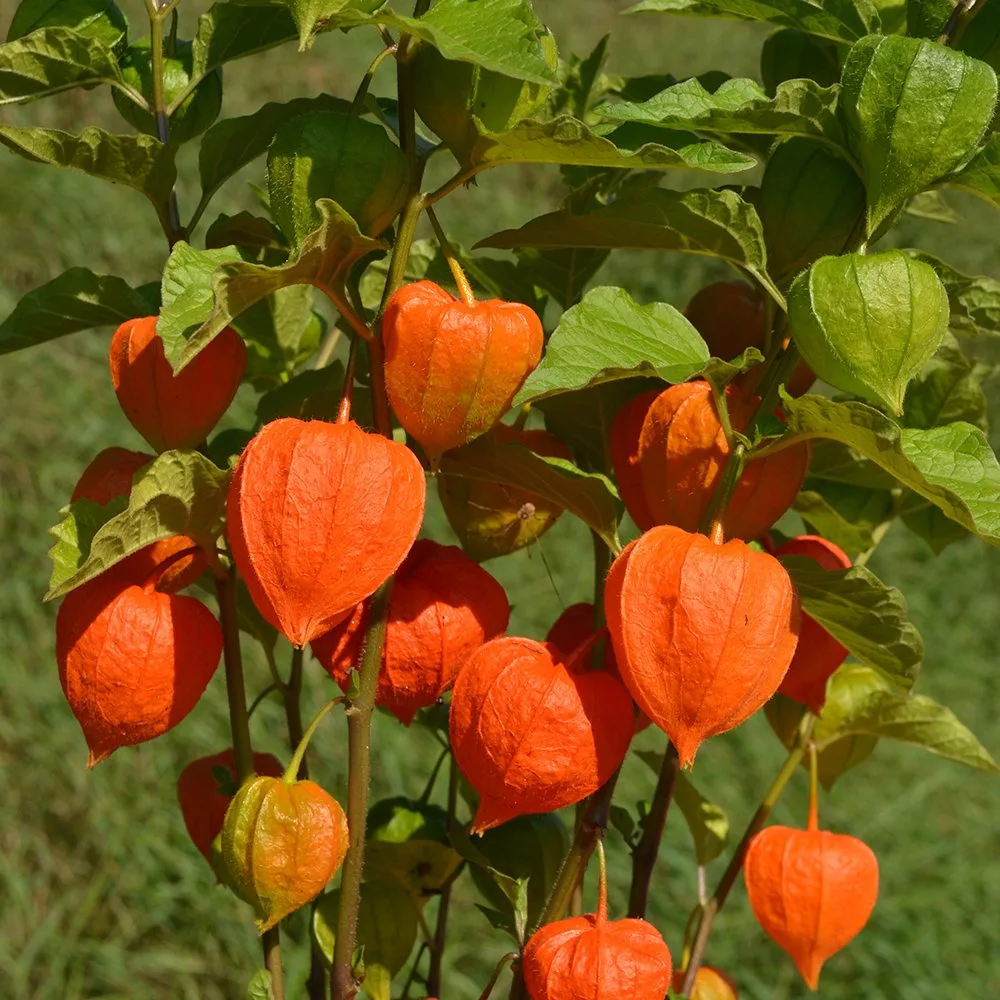
A vigorous, spreading, rhizomatous perennial to 1m tall, with upright stems bearing broadly ovate leaves. Tiny, creamy-white, bell-shaped flowers are produced in summer; these are followed by large, inflated, papery orange 'lanterns' (calyces), which contain a small berry. The stems can be cut for use in floral arrangements
Scientific classification
- Species
- Physalis alkekengi var. franchetii 'Gigantea' (Physalis alkekengi var. franchetii 'Gigantea')
- Genus
- Physalis
- Family
- Solanaceae
- Order
- Solanales
- Class
- Magnoliopsida
- Phylum
- Magnoliophyta
- Harmful if eaten, except ripe fruit. Wear gloves and other protective equipment when handling]
- Toxicity
- Herbaceous Perennial
- Plant type
- 0.5-1 metres
- Height
- 0.1-0.5 metres
- Spread
- Deciduous
- Foliage
- Clump forming
- Habit
- Spring · Summer · Autumn
- Season of interest
- Full sun · Partial shade
- Sunlight
- Information to be completed
- Ideal temperature









Physalis alkekengi var. franchetii 'Gigantea' pictures
Distribution of Physalis alkekengi var. franchetii 'Gigantea'
Distribution map
- Native
- Introduced
- Cultivated
Source:WCVP v16 · Royal Botanic Gardens, Kew · CC BY 3.0 · Boundaries:WGSRPD / TDWG
Toxicity
Harmful if eaten, except ripe fruit. Wear gloves and other protective equipment when handling]
Physalis alkekengi var. franchetii 'Gigantea' care guide
- Keep moisture even through flowering and fruiting, avoiding hard dry swings
- Watering
- Full sun · Partial shade
- Sunlight

Watering
Keep moisture even through flowering and fruiting, avoiding hard dry swings
Fertilizing
 Fertilizing
Tomato or pepper feed every one to two weeks in fruiting season
Pruning
 Pruning
No pruning required
Propagation
 Propagation
Propagate by sowing seed in containers in a cold frame in spring. Divide in spring
Growing
 Growing
Grow in any well-drained soil in sun or partial shade. Has the potential to become a nuisance if not managed well
Common pests and diseases
Diseases
Generally disease-free
Pests
May be susceptible to caterpillar damage
Explore the plant health library →




