
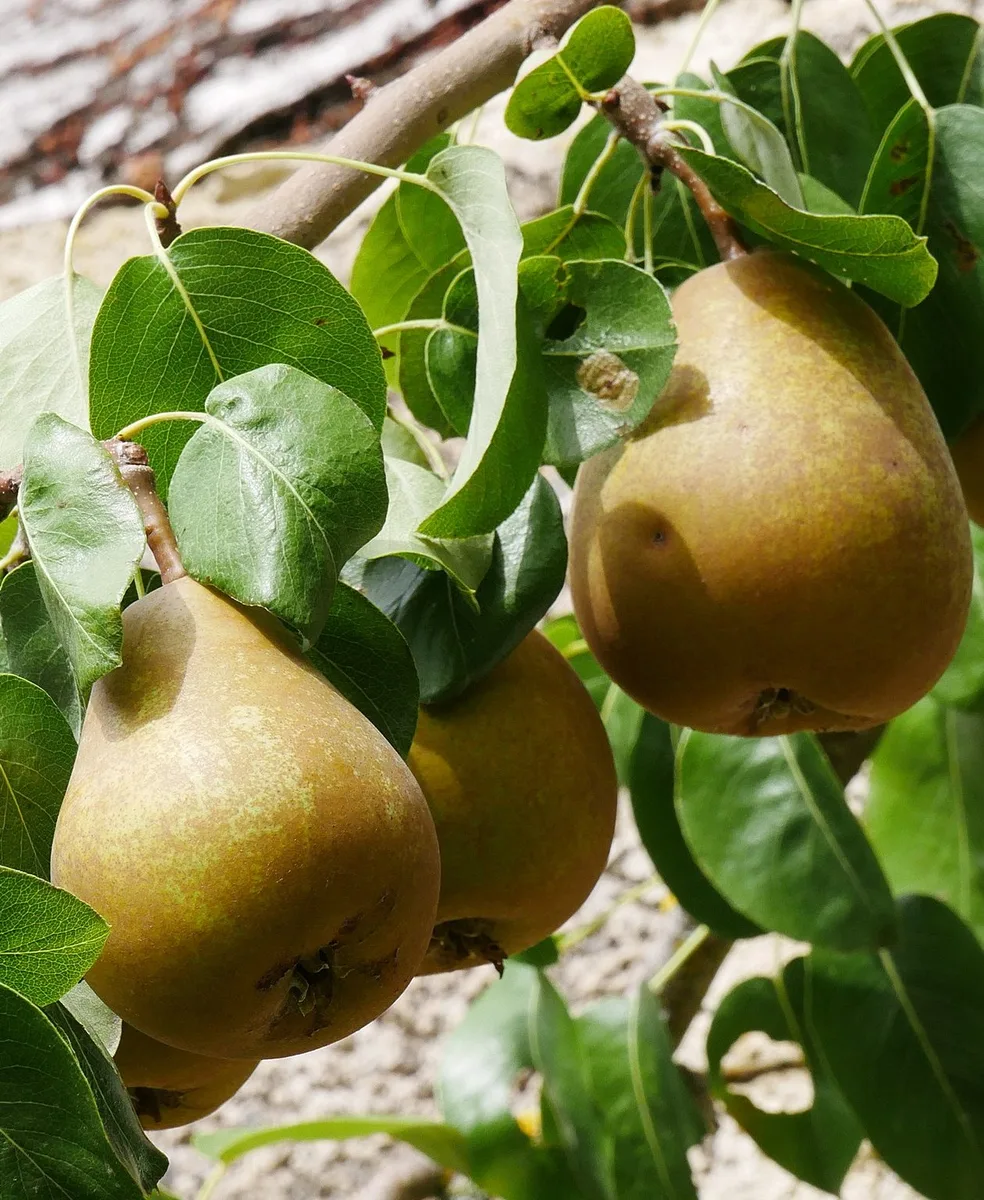
pear 'Beurré Hardy'
Also known as: Information to be completed
A very melting texture and is fragrant with a rose-water perfume. It produces good, regular crops and is a very hardy, vigorous tree. Although it is slow to bear fruit, it has resistance to scab. Pollination group 3. Season of use November to December
Scientific classification
- Species
- pear 'Beurré Hardy' (Pyrus communis 'Beurré Hardy')
- Genus
- Pyrus
- Family
- Rosaceae
- Order
- Rosales
- Class
- Magnoliopsida
- Phylum
- Magnoliophyta
- Information to be completed
- Toxicity
- Fruit Edible
- Plant type
- 4-8 metres
- Height
- 4-8 metres
- Spread
- Deciduous
- Foliage
- Bushy
- Habit
- Spring · Summer · Autumn
- Season of interest
- Full sun
- Sunlight
- Information to be completed
- Ideal temperature









pear 'Beurré Hardy' pictures
Distribution of pear 'Beurré Hardy'
Distribution map
- Native
- Introduced
- Cultivated
Source:WCVP v16 · Royal Botanic Gardens, Kew · CC BY 3.0 · Boundaries:WGSRPD / TDWG
pear 'Beurré Hardy' care guide
- Deep watering during dry spells, allowing slight surface drying between soakings
- Watering
- Full sun
- Sunlight

Watering
Deep watering during dry spells, allowing slight surface drying between soakings
Fertilizing
 Fertilizing
Balanced shrub or tree feed once each early spring
Pruning
 Pruning
Regular pruning required; a spur bearer. Prune according to form: cordons, espaliers and pruning established fans. Can also be grown as standards or spindlebushes. For further guidance see: pruning new pear trees, summer pear pruning, winter pear pruning, renovating pear trees
Propagation
 Propagation
Propagate by grafting or chip budding onto a rootstock for fruit. Quince rootstocks are usually used
Growing
 Growing
Grow in any well-drained, fairly moisture retentive soil . The ideal pH is 6.5. Incorporate plenty of organic matter on thin soils. Choose a sheltered position in full sun. Suitable for all training forms, including espalier, cordon and fan-trained. Needs another cultivar for pollination. Keep a weed free area of 60cm radius around the trunk. Thin fruit if necessary
Common pests and diseases
Diseases
May be susceptible to brown rot, blossom wilt, fireblight and replant diseases
Pests
May be susceptible to aphids, caterpillars, codling moth, bullfinches, pear midge, pear and cherry slugworm and pear blister mite
Explore the plant health library →




