
Malus × purpurea 'Gulliver'
Also known as: Information to be completed
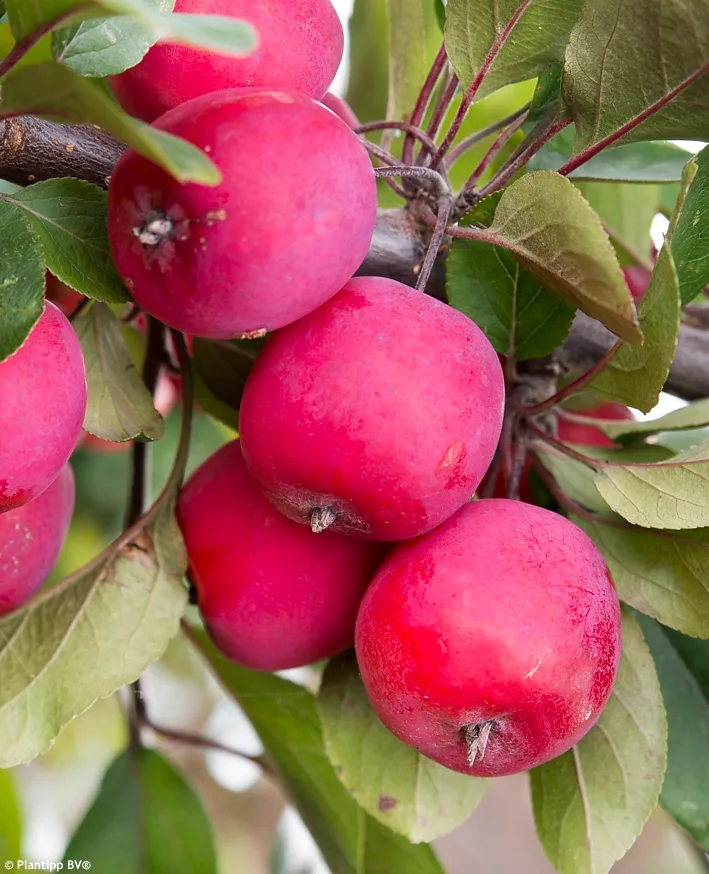
A compact, small tree to about 3m, with pale pink blossom opening in mid- to late spring from dark pink buds. The edible crab apples are ping-pong ball sized, ripening from magenta-purple to rich red, and hang on the tree to late autumn
Scientific classification
- Species
- Malus × purpurea 'Gulliver' (Malus × purpurea 'Gulliver')
- Genus
- Malus
- Family
- Rosaceae
- Order
- Rosales
- Class
- Magnoliopsida
- Phylum
- Magnoliophyta
- Information to be completed
- Toxicity
- Trees · Fruit Edible
- Plant type
- 2.5-4 metres
- Height
- 1-1.5 metres
- Spread
- Deciduous
- Foliage
- Information to be completed
- Habit
- Spring · Summer · Autumn
- Season of interest
- Full sun
- Sunlight
- Information to be completed
- Ideal temperature









Malus × purpurea 'Gulliver' pictures
Malus × purpurea 'Gulliver' care guide
- Regular moderate watering, deep soak during extended dry heat spells
- Watering
- Full sun
- Sunlight

Watering
Regular moderate watering, deep soak during extended dry heat spells
Fertilizing
 Fertilizing
Single spring slow-release fertilizer application before new leaf growth
Pruning
 Pruning
Little pruning is needed. Remove diseased, damaged, crowded or crossing shoots and unwanted growth. Timing depends on the plant: generally late winter or early spring; plants prone to bleeding and deciduous magnolias need different timing, and deciduous azaleas and lilacs are pruned after flowering.
Propagation
 Propagation
Propagate by chip budding or graftingPropagate by chip budding in late summer, or grafting in mid-winter. Plants grown from pips are unlikely to resemble the parent
Growing
 Growing
Grow in fertile, well-drained soil in full sun
Common pests and diseases
Diseases
May be susceptible to apple canker, apple scab, blossom wilt, brown rot, fireblight, honey fungus and powdery mildews
Pests
May be susceptible to aphids, including woolly aphid, fruit tree red spider mite, codling moth and other caterpillars
Explore the plant health library →




