
black tree fern
Also known as: black-stemmed tree fern; gray tree fern; mamaku; sago fern
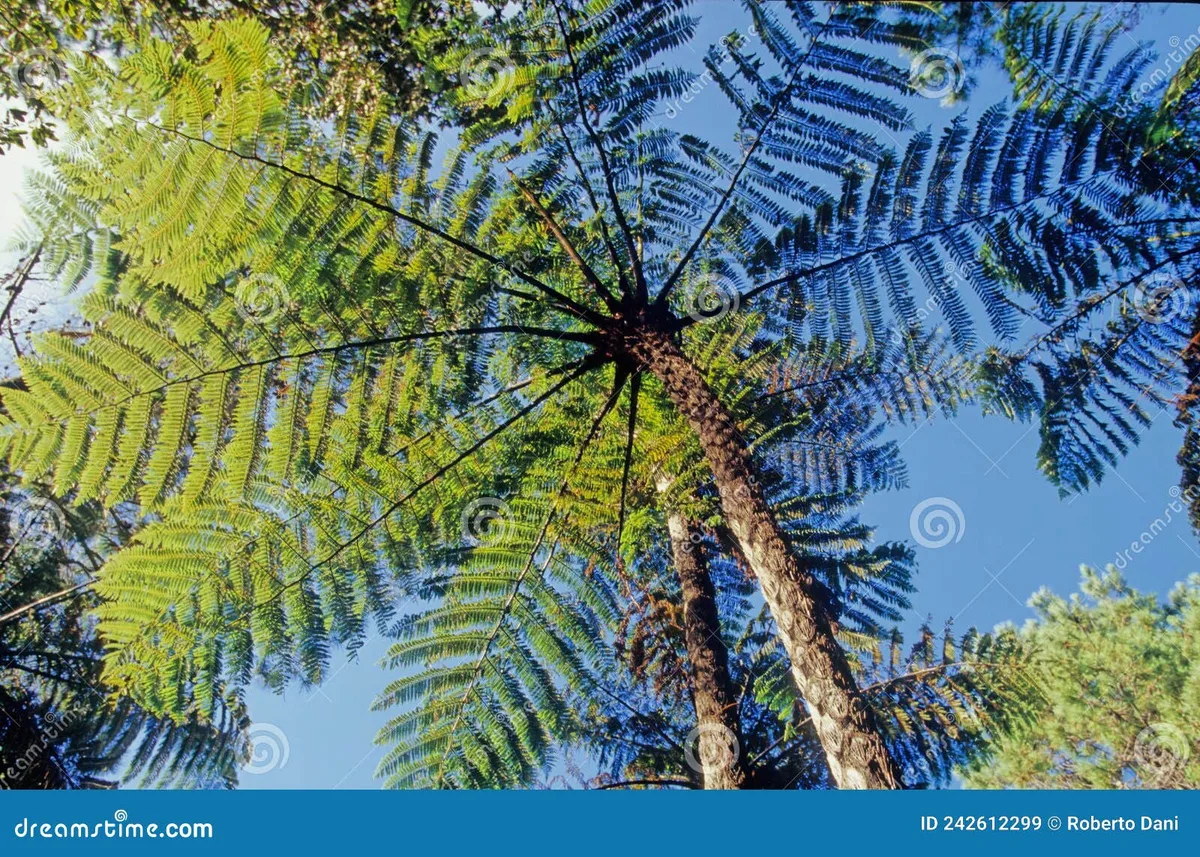
An evergreen, upright tree fern eventually reaching heights of 7-16m. Its slender black trunk bears fronds to 5m long arching up from the crown and made up of small, oblong, glossy leaflets with scaly undersides and spines along the margins
Scientific classification
- Species
- black tree fern (Sphaeropteris medullaris)
- Genus
- Sphaeropteris
- Family
- Cyatheaceae
- Information to be completed
- Toxicity
- Ferns
- Plant type
- Higher than 12 metres
- Height
- wider than 8 metres
- Spread
- Evergreen
- Foliage
- Columnar upright
- Habit
- Spring · Summer · Autumn · Winter
- Season of interest
- Partial shade
- Sunlight
- Information to be completed
- Ideal temperature









black tree fern pictures
Distribution of black tree fern
Distribution map
New Zealand to Southern Pacific
Information to be completed
Culture
Information to be completed
Toxicity
Information to be completed
Quick identification of black tree fern
Information to be completed
black tree fern care guide
- Keep soil evenly moist with higher air humidity
- Watering
- Partial shade
- Sunlight
- Information to be completed
- Ideal temperature

Watering
Keep soil evenly moist with higher air humidity
Fertilizing
 Fertilizing
Weak balanced feed during active frond growth
Pruning
 Pruning
Dead or damaged fronds may be removed as necessary
Propagation
 Propagation
Propagate by sowing spores as soon as ripe
Growing
 Growing
In areas prone to frost, grow in a container under glass with a minimum winter temperature of 10°C. The plant may be placed outside during the summer in a sheltered and partially-shaded spot. It requires a moist but well-drained, humus-rich soil; in hot, dry summers water the stem as well as the soil, but avoid watering the crown in winter. Apply liquid fertiliser monthly during the growing season. Will grow without winter protection only in milder areas. See how to grow tender ferns outdoors for further advice
People also ask
Information to be completed
Common pests and diseases
Diseases
Generally disease-free
Pests
Generally pest-free
Explore the plant health library →




