
Heptapleurum macrophyllum
Also known as: Information to be completed
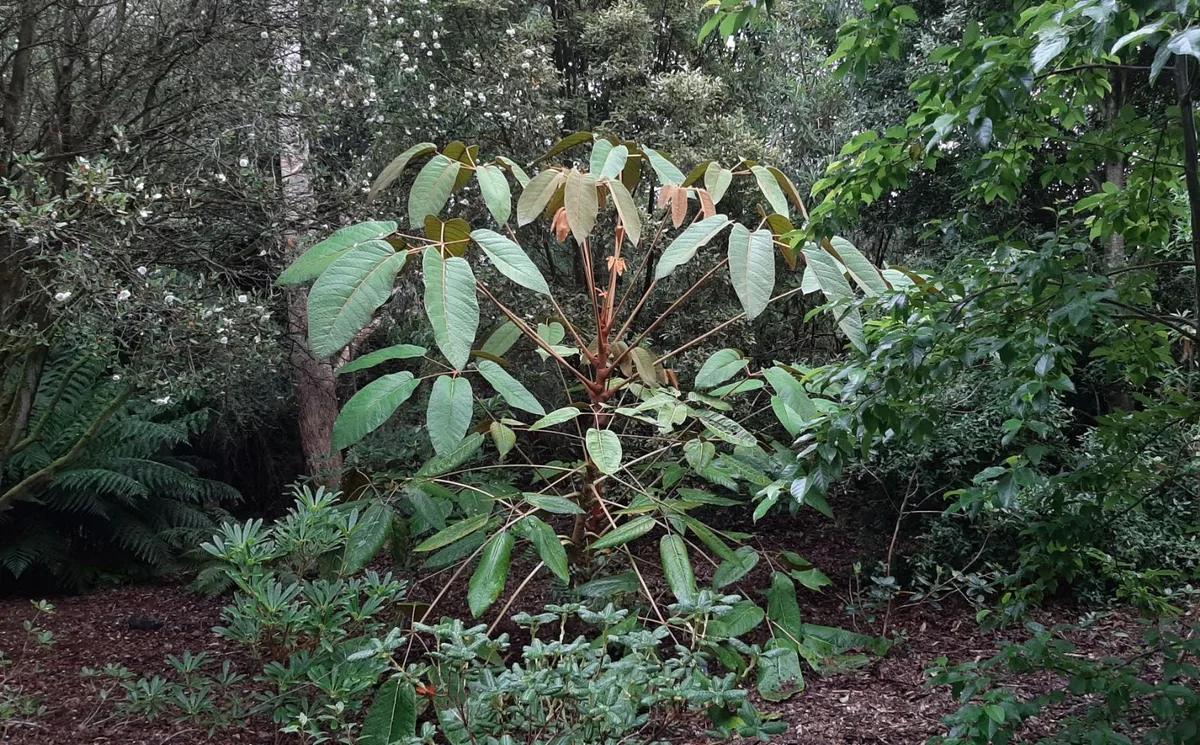
A hardy species of exotic-looking deciduous tree which can be grown as a houseplant but can reach a height of up to 8m in the right conditions, with large, broad, heavily veined green foliage providing a jungle-like feel. The large foliage may be susceptible to wind damage so if grown outside, it is best placed against a south-facing, sheltered wall in dappled sunlight
Scientific classification
- Species
- Heptapleurum macrophyllum (Heptapleurum macrophyllum)
- Genus
- Heptapleurum
- Family
- Araliaceae
- Information to be completed
- Toxicity
- Trees
- Plant type
- Information to be completed
- Height
- Information to be completed
- Spread
- Deciduous
- Foliage
- Columnar upright
- Habit
- Spring · Summer · Autumn
- Season of interest
- Full sun · Partial shade
- Sunlight
- Information to be completed
- Ideal temperature









Heptapleurum macrophyllum pictures
Distribution of Heptapleurum macrophyllum
Distribution map
China Vietnam
Information to be completed
Culture
Information to be completed
Toxicity
Information to be completed
Quick identification of Heptapleurum macrophyllum
Information to be completed
Heptapleurum macrophyllum care guide
- Moderate regular watering, allowing brief slight drying between soakings
- Watering
- Full sun · Partial shade
- Sunlight
- Information to be completed
- Ideal temperature

Watering
Moderate regular watering, allowing brief slight drying between soakings
Fertilizing
 Fertilizing
Balanced perennial feed every four weeks from spring through summer
Pruning
 Pruning
No pruning required, but to keep it compact, pinch out upward-facing growing shoots to encourage more bushy growth lower down the plant
Propagation
 Propagation
Propagate by removing the growing tips as cuttings in spring. This may prove to be difficult but worth trying
Growing
 Growing
Grow in a bright position, out of direct sunlight in moist but well drained soil. If grown outside, choose a sheltered position against a south-facing wall. Feed during the growing season, stopping when the temperature drops or the plant becomes inactive. Avoid overwatering
People also ask
Information to be completed
Common pests and diseases
Diseases
May be susceptible to a leaf spot
Pests
May be susceptible to mealybugs, aphids, thrip and red spider mite
Explore the plant health library →




