
Himalayan hound's tongue
Also known as: Information to be completed
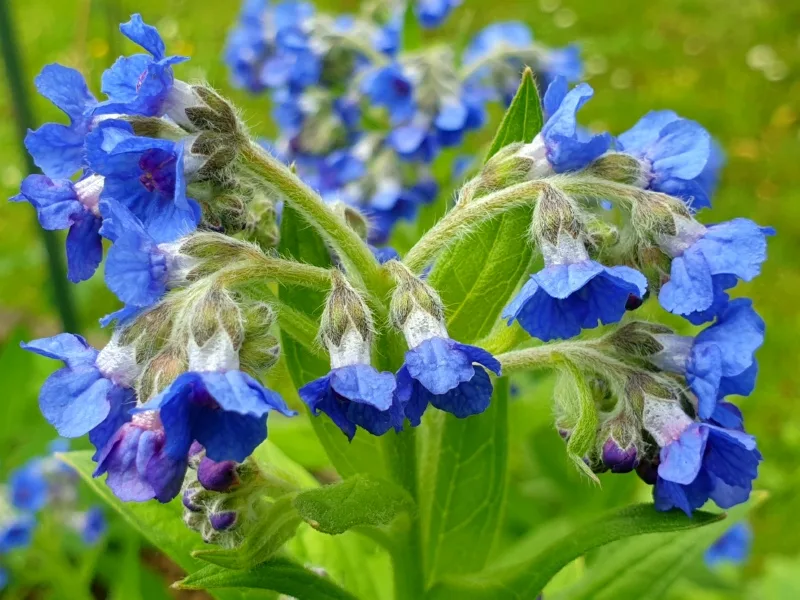
An upright, but bushy clump-forming perennial with bristly, narrow, oblong green leaves. Reaches a height of 60cm. Sprays of the brightest azure flowers appear from mid-spring to mid-summer
Scientific classification
- Species
- Himalayan hound's tongue (Cynoglossum nervosum)
- Genus
- Cynoglossum
- Family
- Boraginaceae
- Order
- Lamiales
- Class
- Magnoliopsida
- Phylum
- Magnoliophyta
- Foliage may irritate skin. Wear gloves and other protective equipment when handling
- Toxicity
- Herbaceous Perennial
- Plant type
- 0.5-1 metres
- Height
- 0.5-1 metres
- Spread
- Deciduous
- Foliage
- Bushy · Clump forming · Columnar upright
- Habit
- Spring · Summer · Autumn
- Season of interest
- Full sun · Partial shade
- Sunlight
- Information to be completed
- Ideal temperature









Himalayan hound's tongue pictures
Distribution of Himalayan hound's tongue
Distribution map
- Native
- Introduced
- Cultivated
Source:WCVP v16 · Royal Botanic Gardens, Kew · CC BY 3.0 · Boundaries:WGSRPD / TDWG
Toxicity
Foliage may irritate skin. Wear gloves and other protective equipment when handling
Himalayan hound's tongue care guide
- Even soft damp soil, water moderately often to prevent full drying
- Watering
- Full sun · Partial shade
- Sunlight

Watering
Even soft damp soil, water moderately often to prevent full drying
Fertilizing
 Fertilizing
Mild balanced general fertilizer monthly spring and summer growth
Pruning
 Pruning
Cut all foliage back to ground level at the end of the growing season
Propagation
 Propagation
Propagate by seed in a cold frame in autumn or spring or by division in spring
Growing
 Growing
Grow in moist, well-drained soil in sun or partial shade
Common pests and diseases
Diseases
May be susceptible to a powdery mildew
Pests
Generally pest-free
Explore the plant health library →




