
lilac hibiscus 'Santa Cruz'
Also known as: Information to be completed
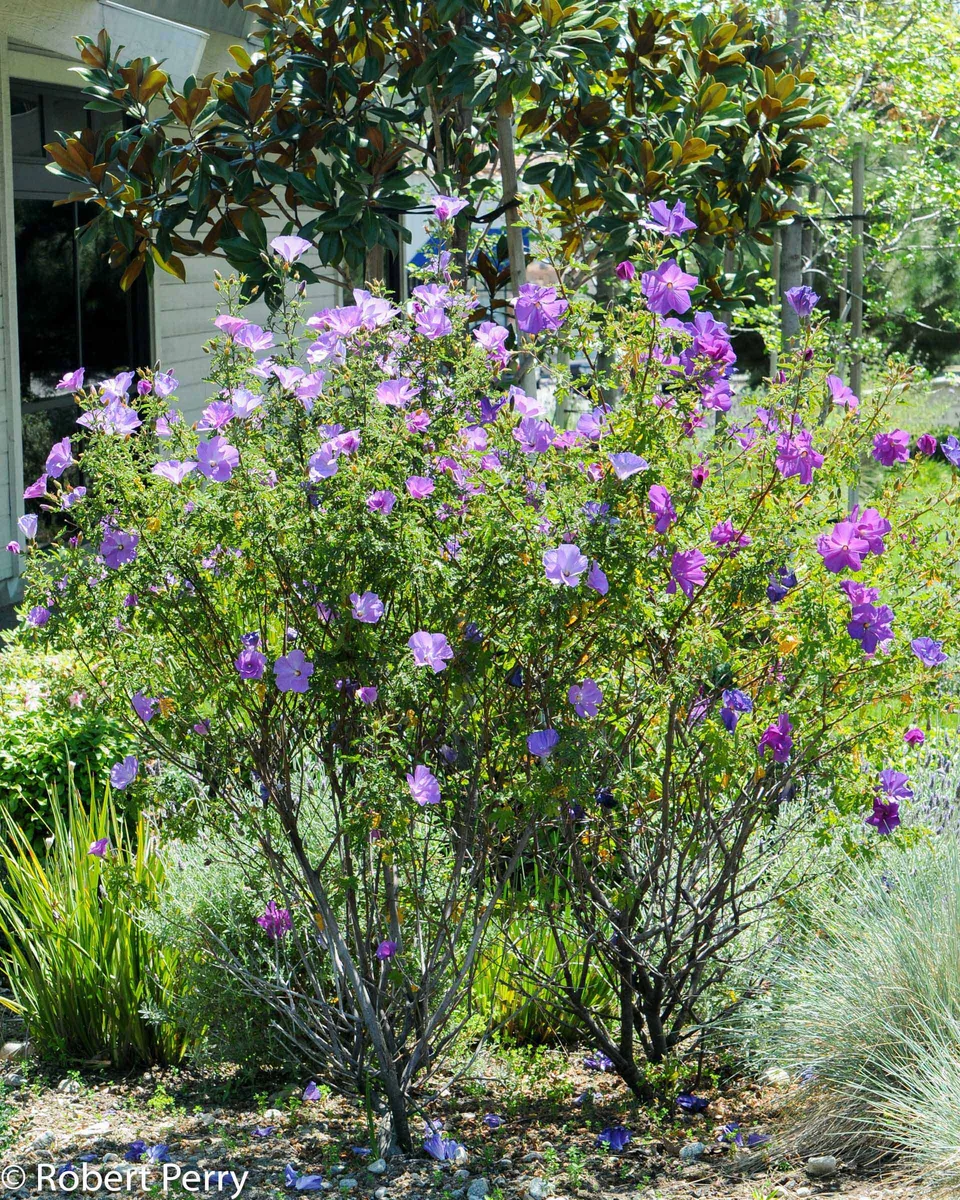
A fast-growing, evergreen shrub starting upright and spreading with age. The leaves are hairy, with five lobes and around 5cm long. Funnel-shaped, mauve-purple flowers 10cm across are produced singly from the leaf axils of young shoots from late spring to autumn
Scientific classification
- Species
- lilac hibiscus 'Santa Cruz' (Alyogyne huegelii 'Santa Cruz')
- Genus
- Alyogyne
- Family
- Malvaceae
- Order
- Malvales
- Class
- Magnoliopsida
- Phylum
- Magnoliophyta
- Information to be completed
- Toxicity
- Shrubs · Conservatory Greenhouse
- Plant type
- 1.5-2.5 metres
- Height
- 1.5-2.5 metres
- Spread
- Evergreen
- Foliage
- Bushy
- Habit
- Spring · Summer · Autumn · Winter
- Season of interest
- Full sun
- Sunlight
- Information to be completed
- Ideal temperature









lilac hibiscus 'Santa Cruz' pictures
Distribution of lilac hibiscus 'Santa Cruz'
Distribution map
- Native
- Introduced
- Cultivated
Source:WCVP v16 · Royal Botanic Gardens, Kew · CC BY 3.0 · Boundaries:WGSRPD / TDWG
lilac hibiscus 'Santa Cruz' care guide
- Moderate regular watering, avoid prolonged drought and stagnant waterlogging
- Watering
- Full sun
- Sunlight

Watering
Moderate regular watering, avoid prolonged drought and stagnant waterlogging
Fertilizing
 Fertilizing
Balanced perennial feed every four weeks spring through summer growth
Pruning
 Pruning
Prune lightly as needed to remove unwanted shoots and keep the shrub in shape. Prune in mid- to late spring.
Propagation
 Propagation
Root semi-ripe cuttings in late summer
Growing
 Growing
Under glass grow in free-draining compost in full light; plants can stand out in the summer. Outdoors grow in any well-drained soil in full sun, provided temperatures do not fall below freezing
Common pests and diseases
Diseases
Generally trouble free
Pests
Aphids, glasshouse red spider mite and glasshouse whitefly may be a problem
Explore the plant health library →




