
tree onion
Also known as: Egyptian onion
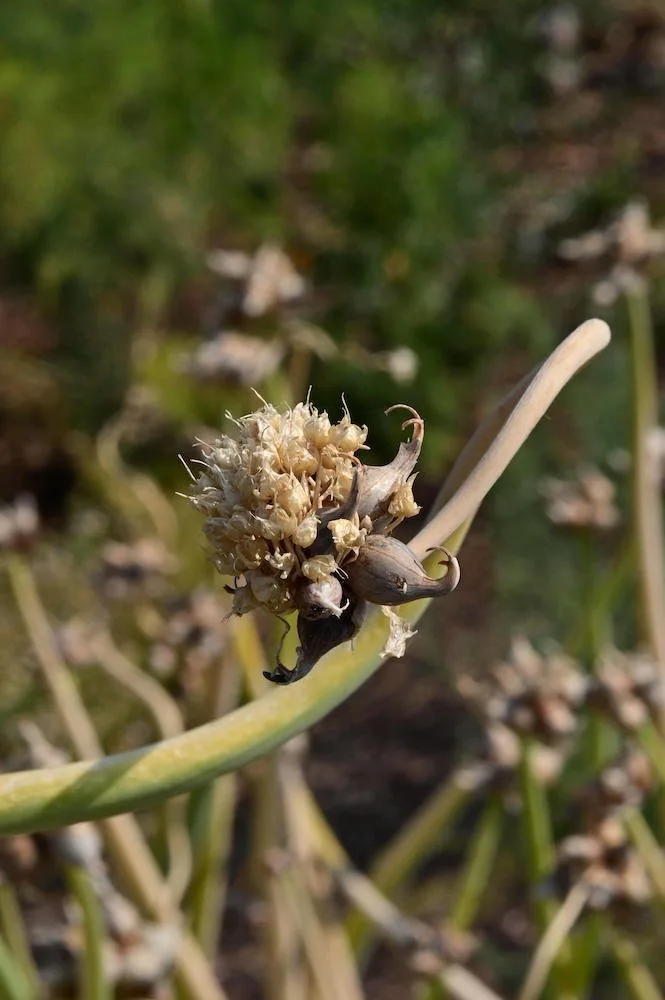
Bulbous perennial reaching up to 1.5 tall, often cultivated as an annual vegetable with thick, cylindrical grey-green edible leaves. The flower stems produces small greenish flowers and small edible bulbs
Scientific classification
- Species
- tree onion (Allium × proliferum)
- Genus
- Allium
- Family
- Amaryllidaceae
- Information to be completed
- Toxicity
- Bulbs · Herbs - Culinary
- Plant type
- 1-1.5 metres
- Height
- 0.1-0.5 metres
- Spread
- Deciduous
- Foliage
- Clump forming
- Habit
- Spring · Summer
- Season of interest
- Full sun
- Sunlight
- Information to be completed
- Ideal temperature









tree onion pictures
Distribution of tree onion
Distribution map
Information to be completed
Information to be completed
Culture
Information to be completed
Toxicity
Information to be completed
Quick identification of tree onion
Information to be completed
tree onion care guide
- Regular watering spring growth, reduce irrigation autumn leaf dieback
- Watering
- Full sun
- Sunlight
- Information to be completed
- Ideal temperature

Watering
Regular watering spring growth, reduce irrigation autumn leaf dieback
Fertilizing
 Fertilizing
Weak bulb liquid feed applied once before spring leaf emergence phase
Pruning
 Pruning
Remove bulbils from the top of the flower stem for culinary porposes and to reduce spread around the garden. Prune back once the foliage has died down
Propagation
 Propagation
Propagate by planting sets of bulbils in the autumn or in spring
Growing
 Growing
Grow in fertile, moisture retentive, but well-drained soil in full sun. Consider liming if the soil is acid, pH below 6.5. Harvest as spring onions in spring or let to gow into shallot-size onions. Prone to spreading if bulbils not removed
People also ask
Information to be completed
Common pests and diseases
Diseases
May be susceptible to onion white rot, onion downy mildew, leek rust and onion neck rot. Bolting, producing flowers, may be a problem
Pests
May be susceptible to onion fly, leek moth and narcissus eelworm
Explore the plant health library →




