
southern white cedar 'Top Point'
Also known as: Information to be completed
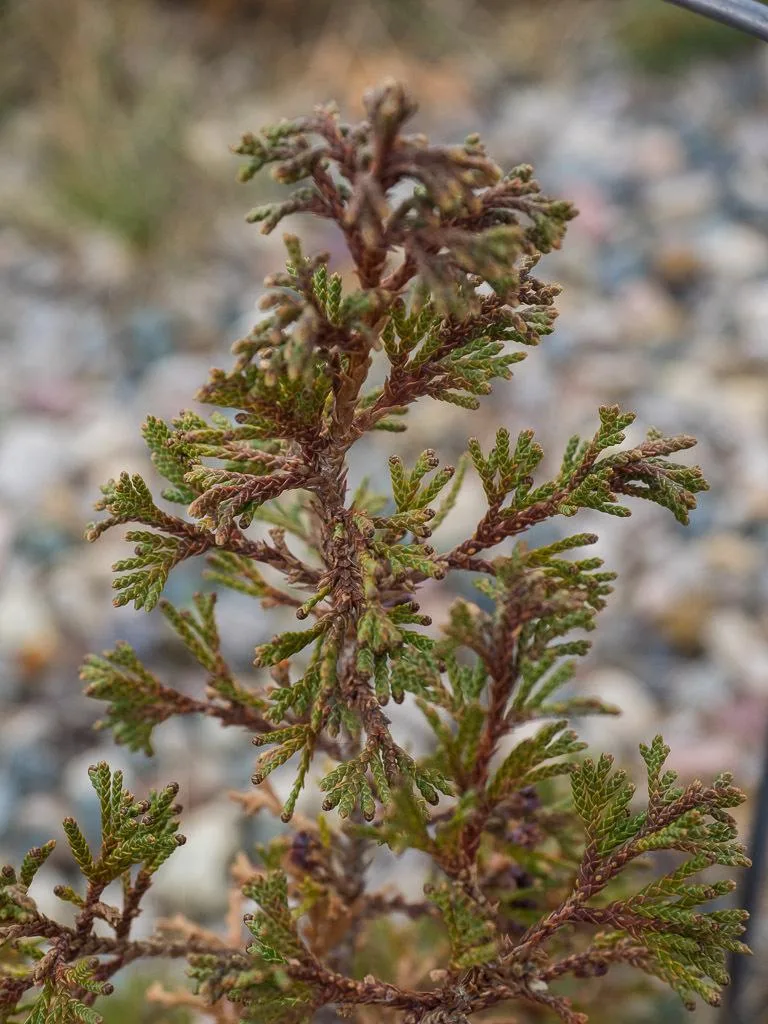
A dwarf conifer, with an upright, conical habit, to about 70cm high in 10 years. Short, flattened green needles are tinted bronze when young, and turn purple as the temperature drops in winter
Scientific classification
- Species
- southern white cedar 'Top Point' (Chamaecyparis thyoides 'Top Point')
- Genus
- Chamaecyparis
- Family
- Cupressaceae
- Order
- Cupressales
- Class
- Pinopsida
- Phylum
- Coniferophyta
- Information to be completed
- Toxicity
- Conifers · Shrubs
- Plant type
- 0.5-1 metres
- Height
- 0.1-0.5 metres
- Spread
- Evergreen
- Foliage
- Columnar upright
- Habit
- Autumn · Winter · Spring · Summer
- Season of interest
- Full sun
- Sunlight
- Information to be completed
- Ideal temperature









southern white cedar 'Top Point' pictures
Distribution of southern white cedar 'Top Point'
Distribution map
- Native
- Introduced
- Cultivated
Source:WCVP v16 · Royal Botanic Gardens, Kew · CC BY 3.0 · Boundaries:WGSRPD / TDWG
southern white cedar 'Top Point' care guide
- Deep occasional watering with excellent drainage, less once established
- Watering
- Full sun
- Sunlight

Watering
Deep occasional watering with excellent drainage, less once established
Fertilizing
 Fertilizing
Light conifer feed once yearly in early spring only
Pruning
 Pruning
No pruning required
Propagation
 Propagation
Propagate by semi-hardwood cuttings in late summer
Growing
 Growing
Grows well in moist but well-drained soil. Tolerant of chalk soils but prefers slightly acidic soil
Common pests and diseases
Diseases
May be susceptible to honey fungus, Phytophthora root rot and Coryneum canker (see Conifers: brown patches)
Pests
May be susceptible to conifer aphid and juniper scale
Explore the plant health library →




