
English lavender 'Princess Blue'
Also known as: Information to be completed
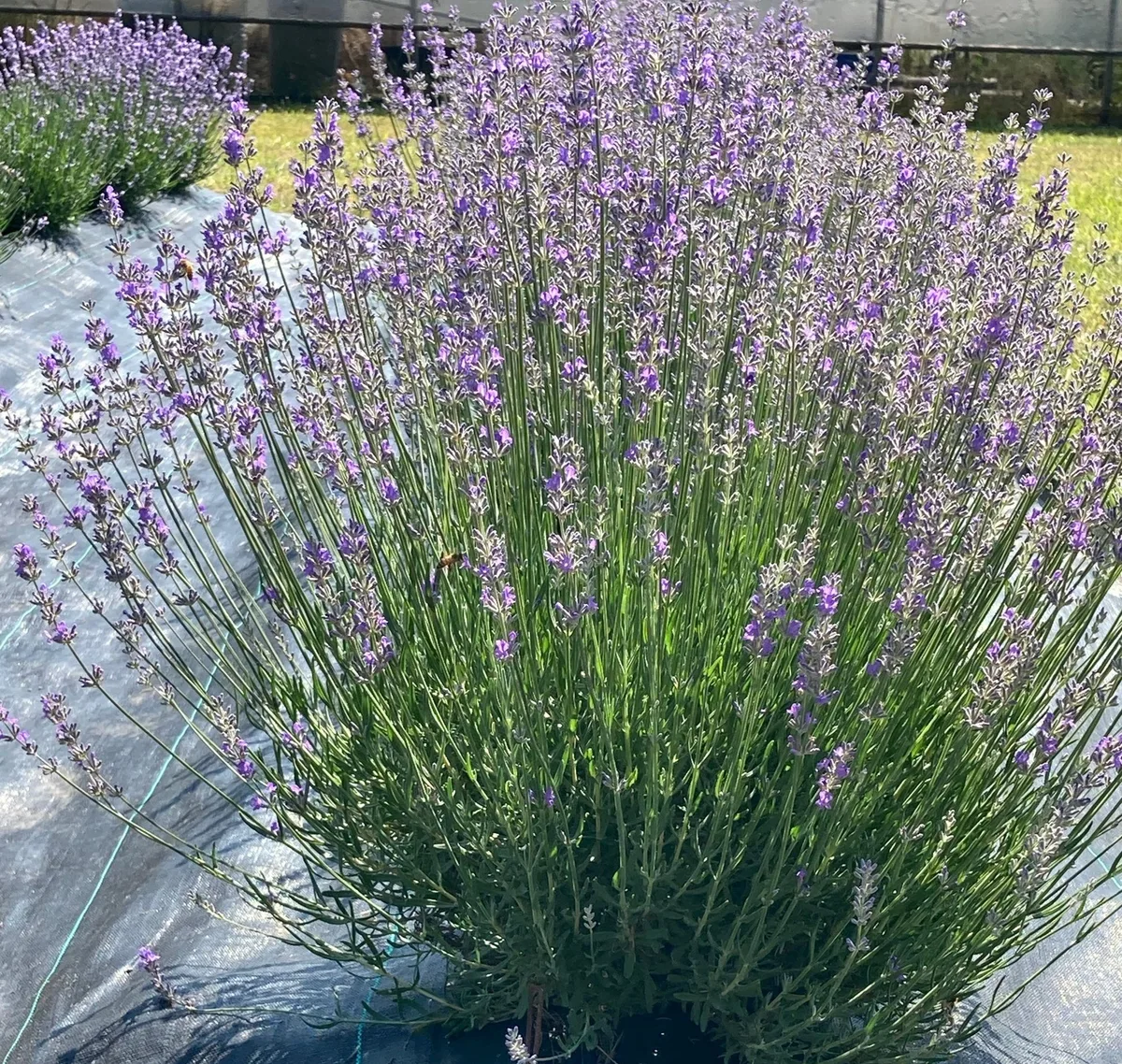
A shrub up to 50cm high, occasionally up to 75 cm high, with an erect compact habit when young, less so when older, evergreen, aromatic, linear grey-green leaves 4-5cm long, and flowering stems up to 38cm long topped by spikes 4-5cm long of fragrant, mid-violet or bright violet-blue flowers in late summer
Scientific classification
- Species
- English lavender 'Princess Blue' (Lavandula angustifolia 'Princess Blue')
- Genus
- Lavandula
- Family
- Lamiaceae
- Order
- Lamiales
- Class
- Magnoliopsida
- Phylum
- Magnoliophyta
- Information to be completed
- Toxicity
- Shrubs
- Plant type
- 0.1-0.5 metres
- Height
- 0.1-0.5 metres
- Spread
- Evergreen
- Foliage
- Bushy
- Habit
- Autumn · Spring · Summer · Winter
- Season of interest
- Full sun
- Sunlight
- Information to be completed
- Ideal temperature









English lavender 'Princess Blue' pictures
English lavender 'Princess Blue' care guide
- Moderate regular watering, allowing brief slight drying between soakings
- Watering
- Full sun
- Sunlight

Watering
Moderate regular watering, allowing brief slight drying between soakings
Fertilizing
 Fertilizing
Balanced perennial feed every four weeks from spring through summer
Pruning
 Pruning
Shorten flowered shoots to about 1.5–2.5 cm from the previous year's growth. Prune in early spring or mid-spring.
Propagation
 Propagation
Propagate by semi-ripe cuttings in late summer, or by softwood cuttings of new growth in early summer
Growing
 Growing
Grow in full sun in well-drained soil; for more advice, see lavender cultivation
Common pests and diseases
Diseases
May be susceptible to grey moulds (Botrytis) and honey fungus (rarely)
Pests
May be susceptible to rosemary beetle, and to cuckoo spit (froghopper or spittle bug nymphs)
Explore the plant health library →




